Best Budget Baseball Gloves of 2026
Finding a great baseball glove that doesn’t empty your wallet is easier than you think. You don’t need to spend a fortune to get a quality mitt that will help you catch balls and play your best. This guide breaks down the top budget-friendly gloves that offer solid durability and a good fit. We’ve done the homework to find the best value for your money, so you can spend less time worrying about price and more time having fun on the field.
1. Franklin Sports Field Master
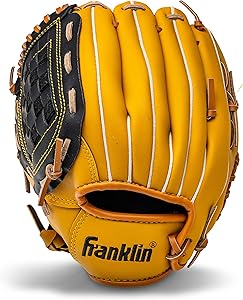
- Material: Premium synthetic leather
- Fit: Customizable thumb-adjustment technology
- Pocket: Hand-formed pocket design
- Versatility: Suitable for baseball, softball, or teeball
The Franklin Sports Field Master is an excellent choice for players seeking a reliable glove without a long preparation period. Its soft synthetic leather construction ensures a lightweight and highly responsive feel on the diamond. This makes it incredibly easy to shape and ready for game action almost immediately upon arrival.
Comfort and stability are prioritized through an adjustable wrist area and tailored thumb fit designed to snugly accommodate various hand sizes. The thick synthetic blend mimics the durability of authentic hide while preventing drops by providing a deep, contouring pocket. It serves as a highly functional, low-maintenance option for recreational players across multiple diamond sports.
Pros: Quick break-in, adjustable fit.
Cons: Not genuine leather.
See the Franklin Sports Field Master
2. Rawlings Player Preferred
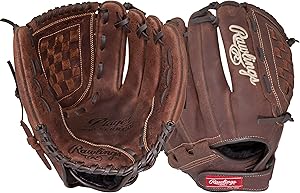
- Size: 12.5-inch adult pattern
- Webbing: Versatile Basket Web
- Material: Full grain leather shell
- Padding: Zero Shock palm padding
Designed specifically for recreational baseball and slowpitch softball leagues, the Rawlings Player Preferred offers adult athletes a dependable mix of comfort and utility. Crafted with a premium full-grain leather shell, this glove promises enhanced durability over standard synthetic alternatives. It effortlessly handles multi-position utility needs thanks to its adaptable basket-web design.
Protection is a standout element, featuring specialized padding that absorbs impact shock during hard catches. The manufacturer accelerates your preparation with an eighty percent factory break-in process, meaning you only need to finish the final twenty percent. An adjustable strap ensures a secure wrist lockdown for confidence through every single inning of play.
Pros: Full-grain leather, impact padding.
Cons: Sized only for adults.
See the Rawlings Player Preferred
3. Rawlings Select PRO LITE

- Target Age: Youth players ages 6-12
- Size/Web: 11.5-inch Pro H Web
- Shell: Soft all-leather shell construction
- Design: Lightweight textured vinyl window
The Rawlings Select PRO LITE brings major league style to young athletes by replicating the Kris Bryant gameday model. Built with a soft all-leather shell and premium palm lining, it delivers a comfortable feel right out of the box. The inclusion of lightweight textured vinyl makes it easy for smaller hands to close and control securely.
Safety and reliability are elevated by built-in shock reduction that protects youth players from stinging impacts. Parents and coaches will appreciate the ninety percent factory break-in, requiring minimal effort from the child before hitting the field. This setup builds immediate defensive confidence for developing utility players across various infield and outfield positions.
Pros: Easy closure, pro-style design.
Cons: Limited to youth sizes.
See the Rawlings Select PRO LITE
4. Franklin Sports RTP Pro

- Material: Genuine pigskin leather
- Size: 12.5-inch multi-position frame
- Webbing: Basket horizontal stripe-web
- Protection: Weather-resistant durable outer shell
Engineered for performance and longevity, the Franklin Sports RTP Pro uses authentic pigskin leather to achieve an ultra-smooth, premium texture. This choice of material offers an excellent balance between structural toughness and a lightweight feel on the hand. A protective outer shell guards the leather against dirt and moisture damage over long seasons.
The practical basket horizontal stripe-web pocket functions beautifully at any position, whether you are snaring pop-ups or scooping heavy grounders. Because the leather is naturally flexible, reshaping and breaking in the glove requires very little time or effort. It yields a comfortable, smooth experience that lets athletes focus entirely on making critical defensive plays.
Pros: Genuine pigskin, moisture resistant.
Cons: Leather requires occasional care.
See the Franklin Sports RTP Pro
5. Wilson A450

- Size: 11.5-inch utility pattern
- Leather Type: Resilient top grain leather
- Structure: Rolled dual welting finger backs
- Wrist System: Quick Fit adjustable cinch
The Wilson A450 pairs lightweight agility with a sturdy architecture that holds its shape through intensive seasonal play. Utilizing resilient top-grain leather, it eliminates the burden of heavy, stiff gear while providing players with precise glove control. Rolled dual welting runs along the fingers to reinforce the pocket, ensuring consistent performance over time.
Comfort is highly refined via traditional rolled finger binding, which minimizes pressure points and hot spots on the hand. The integrated Quick Fit wrist system adjusts smoothly to anchor the glove securely during high-intensity tags or dives. This combination delivers a classic feel alongside modern control for athletes prioritizing clean ball transfers.
Pros: Shape-retaining welting, comfortable binding.
Cons: Might feel small for adults.
6. Rawlings Sandlot

- Size: 11.75-inch utility model
- Webbing: Modified Trap-Eze web
- Leather: Full-grain oiled shell leather
- Comfort: Padded finger back linings
The Rawlings Sandlot stands out due to its classic vintage aesthetic and robust construction tailored for multi-position utility use. Built with a full-grain oiled shell leather, it offers a distinct retro look without compromising long-term durability on the field. The modified Trap-Eze web design makes it highly effective for infielders and outfielders alike.
Player comfort is heavily emphasized with soft, padded finger back linings that soothe the hand during long practices. An integrated Zero Shock palm pad protects against high-velocity impacts, keeping your hand safe from painful stingers. Arriving eighty percent broken-in, this glove gets you out onto the diamond and playing with confidence instantly.
Pros: Oiled vintage leather, palm protection.
Cons: Oiled finish requires break-in maintenance.
7. Rawlings Sure Catch

- Size: 10.5-inch youth glove
- Age Range: Ideal for ages 4 to 10
- Web Style: Sure Catch Pro H Web
- Break-In: 90% Factory broken-in
The Rawlings Sure Catch serves as the ultimate introductory utility glove for young athletes learning baseball basics. Constructed with real leather, this ten and a half inch model provides a lightweight, game-ready feel right out of the box. Its design focuses entirely on easing the learning curve for entry-level players.
Patented Sure Catch technology allows small hands to easily open and snap the glove shut from day one. With an aggressive ninety percent factory break-in, children can transition from the store straight to the field without frustration. It provides a secure, reliable tool that inspires immediate confidence in youngest defensive players.
Pros: Patented easy closure, immediate playability.
Cons: Too small for older kids.
8. Wilson A500

- Size: 12-inch youth infield pattern
- Material: Top grain leather construction
- Webbing: Classic H-Web design
- Fit: Quick Fit wrist system
The Wilson A500 offers youth infielders a professional look and feel scaled perfectly for growing hands. Crafted from resilient top-grain leather, it maintains its pocket shape over multiple seasons while remaining light enough for quick defensive reactions. The classic H-web design gives young players a clear visual window to track oncoming baseballs.
Structural integrity is reinforced by rolled dual welting along the fingers, ensuring the pocket stays deep and stable through diving catches. The Quick Fit wrist cinch keeps the glove firmly anchored during tags, preventing slipping. It is a premium, comfortable fielding tool built to elevate defensive performance at shortstop, third, or on the mound.
Pros: Top-grain leather, tracking window web.
Cons: Specific to infield/youth preferences.
How to Choose Baseball Gloves: A Complete Guide
Choosing the right baseball glove can dramatically improve your game. A glove isn’t just a piece of leather—it’s an extension of your hand. Whether you’re a beginner or a seasoned player, selecting the proper glove means understanding fit, material, position-specific features, and personal preferences. Here’s a comprehensive guide to help you choose the best glove for your needs.
1. Understand the Parts of a Glove
Before diving into sizing and types, it’s essential to understand the glove’s anatomy:
- Webbing: The woven leather between the thumb and fingers; different styles suit different positions.
- Pocket: The indentation where the ball rests; deeper pockets are ideal for outfielders, while shallow ones help infielders transfer quickly.
- Heel: The bottom part of the glove that protects the palm.
- Lacing: Ties the glove together, typically made from leather.
- Back: The part behind your hand—either open or closed.
2. Glove Size by Age and Position
Glove sizes are measured in inches from the top of the index finger down to the heel. Here’s a general guide:
Youth Sizing
- Ages 5–7: 9″–10.5″
- Ages 8–10: 10.5″–11″
- Ages 11–13: 11″–11.5″
Adult Sizing by Position
- Infielders: 11″–11.75″
- Outfielders: 12″–13″
- First Base: 12″–13″
- Catchers: 32″–34″ (measured differently, in circumference)
- Pitchers: 11.5″–12.5″
A snug fit is essential for control. Try gloves on with a baseball in hand if possible. Youth gloves are typically smaller with more padding and easier break-in.
3. Choose the Right Glove for Your Position
Each position demands specific glove features to suit the role:
Infield Gloves
- Size: 11″–11.75″
- Features: Shallow pocket for fast ball transfers, smaller size for quicker hand movement.
- Webbing: I-web or H-web for visibility and flexibility.
Outfield Gloves
- Size: 12″–13″
- Features: Deeper pocket to catch fly balls, longer glove for greater reach.
- Webbing: H-web or trapeze web for stability.
Pitcher’s Gloves
- Size: 11.5″–12.5″
- Features: Closed web to hide grip and pitches, minimal design.
- Webbing: Two-piece closed web or basket web.
First Base Mitts
- Size: 12″–13″
- Features: No fingers, curved edge to scoop throws, more padding.
- Webbing: Single post or modified H-web.
Catcher’s Mitts
- Size: 32″–34″ (circumference)
- Features: Thick padding, oval-shaped, heavily reinforced.
- Webbing: Closed web for durability and shock absorption.
4. Material Types
The glove’s material affects its performance, break-in time, and longevity:
Synthetic Leather
- Lightweight, flexible, cheaper.
- Best for younger players or casual use.
- Breaks in quickly but wears out faster.
Full-Grain Leather
- Durable, high quality, takes time to break in.
- Great for intermediate to advanced players.
- Requires regular maintenance.
Premium or Pro-Grade Leather
- Top-tier material used in professional gloves.
- Long-lasting, tough break-in.
- Excellent shape retention and feel.
5. Webbing Styles
The web style you choose affects how the glove performs:
- Closed Web: Good for pitchers to hide grip; also adds stability.
- I-Web: Preferred by infielders for visibility and fast ball retrieval.
- H-Web: Used by both infielders and outfielders; provides balance of visibility and strength.
- Trapeze Web: Ideal for outfielders; deeper and flexible.
- Single Post Web: Common in first base mitts; offers visibility and support.
6. Back Style: Open vs Closed
- Open Back: Offers more wrist flexibility; ideal for infielders who need quick movement.
- Closed Back: More support and padding; better for catchers and outfielders.
7. Break-In Time and Comfort
Every glove, especially high-quality leather ones, needs to be broken in for maximum performance. This process can take several days to weeks, depending on use and methods.
Tips for breaking in:
- Use glove oil or conditioner to soften leather.
- Wrap a ball in the pocket and tie it shut.
- Play catch regularly to naturally shape the glove.
- Avoid oven or microwave methods—they can damage leather.
8. Fit and Feel
Try the glove on before buying if possible:
- It should feel snug, not tight.
- You should be able to close the glove comfortably around a baseball.
- Check that your fingers fit well in the stalls without extra space.
Youth gloves often come with adjustable wrist straps (Velcro or laced) to help with fit.
9. Budget Considerations
Prices vary widely:
- Beginner Gloves: $20–$60 (synthetic or basic leather)
- Intermediate: $60–$150 (full-grain leather)
- Advanced/Pro: $150–$400+ (premium leather, custom fit)
If you’re serious about the game or play in a competitive league, investing in a higher-quality glove can pay off in durability and performance.
10. Popular Brands
Some of the most trusted brands in baseball gloves include:
- Rawlings: Known for pro-grade gloves and excellent craftsmanship.
- Wilson: Famous for their A2000 and A2K models.
- Mizuno: Offers good quality and comfort at various price points.
- Easton: Popular in youth leagues; offers balance of price and performance.
- Nokona: Handmade in the USA, known for premium quality.
Choose a brand that matches your budget and comfort level. Often, trying gloves from different brands helps find the best fit.
11. Left-Handed vs Right-Handed Gloves
Gloves are labeled based on your throwing hand:
- Right-Hand Throw (RHT): Worn on the left hand.
- Left-Hand Throw (LHT): Worn on the right hand.
Always double-check when ordering online—mistakes here are common.
Conclusion
Choosing the right affordable baseball glove involves understanding your position, preferences, and skill level. Focus on the right size, webbing, and material for your role on the field. A well-fitted, properly broken-in glove can make all the difference in your confidence and performance. Take your time, try different models, and remember: the best glove is the one that feels like a natural extension of your hand.