
Best Golf Balls For Average Golfers of 2026
Navigating the vast selection of golf balls can be daunting, especially for the average golfer aiming to optimize their game without breaking the bank. Forget the high-spin, tour-level balls designed for professionals; what most recreational players truly need are golf balls that offer a forgiving blend of distance, feel, and control tailored to moderate swing speeds.
1. TaylorMade Golf Distance+ Golf Balls

- Construction: Two-layer
- Cover: Ionomer
- Core: REACT Speed Core
- Launch/Spin: Mid-launch, Mid/High spin
The TaylorMade Golf Distance+ balls are engineered with the average golfer in mind, prioritizing raw speed and extended flight. Featuring a REACT Speed Core, these balls are designed to compress efficiently with moderate swing speeds, translating directly into higher initial ball velocity off the clubface. This core, combined with an innovative Extended Flight Dimple Pattern, helps the ball cut through the air with less drag.
Beyond pure distance, TaylorMade has integrated practical features to aid consistency. The Plus Alignment Aid printed on the ball provides a clear visual cue for lining up putts and even tee shots, promoting better aim and confidence on every stroke.
- Pros:
- Exceptional distance for average swing speeds
- REACT Speed Core for high velocity
- Extended Flight Dimple Pattern for carry
- Cons:
- Mid/High spin might not suit all preferences
- Ionomer cover less premium than urethane
2. Callaway Golf Supersoft Golf Balls

- Construction: 2-piece
- Compression: Ultra-low
- Cover: Hybrid Ionomer
- Feel: Exceptionally soft
The Callaway Golf Supersoft golf balls have earned their reputation as a favorite among average golfers for a reason: they live up to their name. Designed with an ultra-low compression core, these balls are incredibly soft. This characteristic is particularly beneficial for golfers with moderate to slower swing speeds, as the ball compresses more easily at impact, leading to enhanced energy transfer and surprisingly good distance.
What sets the Supersoft apart is its blend of feel and performance. The hybrid ionomer cover, engineered with proprietary PARALOID Impact Modifier, not only contributes to the soft sensation but also promotes excellent greenside control for a 2-piece ball. This means you can expect a decent amount of bite on chips and pitches, giving average players more consistency around the green.
- Pros:
- Ultra-soft feel on all shots
- Excellent for moderate swing speeds
- Good greenside control for a 2-piece ball
- Cons:
- May lack maximum spin for advanced players
- Not designed for extreme workability
3. Titleist TruFeel Golf Balls
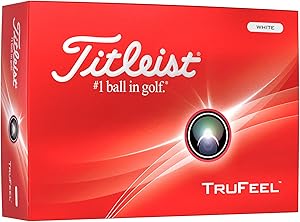
- Core: TruTouch core
- Cover: 3.0 TruFlex cover
- Dimple Design: 376 tetrahedral
- Feel: Ultra-soft
The Titleist TruFeel golf ball is meticulously engineered for players who crave an ultra-soft feel without sacrificing reliable performance, embodying Titleist’s commitment to quality even in their softer offerings. At its heart lies the new TruTouch core, which contributes significantly to both the ball’s soft sensation upon impact and its impressive distance capabilities for average swing speeds.
Further enhancing its appeal, the TruFeel boasts a unique 376 tetrahedral dimple design, optimized to produce a low, penetrating ball flight. This specific aerodynamic pattern helps to reduce drag and promote a stable trajectory, making the ball less susceptible to wind and ensuring more predictable landing zones.
- Pros:
- Titleist brand quality and consistency
- Ultra-soft feel for enhanced feedback
- Increased greenside spin and control
- Cons:
- May not offer maximum distance for high swing speeds
- Softer cover can be less durable against scuffs
4. Callaway Golf Warbird Golf Balls

- Core: Extra-large, high-energy
- Aerodynamics: HEX Aerodynamics
- Cover: Optimized ionomer
- Construction: 2-piece design
The Callaway Golf Warbird balls are unequivocally built for distance, catering directly to the average golfer who prioritizes maximizing yards off the tee and throughout their bag. Central to its design is an extra-large, high-energy core that is highly compressible, allowing players with moderate swing speeds to unlock more potential ball speed and, consequently, greater distance.
Further enhancing its long-game prowess, the Warbird incorporates Callaway’s renowned HEX Aerodynamics. This advanced dimple pattern significantly reduces drag and promotes a higher, more penetrating launch, resulting in a more efficient and longer ball flight.
- Pros:
- Built for maximum ball speed and distance
- High-energy core for improved compression
- HEX Aerodynamics promote long, stable flight
- Cons:
- Firmer feel than “soft” alternatives
- Limited greenside spin for precise control
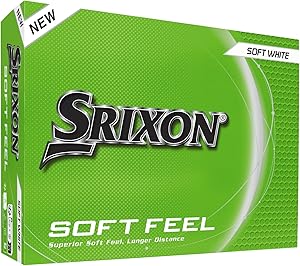
5. Srixon Soft Feel Golf Balls
- Compression: Low
- Core: High-energy Gradient Core
- Dimple Pattern: 338 Speed Dimple
- Cover: Soft, thin ionomer
The Srixon Soft Feel golf ball is a perennial favorite among average golfers, skillfully balancing exceptional feel with impressive all-around performance. True to its name, the Soft Feel delivers a responsive and pleasing sensation off every club, making it a joy to strike, particularly for those who value feedback and comfort. Its low compression core is specifically designed for golfers with slower to medium swing speeds.
Beyond its namesake feel, the Srixon Soft Feel excels in providing balanced performance across the course. The high-energy Gradient Core progressively gets firmer towards the outer edges, promoting a high launch with low spin off the driver for maximum distance, while still offering a softer touch around the greens. The innovative 338 Speed Dimple Pattern is engineered to reduce drag at launch and increase lift during descent.
- Pros:
- Outstanding soft feel and feedback
- Excellent distance for moderate swing speeds
- Good greenside spin and control
- Cons:
- May lack workability for advanced players
- Not ideal for very high swing speeds
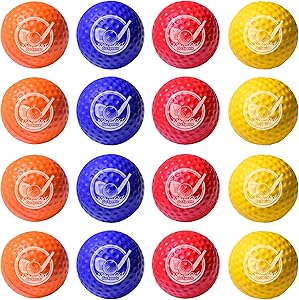
6. GoSports Foam Golf Practice Balls
- Material: Sturdy foam
- Quantity: 16-pack
- Flight Characteristics: Limited flight
- Texture: Realistic dimple texture
For the average golfer looking to refine their swing or practice in limited spaces, the GoSports Foam Golf Practice Balls offer an invaluable, safe, and effective solution. This set of 16 durable foam balls is specifically designed for both indoor and outdoor use, allowing you to work on your technique without the risk of damaging property or injuring others.
The beauty of these practice balls lies in their versatility and safety. Their foam construction and limited flight capability make them perfect for backyard practice, garage sessions, or even living room drills, enabling golfers to hone their swing mechanics without needing a vast open field. They provide a surprisingly realistic feel upon impact, helping to build muscle memory and improve striking consistency.
- Pros:
- Safe for indoor and outdoor practice
- Realistic feel and dimple texture
- Limited flight for confined spaces
- Cons:
- Not suitable for actual play on course
- Doesn’t fully replicate real ball flight
7. Amazon Basics Core Soft Golf Balls

- Compression: Low
- Quantity: 12-pack
- Visibility: High-visibility yellow
- Conformity: USGA conforming
The Amazon Basics Core Soft Golf Balls offer a compelling option for the average golfer seeking a blend of performance, affordability, and consistency. Available in a convenient 12-pack, these low compression balls are designed to provide exceptional distance and a remarkably straight flight path, making them ideal for players with moderate swing speeds who often struggle with hooks or slices. The “soft feel” aspect is immediate upon impact.
Beyond their core performance, these golf balls include thoughtful features that enhance playability. Advanced core and cover technology contribute to improved short game control and putting accuracy, ensuring that while you gain distance, you don’t compromise entirely on feel around the green. A side stamp alignment feature is integrated to assist with lining up putts, providing a clear visual aid for better accuracy.
- Pros:
- Excellent value for a 12-pack
- Low compression for distance and feel
- Promotes straighter flight path
- Cons:
- Not a multi-layer tour performance ball
- Less greenside spin than urethane covers
How to Choose Golf Balls For Average Golfers
For many recreational golfers, the choice of golf ball often seems secondary to the club in their hand. However, selecting the right golf ball can significantly impact your game, offering advantages in distance, feel, and control that are specifically tailored to your swing speed and playing style. The “average golfer” typically encompasses a wide range of handicaps, but generally refers to players with moderate swing speeds (roughly 70-95 mph with a driver), who may struggle with consistency, slices or hooks, and seek a balance between distance and forgiveness. Understanding how different golf ball characteristics align with these needs is the first step towards unlocking a more consistent and enjoyable golfing experience.
Defining the Average Golfer
Before diving into ball specifics, it’s essential to define who an “average golfer” is in the context of golf ball selection. This demographic typically includes players with handicaps ranging from 15 to 30, whose primary goals are often to hit the ball straighter, achieve more consistent distance, and gain a better feel around the greens without sacrificing too many balls. They might not have the high clubhead speed to fully compress a tour-level ball or the consistent strike to demand maximum spin control. For these players, a golf ball that aids in mitigating common swing flaws and provides a forgiving feel is far more beneficial than one designed for professional-level precision.
Key Characteristics of Golf Balls for Average Golfers
The market is flooded with golf balls, each boasting unique technologies. For the average golfer, focusing on a few key characteristics can simplify the decision-making process.
Compression: The Heart of the Ball
Compression refers to how much a golf ball deforms on impact. It’s often the single most important factor for average golfers. Balls are categorized as low, medium, or high compression.
- Low Compression (typically 30-70): Ideal for average swing speeds. These balls compress more easily, transferring energy efficiently even with slower swings. This results in increased ball speed, higher launch, and reduced spin off the driver, which often translates to straighter shots and more distance for many recreational players. They also provide a softer feel.
- Medium to High Compression (70-100+): Designed for faster swing speeds (100+ mph). These balls require more force to compress fully, and using them with a slower swing speed will result in a loss of distance and a harder feel.
For the average golfer, prioritizing a low compression ball is usually the best bet for maximizing distance and achieving a softer feel.
Construction: Layers of Performance
Golf balls come in various constructions, from simple two-piece designs to complex five-piece models.
- Two-Piece Balls: These are the most common and often the best choice for average golfers. They consist of a large, solid core and a durable outer cover.
- Pros: Excellent durability, maximum distance, lower spin off the driver (which helps with slices/hooks), and typically more affordable.
- Cons: Less greenside spin and feel compared to multi-layer balls.
- Three-Piece Balls: These add an intermediate layer between the core and cover.
- Pros: Offer a better balance of distance, feel, and greenside spin than two-piece balls. Can be a good step up for average golfers looking for a bit more control without sacrificing too much distance.
- Cons: Slightly less durable and usually more expensive than two-piece balls.
- Four- or Five-Piece Balls: These are typically tour-level balls designed for professionals with very high swing speeds who demand precise spin control and feel. They are generally not recommended for average golfers, as their complex construction requires consistent, fast swings to realize their full benefits.
For most average golfers, a two-piece ball provides the best combination of distance, durability, and value. Some might benefit from a softer three-piece ball if greenside feel is a higher priority.
Cover Material: Feel and Spin
The outer layer of the golf ball, the cover, plays a crucial role in feel, spin, and durability.
- Ionomer (Surlyn): Found on most two-piece and some three-piece balls.
- Pros: Extremely durable, resistant to cuts and abrasions, and promotes lower driver spin for straighter shots.
- Cons: Offers a firmer feel and generates less greenside spin compared to urethane.
- Urethane: Typically found on multi-layer, tour-level balls.
- Pros: Provides a soft, responsive feel and generates significantly more greenside spin for control on chips, pitches, and putts.
- Cons: Less durable and more expensive than ionomer covers.
For average golfers, an ionomer cover is often preferred for its durability and lower driver spin. However, if greenside control is a significant focus, a soft ionomer or hybrid cover can offer a good compromise.
Dimple Pattern: Aerodynamics in Action
The dimples on a golf ball aren’t just for aesthetics; they play a critical role in aerodynamics, influencing lift and drag. While specific dimple patterns vary by manufacturer, the general principle is to optimize flight for a given ball speed. For average golfers, a consistent, stable ball flight that resists wind is more important than achieving highly specialized trajectories.
Factors to Consider When Making Your Choice
With the technical aspects understood, here’s how to apply them to your personal game:
Your Swing Speed
This is paramount. If you don’t know your exact driver swing speed, a good rule of thumb is that if your driver shots carry less than 200-220 yards, you likely have a moderate to slower swing speed (under 95 mph). For these speeds, low compression balls (like those in the 30-70 range) will yield the best results for distance and feel. If you have a faster swing, you might benefit from slightly higher compression, but stick to softer options.
Feel Preference
Do you prefer a “clicky” or “mushy” feel off the clubface? Low compression balls with ionomer or hybrid covers typically offer a softer feel, which many average golfers find more pleasant and confidence-inspiring. Some golfers, however, prefer a firmer feel for more feedback. This is largely subjective.
Distance vs. Control
Most average golfers prioritize distance and forgiveness. A two-piece, low-compression ball with an ionomer cover will deliver maximum distance and straighter flight off the tee due to lower driver spin. If you find yourself consistently around the greens and want more control for chips and pitches, a soft three-piece ball or one with a hybrid cover might be worth the slightly higher cost and potentially less driver distance.
Spin Characteristics
For average golfers, excessive driver spin often leads to slices and hooks. A ball designed to reduce driver spin can help straighten out shots. Conversely, greenside spin is desirable for stopping the ball near the pin. Balls with softer covers (like urethane or advanced ionomer/hybrid covers) will offer more greenside spin, but often at the expense of durability and driver spin reduction. Find a balance that suits your short game needs and long game consistency.
Durability and Price
Average golfers tend to lose more balls, making durability and price important considerations. Two-piece balls with ionomer covers are generally the most durable and cost-effective. Investing in expensive, multi-layer urethane balls might not be practical if you’re frequently replacing them after a few holes.
Visibility
While often overlooked, the color of your golf ball can significantly impact visibility. High-visibility colors like yellow, orange, or matte finishes can make finding your ball easier, especially in challenging light conditions or dense rough, saving time and frustration.
Testing and Experimentation
The best way to find your ideal golf ball is through experimentation. Don’t be afraid to try a sleeve of different models. Pay attention to how the ball feels off the driver, irons, and wedges, and observe its flight characteristics and performance around the green. Keep notes on what you like and dislike about each. What works for one average golfer might not work for another.
Conclusion
Choosing the best golf ball for an average golfer isn’t about finding the most expensive or technologically advanced option, but rather the one that best complements your unique swing speed and playing style. Focus on low compression for distance and feel, durable two or three-piece constructions, and covers that offer a balance of greenside control and driver spin reduction. By understanding these key factors and taking the time to experiment, you can select a golf ball that genuinely enhances your performance, leading to more consistent shots, lower scores, and ultimately, more enjoyment on the course.