
Best Low Compression Golf Balls of 2026
For many golfers, achieving greater distance and a softer feel is the ultimate goal, and that’s precisely where low compression golf balls shine. Designed specifically to maximize energy transfer for players with moderate to slower swing speeds, these balls compress more easily upon impact, leading to a higher launch, reduced spin off the driver, and ultimately, more yards down the fairway.
1. Callaway Golf Supersoft Golf Balls

- Compression: Low (optimized for slower swing speeds)
- Core: SoftFast Core
- Cover: HYPEREON soft cover
- Feel: Ultra-soft
The Callaway Golf Supersoft Golf Balls have consistently been a favorite among golfers prioritizing a plush feel without sacrificing distance, and the 2023 model continues this tradition with impressive performance enhancements. Engineered with Callaway’s proprietary SoftFast Core, these balls are designed to maximize ball speed for players with moderate swing speeds. The low compression rating allows for significant energy transfer upon impact.
Beyond the exceptional distance capabilities, the Supersoft’s HYPEREON soft cover contributes to an incredible feel around the greens, providing the delicate touch needed for precise short game shots. This two-piece construction balances distance and greenside control, making it an ideal choice for golfers seeking a versatile ball that performs reliably from tee to green. Its durability also ensures a long-lasting experience.
- Pros:
- Excellent distance for moderate swing speeds
- Incredibly soft feel on all shots
- Good greenside control and feedback
- Cons:
- May not suit very high swing speeds
- Spin rates might be lower for skilled players
2. TaylorMade SpeedSoft Golf Balls

- Compression: Ultra-low (PWRCORE)
- Core: New PWRCORE
- Cover: Enriched Surlyn
- Visibility: High (Yellow option)
The TaylorMade SpeedSoft Golf Balls are engineered to deliver an exceptional blend of maximum distance and an ultra-soft feel. At a highly competitive price point, these balls offer impressive value without compromising on performance. The core technology, a new low-compression PWRCORE, is the heart of its design. This dual-purpose core ensures that golfers can achieve significant yardage without sacrificing the feedback and touch essential for scoring.
The enriched Surlyn cover enhances both durability and visibility, especially with the high visibility yellow option, making the ball easier to track in flight and locate on the course. This combination of a responsive core and a durable, visible cover positions the SpeedSoft as a reliable choice for players seeking consistent performance across their game. Whether you’re driving for distance or finessing a chip, these golf balls promise a rewarding experience, combining speed and softness in a budget-friendly package.
- Pros:
- Ultra-soft feel on all shots
- Excellent ball speed for everyday golfers
- Highly attractive price point
- Cons:
- May offer less spin for advanced players
- Durability of soft cover can vary
3. TaylorMade Golf Distance+ Golf Balls

- Core: REACT Speed Core
- Cover: Ionomer
- Dimple Pattern: Extended Flight
- Construction: Two-layer
The TaylorMade Golf Distance+ Golf Balls are meticulously engineered for golfers who prioritize maximum distance and explosive speed off the tee. Featuring a REACT Speed Core, these two-layer balls are designed to deliver high-velocity performance. The core’s composition ensures efficient energy transfer upon impact. This focus on raw power makes them an excellent choice for those looking to add considerable length to their drives.
Complementing the speed-focused core is the all-new Extended Flight Dimple Pattern. This aerodynamic design helps the ball cut through the wind and maintain its trajectory, staying airborne longer to maximize carry distance. Furthermore, the inclusion of a Plus Alignment Aid directly on the ball assists golfers in accurately lining up their shots, whether on the tee or the putting green. With an ionomer cover providing a softer feel and mid/high spin, these Distance+ balls offer a balanced performance package for both men and women golfers seeking to transform their long game.
- Pros:
- Exceptional distance off the tee
- High-velocity REACT Speed Core
- Aerodynamic Extended Flight Dimple Pattern
- Cons:
- Greenside spin might be moderate
- Feel could be firmer for some preferences
4. Wilson 2025 Duo Soft Golf Balls

- Softness: World’s Softest (Industry-leading)
- Core: High Energy Core
- Construction: Two-layer
- Flight: Straighter (reduced spin)
The Wilson 2025 Duo Soft Golf Balls proudly claim the title of the “World’s Softest Golf Ball,” delivering an industry-leading feel that provides exceptional feedback on every shot. This incredible softness makes for a truly comfortable impact. Despite its plushness, the Duo Soft doesn’t compromise on distance, featuring a High Energy Core specifically engineered to deliver maximum yardage off the tee. This combination ensures that golfers with moderate swing speeds can experience both impressive carry and a satisfyingly soft sensation.
The two-layer construction of the Wilson Duo Soft is strategically designed to reduce spin on longer shots, promoting a straighter ball flight and minimizing hooks or slices. This characteristic is particularly beneficial for players looking to improve their accuracy and keep their drives in the fairway more consistently.
- Pros:
- Unrivaled soft feel
- Excellent distance for slower swing speeds
- Promotes straighter ball flight
- Cons:
- May lack greenside spin for advanced players
- Softness might not suit all preferences
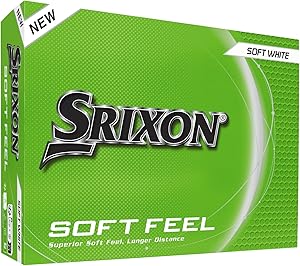
5. Srixon Soft Feel Golf Balls
- Core: High-energy, low compression
- Cover: Soft, thin Ionomer
- Dimple Pattern: 338 Speed Dimples
- Feel: Responsive and soft
The Srixon Soft Feel Golf Balls are designed for golfers who prioritize a responsive feel without compromising on all-around performance. If touch and control are paramount to your game, these balls deliver with their innovative Soft Feel technology. Engineered with a high-energy core, the Soft Feel also boasts increased distance capabilities, boosting ball speed for longer drives, making it an ideal choice for a wide range of golfers, especially those with slower to medium swing speeds.
Its low compression design is specifically tailored to facilitate an easy launch and enhanced accuracy, providing a noticeable advantage for improved control around the course. The 338 Speed Dimple Pattern is a key feature, meticulously crafted to reduce drag during launch and increase lift on descent, optimizing flight dynamics for more consistent and longer carries.
- Pros:
- Excellent soft, responsive feel
- Increased distance for moderate swing speeds
- Low compression aids easy launch
- Cons:
- Driver spin might be too low for some
- Feel might be too soft for firmer preferences
6. Titleist Tour Soft Golf Balls

- Core: New faster, large core
- Cover: Reformulated thin Fusablend
- Dimple Design: 346 quadrilateral dipyramid
- Alignment: Full 360-degree wrap
The Titleist Tour Soft Golf Balls are specifically designed for players who prioritize a remarkably soft feel while still demanding great all-around performance from tee to green. This latest iteration features a new, faster, and larger core that is engineered to deliver longer distance off the tee and impressively low spin on long game shots. This advancement ensures that golfers can achieve greater yardage without sacrificing the signature soft impact that Titleist Tour Soft is known for.
Further enhancing its performance, the optimized ball flight for long distance comes courtesy of a sophisticated 346 quadrilateral dipyramid dimple design, promoting a stable and penetrating trajectory. Around the greens, the reformulated thin Fusablend cover provides dependable greenside spin, offering excellent short game control for precise chips and pitches.
- Pros:
- Exceptional soft feel
- Longer distance off the tee
- Dependable greenside spin and control
- Cons:
- Higher price point than some competitors
- Low long-game spin may not suit all players
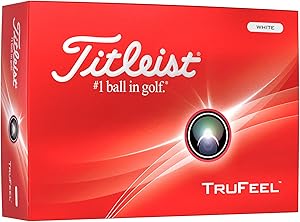
7. Titleist TruFeel Golf Balls
- Core: New TruTouch core
- Cover: Softer 3.0 TruFlex cover
- Dimple Design: Unique 376 tetrahedral
- Feel: Ultra-soft
The Titleist TruFeel Golf Balls are specifically crafted for players who prioritize an ultra-soft feel above all else, while still seeking the reliability and quality associated with the Titleist brand. At the heart of its performance is the new TruTouch core, engineered to deliver impressive long distance alongside that signature soft sensation upon impact. This combination allows golfers to experience both satisfying yardage and a plush feel, making every shot more enjoyable and confidence-inspiring.
Further enhancing its flight characteristics, the TruFeel utilizes a unique 376 tetrahedral dimple design, which promotes a low, penetrating ball flight. This design helps the ball cut through the air efficiently, contributing to consistent distance and stability. Around the greens, the softer 3.0 TruFlex cover significantly increases greenside spin and control, enabling more precise short game shots and greater command over chips and pitches.
- Pros:
- Incredibly ultra-soft feel
- Reliable long distance performance
- Enhanced greenside spin and control
- Cons:
- May not provide maximum distance for fast swing speeds
- Lower spin off the driver for some players
How to Choose Low Compression Golf Balls
Choosing the right golf ball can significantly impact your game, and for many golfers, particularly those with moderate to slower swing speeds, low compression golf balls offer a distinct advantage. These balls are designed to compress more easily upon impact, transferring energy more efficiently and leading to a higher launch, reduced spin off the driver, and often, more distance. But with numerous options on the market, how do you pinpoint the best low compression golf ball for your specific needs? This comprehensive guide will walk you through the essential factors to consider, ensuring you make an informed decision that elevates your performance on the course.
Understanding Golf Ball Compression
Before diving into specific features, it’s crucial to understand what golf ball compression truly means. Compression refers to how much a golf ball deforms upon impact with the clubface. It’s measured on a scale, typically from 0 to 200, though most balls range between 30 and 120. A lower compression number indicates a softer ball that requires less force to compress fully. For golfers with slower swing speeds (generally below 90 mph), a low compression ball is beneficial because it allows for maximum compression even at lower speeds, leading to optimal energy transfer. This translates to higher ball speed, a higher launch angle, and reduced side spin, which helps in achieving greater distance and straighter shots. Conversely, higher compression balls are designed for faster swing speeds, providing more control and workability for advanced players.
Identifying Your Swing Speed
The most critical factor in choosing the best low compression golf ball is your swing speed. Without knowing this, selecting an appropriate ball is largely guesswork. There are several ways to determine your swing speed:
Using a Launch Monitor
The most accurate method is to use a launch monitor, often found at golf pro shops, driving ranges, or golf simulation centers. These devices measure various metrics, including your clubhead speed, ball speed, and launch angle, giving you precise data to work with.
Observing Your Driver Distance
As a rough estimate, you can correlate your average driver distance with swing speed. For instance, if you consistently hit your driver around 180-200 yards, your swing speed is likely in the 70-80 mph range. If you hit 200-230 yards, you might be closer to 80-90 mph. These are general guidelines, but they can provide a starting point.
Consulting a Golf Professional
A PGA professional can assess your swing, recommend the right equipment, including golf balls, and even conduct a ball fitting to match your game perfectly.
Key Features to Look for in Low Compression Golf Balls
Once you have a good idea of your swing speed, you can start evaluating other features of low compression golf balls:
Core Technology
The core is the engine of the golf ball. Low compression balls often feature a larger, softer core designed to maximize initial ball speed. Look for terms like “SoftFast Core,” “PWRCORE,” or “TruTouch core,” which indicate technologies aimed at enhancing energy transfer and feel for moderate swing speeds.
Cover Material
The cover of a golf ball affects its feel, durability, and greenside spin. Most low compression balls use an ionomer or Surlyn cover. These materials are generally more durable and provide a softer feel compared to urethane covers found on tour-level balls. While they may offer less greenside spin than urethane, many modern low compression balls are incorporating technologies to improve short game control without sacrificing durability or soft feel.
Dimple Pattern
The dimple pattern on a golf ball plays a crucial role in its aerodynamics, influencing launch, flight trajectory, and distance. Different patterns are designed to optimize lift and reduce drag. For low compression balls, look for patterns that promote a higher launch and a more penetrating flight to maximize carry distance, such as “Extended Flight Dimple Pattern” or “338 Speed Dimples.”
Feel
Beyond the technical aspects, “feel” is a subjective but important factor. A low compression ball inherently provides a softer feel upon impact, which many golfers find more pleasant and confidence-inspiring. This soft feel can also translate to better feedback on chips and putts, aiding in greenside control. Some balls explicitly market themselves as “ultra-soft” or “world’s softest,” catering directly to players who prioritize this sensation.
Spin Characteristics
Low compression balls are generally designed to reduce driver spin, which helps to straighten out shots and increase distance for golfers with slower swing speeds. However, you still want adequate greenside spin for control on approach shots and around the green. Many manufacturers are now engineering their low compression balls to offer a good balance, providing low long-game spin while still allowing for some control with wedges and putters.
Visibility
While not directly performance-related, visibility can greatly enhance your golfing experience. Many low compression balls are available in high-visibility colors like yellow, orange, or matte finishes, making them easier to track in flight and locate on the course, especially in challenging lighting conditions or dense rough.
Matching the Ball to Your Game
Consider your primary goals when choosing a low compression golf ball:
Prioritizing Distance
If your main aim is to squeeze every possible yard out of your swing, look for balls that emphasize “explosive speed” or “maximum distance” in their description. These balls will often have specific core technologies and dimple patterns geared towards maximizing carry and roll.
Prioritizing Feel and Control
If you value a soft feel and enhanced feedback for your short game, prioritize balls that highlight their “ultra-soft feel” and “greenside control.” While these balls will still offer good distance, their primary focus is on responsiveness around the putting surface.
Balancing Distance and Feel
Many low compression balls strike a balance between distance and feel. If you want a bit of both, look for models that mention “all-around performance” or offer technologies that promise both high ball speed and a soft touch.
Testing and Experimentation
Ultimately, the best way to choose a golf ball is through experimentation. Purchase sleeves of a few different low compression models that align with your swing speed and desired characteristics. Take them to the driving range and, more importantly, onto the course. Pay attention to how each ball feels off the tee, with your irons, and around the greens. Note any differences in distance, trajectory, and control. What feels good to one golfer might not feel right to another, so personal preference plays a significant role.
Choosing the best low compression golf ball can significantly improve your game by optimizing performance for your swing speed. By understanding compression, identifying your swing speed, and evaluating key features like core technology, cover material, and dimple patterns, you can confidently select a ball that enhances your distance, feel, and overall enjoyment on the golf course. Don’t be afraid to experiment, as finding the perfect match can truly unlock your potential.