Best Fairway Woods For Beginners of 2026
Navigating the golf course as a beginner can be daunting, especially when faced with those tricky long shots from the fairway or off the tee. This is where a good fairway wood becomes your best friend. Choosing the right one can significantly boost your confidence and enjoyment. Our guide cuts through the confusion, highlighting top-performing fairway woods specifically designed to make the game more accessible and fun for newcomers.
1. Orlimar Escape HL Fairway Wood

- Loft Range: 15-37 degrees (#3 to #15 wood equivalent)
- Face Construction: Wrap-around, ultra-thin, variable thickness
- Weighting: Progressive internal heel weighting
- Design Feature: Shank-proof, face-forward design
The Orlimar Escape HL Fairway Wood is an exceptional choice for beginners. Its impressive range of lofts, from a #3 all the way to a #15 wood, means golfers can truly dial in the perfect club for various distances and situations, effectively replacing harder-to-hit long irons or hybrids. The wrap-around face construction, featuring an ultra-thin and variable thickness, is engineered to maximize ball speed across a larger area of the clubface.
Furthermore, the progressive internal heel weighting is a game-changer for golfers who struggle with slicing. This weighting strategy actively assists in squaring the clubface at impact. Perhaps one of its most innovative features for beginners is the “shank-proof” design. With a face-forward profile, these high-lofted fairway woods significantly reduce the chances of hitting the ball off the hosel, a common frustration for new players. The included headcover adds protection, and the ultra-light graphite shaft ensures an easy swing.
- Pros:
- Wide range of lofts for versatility
- Promotes higher ball speed and distance
- Helps reduce slices and promotes a draw
- Cons:
- Extensive loft options might be overwhelming for some
- Specific senior flex shaft for some models
2. Intech Behemoth Oversized Golf Fairway Wood
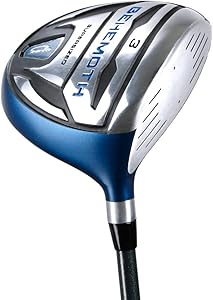
- Head Design: Supersized, high MOI
- Shaft: Lightweight graphite (Intech Behemoth)
- Lofts: User-friendly for easy launch
- Inclusions: Headcover
The Intech Behemoth Oversized Golf Fairway Wood is an excellent entry-level option, specifically designed with the beginner golfer in mind, particularly those on a budget who prioritize forgiveness and ease of use. Its standout feature is the supersized, high Moment of Inertia (MOI) design. This translates directly to a much larger sweet spot on the clubface, meaning that even if your contact isn’t perfectly centered, you’re still likely to achieve a decent shot with good distance and direction.
Coupled with the oversized head is the matching lightweight Intech Behemoth graphite shaft. A lighter shaft allows beginners to generate more clubhead speed with less effort, which is essential for achieving greater distance. The “user friendly lofts” are another significant advantage, specifically engineered to help golfers get the ball airborne easily. Many beginners struggle with launching the ball, but the Behemoth’s design aids in producing higher trajectories, allowing the ball to fly further and land softer.
- Pros:
- Large sweet spot provides maximum forgiveness
- Lightweight shaft promotes easier swing speed
- Designed for easy ball launch
- Cons:
- Only available for right-handed men
- May lack advanced adjustability features
3. Orlimar Escape Fairway Wood (Men & Women)

- Loft Range: Specialty clubs up to a 15-wood (down to 8/9 iron equivalent)
- Face Height: Shallow for easy extraction
- Center of Gravity: Low for high launch
- Shaft: Orlimar Escape Superlite 60 graphite (Regular flex for #15 wood)
The Orlimar Escape Fairway Wood, designed for both men and women, stands out as a highly adaptable and forgiving option, particularly beneficial for beginners who might struggle with traditional long irons or hybrids. This series offers an extensive range of high-lofted specialty clubs, reaching up to a 15-wood, which essentially covers the distance gaps of an 8 or 9 iron all the way down to a traditional #3 wood.
A key feature contributing to its beginner-friendliness is the shallow face height. This design makes it incredibly easy to extract the ball from a variety of lies, even tight ones on the fairway, and promotes a clean strike rather than digging into the turf. Coupled with a low center of gravity, the shallow face ensures the ball launches high into the air with minimal effort. This high launch trajectory is ideal for beginners, as it helps the ball carry further and land softly on the green, holding its target more effectively.
- Pros:
- Wide range of lofts replaces difficult irons
- Shallow face promotes easy ball extraction
- Low CG for high, soft-landing shots
- Cons:
- May not offer the piercing flight some advanced players prefer
- Focus on high lofts might mean fewer low-lofted options
4. Pinemeadow PGX Offset Golf Fairway Wood

- Technology: Anti-slice offset design
- Play Improvement: Increased time to square face
- Shaft: Pinemeadow Graphite shaft
- Material: Stainless steel clubhead
The Pinemeadow PGX Offset Golf Fairway Wood is specifically engineered to combat one of the most common and frustrating shots for beginner golfers: the slice. This club incorporates anti-slice technology through an increased offset in the clubface, a design feature that has gained significant popularity among recreational and new players. The visible offset of the leading edge allows for a crucial benefit during the downswing: it gives the golfer a fraction of a second more time to square the clubface at impact.
Improved playability is not just about avoiding a slice; it’s about building confidence and consistency. By helping to square the face, the PGX Offset fairway wood enables beginners to hit the ball more consistently on the sweet spot, leading to better ball flight and more predictable results. The club is fitted with a Pinemeadow Graphite shaft, which, when paired with the durable stainless steel clubhead, creates a lightweight yet stable combination.
- Pros:
- Effectively combats slicing for straighter shots
- Promotes more consistent face squaring at impact
- Lightweight graphite shaft for easier swing
- Cons:
- Offset design might look unconventional to some
- May not be suitable for golfers who already draw the ball
5. Pinemeadow Yukon Fairway Wood (High Lofts)

- Shaft: Low-torque Pinemeadow Graphite
- Key Attributes: Unbelievable feel and forgiveness
- Playability: Most playable club offered by the brand
- Target User: All golfers, especially those dropping long irons
The Pinemeadow Yukon Fairway Wood, specifically designed with high lofts, positions itself as an incredibly forgiving and highly playable option, making it an ideal choice for beginner golfers and those looking to simplify their long game. Fitted standard with a low-torque Pinemeadow Graphite Shaft, this club is engineered to provide an excellent balance of flexibility and stability, allowing beginners to generate sufficient clubhead speed and control without significant effort.
What truly sets the Yukon apart, as highlighted by Pinemeadow, is its “unbelievable feel and forgiveness” and its claim to be “the most playable club we carry.” This emphasis on forgiveness is crucial for beginners, as it helps mitigate the impact of off-center strikes, ensuring that even imperfect swings yield respectable results. The high lofts are particularly beneficial for getting the ball airborne easily and consistently, offering a user-friendly alternative to the often-challenging longer irons.
- Pros:
- Low-torque shaft for stability and control
- Exceptional feel and high forgiveness
- Very easy to hit and get airborne
- Cons:
- May lack the aesthetic appeal of premium brands
- Specific loft options may be limited
6. Wilson Men’s Ultra BLK Fairway Wood

- Hand Orientation: Left Hand (specific model)
- Center of Gravity: Low for improved performance
- Shaft: Reinforced premium graphite
- Head Material: Aluminum with compact shape
The Wilson Men’s Ultra BLK Fairway Wood is engineered with beginner golfers in mind, focusing on features that simplify the process of hitting long, consistent shots. While the specific listing mentions a left-handed model, the design principles apply broadly to its series, emphasizing ease of use and forgiveness. A core aspect of its performance is the strategically engineered low center of gravity (CG). This design choice is critical for beginners, as it helps to launch the ball higher and with greater ease.
Further enhancing playability, the club features a reinforced premium graphite shaft, delivering a lightweight feel that promotes increased clubhead speed without requiring excessive physical effort. This makes it easier for new golfers to swing the club fluidly and generate power. The aluminum head, with its compact shape, provides a blend of durability and aerodynamic efficiency, contributing to a stable swing path.
- Pros:
- Low CG aids in easy, high launch
- Lightweight graphite shaft boosts clubhead speed
- Large sweet spot offers high forgiveness
- Cons:
- Specific listing is for left-handed only (ensure correct variant)
- Aluminum head may not offer the same feel as steel
7. Snake Eyes MAX #3 Fairway Wood

- Shaft: Graphite shafted
- Profile: Low profile for higher launch
- Weighting: Fixed, low and back CG
- Face Technology: Deep speed channel
The Snake Eyes MAX #3 Fairway Wood is designed to deliver maximum distance and forgiveness. Featuring a graphite shaft, this club is crafted to provide a lightweight feel. The low-profile design is particularly beneficial for beginners, as it helps promote a higher launch angle. Getting the ball up in the air with sufficient height is often a challenge for new players, and this design facilitates exactly that, leading to greater carry distance and a more predictable trajectory.
Central to its performance is the fixed weight positioned low and back within the clubhead. This strategic placement creates a lower center of gravity (CG), which is a critical factor in achieving higher and more penetrating ball flight. A low and deep CG helps the club effectively lift the ball. Additionally, the inclusion of a deep speed channel on the face is engineered to create additional face flexing upon impact.
- Pros:
- Graphite shaft promotes faster swing speeds
- Low profile aids in easy, high ball launch
- Low and back CG enhances forgiveness and flight
- Cons:
- “Stiff Flex” might not be ideal for all beginners
- Only a #3 wood, less versatile than multi-loft sets
How to Choose Fairway Woods For Beginners
For many beginner golfers, the thought of hitting a driver off the tee or a long iron from the fairway can be intimidating. This is where fairway woods step in as crucial allies, offering a perfect blend of power, forgiveness, and versatility. Designed to help you advance the ball significant distances with greater ease than their iron counterparts, a good fairway wood can dramatically improve your confidence and scoring potential on the course. But with a myriad of options available, how do you choose the one that’s right for you? This guide will break down the essential factors beginners should consider when selecting their first fairway wood.
Understanding the Role of Fairway Woods for Beginners
Fairway woods are versatile clubs primarily used for long shots from the fairway, rough, or even off the tee on shorter par 4s or tight holes where accuracy is paramount. For beginners, they offer a forgiving alternative to the driver, often featuring a shorter shaft and a larger clubhead than long irons, making them easier to control and hit consistently. They are engineered to get the ball airborne with less effort, helping new golfers overcome common issues like topping the ball or struggling with distance. A well-chosen fairway wood can quickly become a go-to club, providing confidence for those intimidating long shots.
Key Factors When Choosing a Fairway Wood for Beginners
1. Forgiveness is Paramount
As a beginner, consistency is still developing, and mishits are part of the learning process. Forgiveness in a golf club refers to its ability to minimize the negative impact of off-center strikes, meaning your shots will still travel reasonably far and straight even if you don’t hit the sweet spot perfectly. Look for fairway woods with a large clubhead and a low, deep center of gravity (CG). These designs create a larger sweet spot and help launch the ball higher with less spin, which reduces hooks and slices. Clubs labeled as “oversized” or featuring “high MOI” (Moment of Inertia) are often excellent choices for maximizing forgiveness.
2. Loft for Easy Launch
Loft is the angle of the clubface, and it’s a critical factor for beginners. Higher lofted clubs make it easier to get the ball airborne, which is often a significant challenge for new golfers. While a traditional 3-wood typically has around 15 degrees of loft, beginners might benefit more from a 5-wood (around 18-19 degrees) or even a 7-wood (around 21-22 degrees). These higher lofts provide more forgiveness and a higher launch angle, ensuring the ball gets up in the air quickly and flies with a good trajectory, making it easier to clear hazards and achieve respectable distance without needing to generate excessive clubhead speed.
3. Shaft Flex and Material
The shaft of a golf club plays a crucial role in how the club performs. For beginners, a lighter, more flexible shaft is generally recommended. Graphite shafts are lighter than steel and typically offer more flexibility, which helps golfers with slower swing speeds generate more clubhead speed and thus more distance. Look for shafts labeled “senior,” “light,” or “regular” flex. A shaft that is too stiff for your swing speed will make it difficult to feel the clubhead and generate power, leading to inconsistent shots and a lack of distance. Experimenting with different flexes, if possible, can help you find what feels most comfortable and effective for your swing.
4. Clubhead Design and Size
The visual appearance of a clubhead can significantly impact a beginner’s confidence. A larger clubhead often provides a greater sense of forgiveness and a larger target area, making it less intimidating to address the ball. Some beginner-friendly fairway woods also incorporate features like an “offset” design, where the clubface is set slightly behind the hosel. This design helps golfers square the clubface at impact, mitigating the dreaded slice. A shallow face profile is another beneficial feature, as it makes it easier to hit the ball cleanly from various lies, including tight fairways or light rough, ensuring a good strike without digging into the turf.
5. Budget Considerations
As a beginner, there’s no need to invest in the most expensive, tour-level equipment. Many excellent and highly forgiving fairway woods are available at very reasonable price points. Focus on clubs that prioritize forgiveness and ease of use over advanced adjustability or premium materials, which often come with a higher cost. Many reputable golf brands offer “game improvement” or “entry-level” clubs specifically designed for new players that perform exceptionally well without breaking the bank. Remember, investing too much too soon might not be beneficial as your swing evolves rapidly in the early stages.
Tips for Beginners When Buying Fairway Woods
1. Don’t Go Too Heavy
A common mistake for beginners is choosing a club that is too heavy. A lighter overall club weight, combined with a lightweight graphite shaft, will allow you to swing more freely and generate better clubhead speed with less effort. This ease of swing is vital for maintaining good tempo and making consistent contact.
2. Consider Buying a Set (or Part of One)
While you can buy individual fairway woods, many beginner golf sets come with a 3-wood or a 5-wood that is specifically designed to complement the other clubs in the set. If you’re building your bag piece by piece, consider adding a 5-wood first, as its higher loft generally makes it easier to hit than a 3-wood for most beginners.
3. Don’t Overlook Used Clubs
Buying used golf clubs is an excellent way to save money and still get quality equipment. Many golf shops and online retailers offer used clubs in great condition. Just ensure the club’s specifications (loft, shaft flex) still align with what you need as a beginner.
4. Focus on Feel and Comfort
Ultimately, the best club for you is one that feels good in your hands and instills confidence when you stand over the ball. While specifications are important, how a club feels during your swing and at impact can make a significant difference in your performance and enjoyment. If possible, try swinging a few different options before making a final decision.
5. Don’t Try to Muscle It
Fairway woods are designed to work with your swing, not against it. Beginners often try to hit the ball too hard, which leads to poor contact. Trust the club’s design and focus on a smooth, controlled swing. The forgiveness built into beginner-friendly fairway woods will do the rest of the work.
Conclusion
Choosing the right fairway wood as a beginner doesn’t have to be overwhelming. By prioritizing forgiveness, selecting an appropriate loft, opting for a flexible graphite shaft, and considering clubhead design, you can find a club that will significantly aid your progress and enjoyment on the golf course. Remember, the goal is to make the game easier and more fun, and a well-suited fairway wood can be a powerful tool in achieving that. Don’t hesitate to consult with golf professionals or experienced players, but always let comfort and confidence be your ultimate guides.