
Best Ergonomic Snow Shovels of 2026
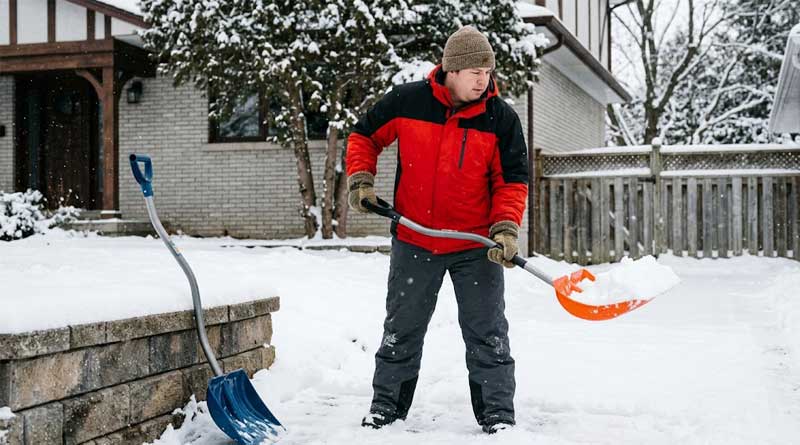
Winter storms bring heavy snowfall that can quickly turn driveway maintenance into a physically demanding chore. Traditional snow shovels often force users into repetitive bending and lifting, which places immense strain on the lower back, shoulders, and wrists. Ergonomic snow shovels are specifically engineered to mitigate these physical hazards by utilizing curved shafts, spring-assisted handles, and dual-grip systems. By altering leverage angles and improving body posture, these specialized tools make snow clearance efficient, safe, and significantly less exhausting throughout the harsh winter months.
1. ErgieShovel Ergonomic Dual-Handle Snow Shovel

- Blade Width: 18-inch combination scoop
- Shaft Material: 34.5-inch alloy steel
- Total Weight: 4.0 lbs lightweight design
- Handle Type: Ergonomic dual D-ring grip
The ErgieShovel ERG-SNSH18 introduces an innovative dual-handle configuration engineered to revolutionize winter driveway clearing. By placing a second adjustable grip along the steel shaft, this tool provides additional leverage that drastically reduces back strain. Users can easily lift heavy loads without stooping deeply into snowbanks.
Featuring a durable 18-inch blade equipped with a protective aluminum wear strip, this shovel effortlessly cuts through compacted snow and under-layer ice. The lightweight construction ensures prolonged usability without fatigue, making it an exceptional choice for homeowners facing frequent heavy winter storms.
- Pros: Excellent lifting leverage; durable steel shaft construction; integrated aluminum strip protects blade.
- Cons: Dual handle requires slight adjustment period for natural rhythm; fixed second handle position.
2. Garant Yukon Ergonomic Curved Snow Shovel

- Blade Width: 18-inch push and scoop blade
- Shaft Material: Curved lightweight aluminum
- Assembly System: Tool-free knock-down frame
- Temperature Resistance: Extreme sub-zero polymer grade
The Garant Yukon 18-Inch Snow Shovel combines traditional clearing efficiency with modern ergonomic science. Its distinctively curved aluminum shaft elevates the hand placement relative to the blade, naturally preventing the user from bending over while scooping heavy snow drifts.
Engineered to handle severe winter environments, the high-density poly blade withstands freezing sub-zero conditions without becoming brittle or cracking under pressure. The quick assembly knock-down mechanism also allows effortless seasonal storage, serving as a reliable companion for intensive residential usage.
- Pros: Lightweight aluminum construction; ergonomic curve reduces lumbar fatigue; easy tool-free assembly.
- Cons: Lacks a metal wear strip on the blade edge; best suited for soft to medium packed snow.
3. Nohovu Heavy-Duty Aluminum Snow Shovel

- Blade Material: High-grade aluminum alloy
- Overall Length: 45 inches full span
- Shaft Material: High-density fiberglass
- Total Weight: 3.86 lbs sturdy build
Nohovu delivers a heavy-duty clearing solution with this metal snow shovel featuring a high-strength aluminum alloy scoop. Unlike plastic alternatives, this resilient metal blade easily breaks through crusted ice layer formations and packed plow residue without gouging or warping during strenuous operation.
Equipped with a non-slip D-grip mounted on a rigid fiberglass shaft, this shovel balances structural durability with user comfort. Dual-rivet reinforced connections guarantee maximum power transfer when moving dense slush from expansive driveways, sidewalks, and parking areas.
- Pros: Rugged aluminum alloy scoop; reinforced fiberglass shaft; excellent for cutting through icy pack.
- Cons: Straight shaft design offers less leverage benefit than bent models; metallic edge can scratch wood decks.
4. True Temper Poly Ergonomic Snow Pusher

- Blade Type: 18-inch combo poly blade
- Shaft Material: 37.4-inch ergonomic steel
- Wear Strip: Non-damaging nylon edge
- Grip Type: Oversized winter D-handle
Designed for versatile winter maintenance, the True Temper 1603400 offers an 18-inch combination blade capable of both pushing and lifting snow. The subtle S-curve steel handle offsets lifting strain, allowing users to keep an upright posture throughout extended winter cleanup tasks.
A standout element is the protective nylon wear strip along the leading edge, which delivers extended blade lifespan without scratching delicate patio pavers or wooden deck boards. An extra-wide D-grip accommodates heavy winter gloves seamlessly.
- Pros: Safe for delicate wood decks and stone; curved steel handle; comfortable oversized gloved grip.
- Cons: Slightly heavier than aluminum counterparts; nylon edge wears faster on rough asphalt.
5. Suncast Wide-Blade Ergonomic Snow Pusher

- Blade Width: 24-inch wide coverage
- Blade Material: Non-stick graphite poly
- Edge Protection: Galvanized steel wear strip
- Shaft Design: Curved ergonomic profile
The Suncast 24-Inch Snow Pusher is engineered for rapid clearance of large surface areas like multi-car driveways and long sidewalks. Its non-stick graphite-infused blade prevents heavy, wet snow from clinging to the shovel surface, accelerating work speeds significantly.
Reinforced with structural ribbing and a galvanized steel wear strip, the blade resists twisting when pushing deep snow. The ergonomic shaft geometry redirects pushing forces horizontally, protecting your lower back during broad path clearing sessions.
- Pros: Massive 24-inch clearing path; non-stick graphite surface; galvanized steel edge stability.
- Cons: Wide blade can be heavy when lifting deep snow; requires higher storage space.
6. Snow Joe Shovelution Strain-Reducing Snow Shovel

- Blade Width: 18-inch poly scoop
- Leverage System: Spring-assist second handle
- Blade Edge: Durable aluminum strip
- Grip System: Dual D-ring handles
Snow Joe’s Shovelution SJ-SHLV02 introduces a spring-assisted fulcrum handle designed to eliminate back bending entirely. By utilizing the secondary spring-loaded grip, users leverage their upper body strength to snap and throw heavy scoops effortlessly.
This clever mechanics system absorbs impact shock and automatically resets after every dump. Combined with an impact-resistant poly blade bordered by an aluminum strip, it offers unprecedented strain relief for older homeowners or individuals managing back recovery.
- Pros: Spring-assist mechanics reduce lifting effort up to 30%; eliminates lumbar bending; dual D-grips.
- Cons: Spring mechanism can catch on tight coat sleeves; less control when simply pushing snow.
7. Yocada Adjustable Length Ergonomic Snow Shovel
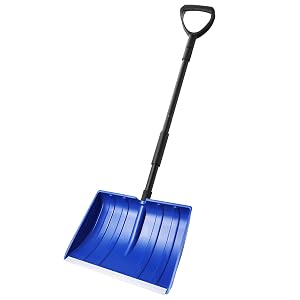
- Blade Width: 16-inch capacity head
- Shaft Length: Adjustable 48 to 55 inches
- Shaft Material: Heavy-duty iron poles
- Storage Style: Detachable modular frame
The Yocada 55-Inch Snow Shovel offers height-customizable ergonomics through a three-piece locking iron shaft system. Extending up to 55 inches, this tool accommodates taller users who typically suffer from excessive stooping when operating standard-length shovels.
Featuring an aluminum wear edge on a 16-inch scoop, it cleans down to bare pavement easily. The quick-click button assembly allows fast breakdown into compact components, making it perfect for vehicle trunks, emergency kits, or space-constrained garages.
- Pros: Adjustable shaft length fits various user heights; strong iron construction; compact breakdown.
- Cons: Connecting joints can wobble if not snapped tightly; slightly narrower blade width.
8. Best Choice Products Wheeled Heavy-Duty Snow Pusher

- Blade Width: 36-inch galvanized steel plow
- Mobility: Dual rubber wheel axle
- Handle Adjustment: 33.5 to 51 inches height
- Blade Angle: Multi-position guide rail
For those seeking zero-lifting snow clearance, the Best Choice Products Wheeled Snow Pusher acts as a personal hand plow. Featuring a massive 36-inch galvanized steel blade supported by two rolling wheels, it transforms physical lifting into smooth pushing power.
The handle height adjusts from 33.5 to 51 inches while the blade angle can be pivoted to direct snow off to the sides. It is an exceptional ergonomic option for flat, paved driveways experiencing light to moderate snow accumulation.
- Pros: Complete elimination of snow lifting; massive 36-inch clearing path; adjustable blade angles.
- Cons: Ineffective on steep stairs or deep packed drifts; requires flat pavement for optimal wheel rolling.
How to Choose the Best Ergonomic Snow Shovel
Clearing snow during harsh winter months is one of the most physically demanding household tasks. Standard traditional shovels force users into mechanical positions that place dangerous torque on the lumbar spine, leading to muscle strains, joint fatigue, and back injuries. Selecting an ergonomic snow shovel requires understanding how design variations alter leverage, biomechanics, and operational efficiency based on your physical needs and local climate conditions.
Understanding Ergonomic Design Principles
The main objective of an ergonomic shovel is to minimize biomechanical stress on your body. When shoveling, two primary actions cause injury: bending forward at the waist to scoop snow and twisting the spine to throw it. Ergonomic tools alter these movement patterns through modified shaft geometry, dual-handle leverage systems, or rolling mechanics.
Curved Shafts vs. Dual-Handle Lever Systems
Curved shaft shovels feature a permanent bend along the pole length. This curvature raises the hand positioning relative to the scoop, allowing you to lift snow while keeping your spinal column aligned straight. In contrast, dual-handle shovels incorporate a secondary handle halfway down the main shaft. This secondary grip acts as a fulcrum, allowing your upper body to do the lifting work rather than your lower back muscles.
| Ergonomic Feature | Primary Mechanism | Best Application | User Benefit |
|---|---|---|---|
| Curved Shaft | Raises hand grip elevation | General scooping and throwing | Prevents lower back bending |
| Secondary Assist Handle | Acts as a lifting fulcrum | Deep heavy snowfall | Reduces lifting effort up to 30% |
| Adjustable Telescoping Shaft | Customizes tool length to height | Multi-user households | Optimizes posture for tall/short users |
| Wheeled Plow Mechanics | Converts lifting into rolling force | Flat driveways and sidewalks | Completely eliminates lifting motion |
Blade Size, Shape, and Material Selection
The shovel blade directly dictates how much weight you move per scoop and what surfaces you can clear safely. Matching blade characteristics to your typical snow conditions is vital for both ergonomic comfort and tool durability.
Polyethylene vs. Aluminum vs. Steel Blades
- Polyethylene (Plastic): Extremely lightweight, flexible, and rust-proof. Non-stick properties make plastic ideal for wet snow, but it can wear down when scraped over rough concrete surfaces continuously.
- Aluminum Alloy: Offers an exceptional strength-to-weight ratio. Aluminum blades easily cut through icy snow crusts without adding excessive weight to your lifting load.
- Galvanized Steel: Heavy-duty and highly rigid. Steel is featured mostly on wide pushing plows or wheeled units where durability takes priority over tool weight.
Understanding Blade Functions: Shovels vs. Pushers
Blade depth determines function. A shallow, wide blade (24 to 36 inches) is engineered for pushing snow out of the way like a plow, which is highly ergonomic because it avoids lifting altogether. A deeper, narrower blade (14 to 18 inches) is designed for scooping and throwing heavy drifts. Combination blades offer a moderate curve that allows both pushing light snow and scooping deeper piles.
Shaft Ergonomics and Material Considerations
Shaft construction influences overall tool weight, durability, and shock absorption. Since you hold the shaft for extended periods, selecting the right material keeps physical fatigue low.
Material Properties Comparison
- Fiberglass: Provides excellent flex, high durability, and strong dampening against hard impacts. It stays relatively warm to the touch in freezing weather.
- Aluminum: Unmatched for ultra-lightweight performance. High quality aluminum shafts reduce overall lifting weight, though they conduct cold faster without protective foam coatings.
- Steel: Delivers maximum structural strength for heavy-duty applications, but adds weight that can accelerate arm fatigue over extended sessions.
Key Ergonomic Features to Evaluate Before Purchase
Before purchasing your snow clearing tool, inspect key details that directly affect user comfort and biomechanics:
1. Grip Geometry and Size
Ensure the shovel features an oversized D-grip handle. Compact grips restrict hand space, forcing tight clenching that causes hand cramping when wearing thick winter gloves or mittens.
2. Blade Wear Strips
Check the leading edge of the blade. A steel or aluminum wear strip protects the main scoop from cracking when hitting hidden asphalt bumps or curb edges. However, if you clear decorative wooden decks, opt for nylon or poly wear edges to prevent surface gouging.
3. Tool Weight Balance
A heavy shovel causes fatigue long before you finish your driveway. Aim for shovels weighing between 3.5 lbs and 5 lbs for manual scooping tools, reserving heavier 10+ lb units exclusively for wheeled pushing systems.
Step-by-Step Guide to Matching a Shovel to Your Environment
- Assess Your Local Snowfall Patterns: Frequent light powdery snow favors wide, lightweight pushers (24 inches or wider). Heavy wet snow or ice requires a narrow combination shovel (18 inches) with metal reinforcement.
- Evaluate Property Terrain: Flat, wide concrete surfaces work exceptionally well with wheeled snow plows. Stairs, gravel paths, and elevated wooden decks require manual curved-shaft shovels with protective nylon edges.
- Account for Personal Physical Needs: Users with pre-existing lower back pain should prioritize spring-assisted dual-handle shovels or rolling plows to minimize spinal torsion completely.