Best Ice Fishing Lines For Tip Ups of 2026
Ice fishing with a tip-up is a classic and highly effective way to target a variety of species, from walleye to northern pike. The best lines for tip-ups are designed with specific properties—like a larger diameter and low memory—to ensure smooth flag releases and reliable hand-to-hand combat with a trophy fish. This article will help you choose the ideal line to make your tip-up a successful tool on the ice.
1. HERCULES Super Tough Braided Fishing Line

- Material: UHMWPE (Ultra-High Molecular Weight Polyethylene)
- Strand Count: Available in 4-strand and 8-strand braids
- Available Tests: 4lb to 160lb test
- Length: Comes in 150, 300, 500, and 1000-yard spools
The HERCULES Super Tough Braided Fishing Line is a versatile and durable option that can be used for a wide range of fishing applications, including tip-up fishing. Its key strength is its incredible toughness and abrasion resistance. Made from UHMWPE fibers, this line is designed to stand up to the rigors of fishing around structures, and it’s more than capable of withstanding the friction from a freezing ice hole.
This braided line is known for being round, smooth, and tightly woven, which helps to prevent tangles and coils. This is particularly important for tip-ups, as a coiled line can cause the flag to trip prematurely or can prevent a fish from taking the bait. The line’s exceptional knot strength ensures that your knots will hold up to the pressure of a hard-fighting fish.
- Pros: Excellent abrasion resistance, high knot strength
- Cons: Not specifically designed for ice fishing
2. Beyond Braid Braided Fishing Line

- Material: PE fibers with a fluoropolymer coating
- Strand Count: Available in 4-strand and 8-strand braids
- Key Features: No stretch, low memory, and high abrasion resistance
- Color Options: Blue Camo, Moss Camo, White, Green, Pink, and Blue
Beyond Braid is a super-strong, abrasion-resistant line that is an excellent choice for tip-up fishing. Its key feature is the smooth fluoropolymer coating, which helps it resist water absorption and allows it to slide through the ice hole with minimal friction. The line’s no-stretch properties are perfect for tip-up applications, giving you instant feedback and a solid hookset when a fish takes the bait.
The 8-strand braided option provides a thinner, smoother, and rounder profile compared to 4-strand lines. This makes it easier to handle with cold hands and allows for a more natural feel. The wide range of available colors also allows you to choose a high-visibility option, which is a great advantage for seeing the line on the snow and ice.
- Pros: Fluoropolymer coating resists ice build-up, no stretch for excellent sensitivity
- Cons: Can be pricey compared to other braids
3. Sufix Performance Tip Up Ice Braid Line

- Material: Braided line with HTP and Hydro Fusion Process
- Line Type: Tip-up specific ice braid
- Features: Low stretch, low memory, and exceptional cold-weather handling
- Size: 20-pound test, 50-yard spool
The Sufix Performance Tip Up Ice Braid is a specialized line designed from the ground up to meet the unique needs of tip-up fishing. The HTP (High Tenacity Process) provides exceptional abrasion resistance and durability, which is essential for withstanding the friction from the sharp edges of an ice hole. This line is specifically formulated to perform in freezing temperatures, ensuring it stays supple and manageable even in the coldest conditions.
A key feature of this line is the Hydro Fusion Process, which gives the braid a faster sinking speed and ensures it doesn’t absorb water like standard braids. This helps to prevent ice from building up on the line and keeps the spool from freezing, so the flag can trip smoothly and without issue. The line’s black color provides excellent visibility against the snow and ice, making it easy to see when a fish is running.
- Pros: Specifically designed for tip-ups, resists freezing and water absorption
- Cons: Limited size options
4. Mason Tip-Up Ice Fishing Line

- Material: Braided Nylon
- Line Type: Tip-up specific braided line
- Features: High strength, durable, and reliable
- Size and Color: 30lb test, 50 yards, Green
Mason Tip-Up Ice Fishing Line is a traditional braided nylon line that has been a staple for ice anglers for years. Its durability and reliability are what make it a classic choice. This line is designed to be strong and tough, and its braided nylon material provides excellent knot strength. The line’s green color is highly visible against a snowy backdrop, making it easy to see the line’s position as it goes down the hole and when a fish takes it. For anglers who prefer a simpler, time-tested solution, this line is a solid choice.
The line’s braided nylon construction gives it a decent amount of stretch, which can be beneficial when fighting a large fish. The stretch acts as a shock absorber, helping to prevent the hook from tearing out of the fish’s mouth. While it may not have the fast-sinking properties of a coated line, its strength and durability make it a dependable option for general tip-up fishing.
- Pros: Durable and reliable, excellent knot strength, highly visible green color
- Cons: Not coated, so it may absorb water and freeze, more stretch than modern braids
5. Reaction Tackle Ice Fishing Braided Line

- Material: PE fibers
- Strand Count: X8 (8 tightly woven strands)
- Key Features: Zero memory, low water absorption, and high abrasion resistance
- Length: 150-yard spools
Reaction Tackle’s Ice Fishing Braided Line is specifically engineered to handle the harsh conditions of ice fishing. Its X8 strand construction gives it a thinner, smoother profile and a much rounder shape, which provides a more natural feel in your hands. This is a significant advantage when you’re manually pulling in a fish. The line is designed with low water absorption, which helps to minimize ice buildup on your reel and in the ice hole, ensuring a smooth and uninterrupted fishing experience.
This line is built with an emphasis on durability and strength. Its abrasion resistance is a key factor, as it can withstand the constant rubbing against the sharp ice edges. The no-stretch property of the line provides a direct connection to the fish, allowing for powerful and instantaneous hooksets. With a 150-yard spool, you have plenty of line capacity to handle long runs from a trophy-sized fish. The camo color option, which changes color every 10 feet, provides a visible indicator of depth.
- Pros: Specifically designed for ice fishing, resists ice build-up, zero memory
- Cons: A more expensive option
6. Beaver Dam Tip-Up Line
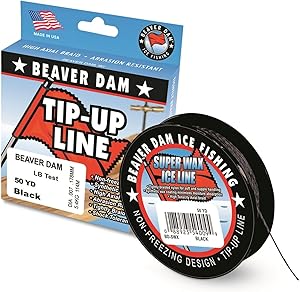
- Material: Waxed braided line
- Line Type: Tip-up specific line
- Features: Wax coating to resist freezing and absorb water
- Size and Color: 30lb test, 50 yards, Black
The Beaver Dam Tip-Up Line is a classic, go-to option that is a perfect match for the iconic Beaver Dam tip-up. This is a waxed braided line, which is designed to resist water absorption and freezing. The wax coating gives the line a slick, smooth feel, allowing it to easily slip through the water and the ice hole without getting caught up. The line’s black color is highly visible against the snow, which is a significant advantage for seeing when a flag trips and when a fish is running with the bait.
This line is a great option for those who want a simple and effective solution. While it may not have all the high-tech features of modern super braids, its purpose-built design makes it incredibly effective. The 30lb test is a good all-around choice for a variety of species, from walleye to smaller pike. The 50-yard spool size is more than enough for most shallow to mid-depth ice fishing applications.
- Pros: Waxed coating prevents freezing, highly visible black color
- Cons: Smaller spool size, may not be strong enough for trophy-sized pike
7. Reaction Tackle Ice Monofilament Fishing Line

- Material: High-strength nylon monofilament
- Line Type: Ice monofilament
- Key Features: Low memory, high abrasion resistance, and freezing-resistant technology
- Length: 1000-yard spool
The Reaction Tackle Ice Monofilament Fishing Line is a unique and high-performance option for tip-up fishing, offering a different set of advantages compared to braided lines. This line is specifically engineered to handle the frigid temperatures of ice fishing, with cutting-edge technology that minimizes ice formation on the line and equipment. Its high-strength nylon material is durable and provides excellent abrasion resistance, which is essential for withstanding the friction from the ice hole.
Unlike braided lines, this monofilament has a bit of stretch, which can act as a shock absorber during a fight and help prevent the hook from tearing out of a fish’s mouth. It is available in a nearly invisible clear color, which is a great advantage in clear water where fish can be line-shy. It also comes in a variety of high-visibility colors like green, orange, and pink, which can be useful for seeing your line against the snow. With a massive 1000-yard spool, you have more than enough line for multiple tip-ups.
- Pros: Resists freezing and ice build-up, very high abrasion resistance
- Cons: Not as sensitive as braided lines due to its stretch
How to Choose Ice Fishing Lines For Tip Ups
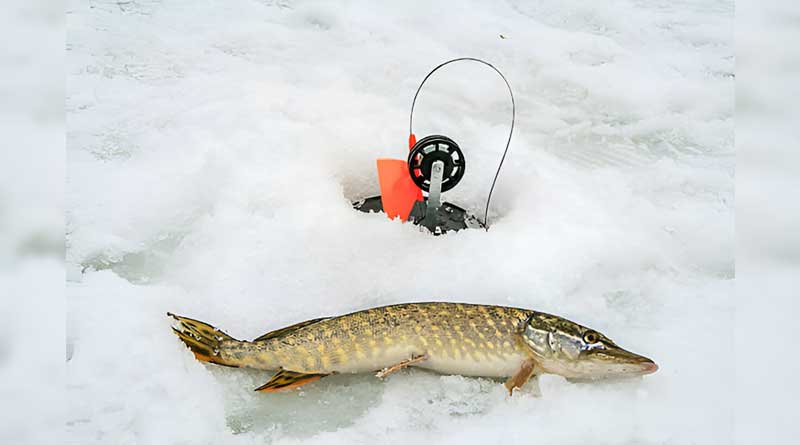
Fishing with a tip-up is a time-honored tradition and one of the most effective methods for covering large areas and targeting large, solitary predators like pike, walleye, and lake trout. The tip-up’s hands-free design allows anglers to fish multiple holes at once, increasing their chances of a bite. However, the line you spool on a tip-up is very different from the line you use on a rod and reel. It must be strong enough to withstand the initial run of a powerful fish, durable enough to resist abrasion from the ice, and manageable enough to handle bare-handed in freezing conditions. A standard line simply won’t work. This comprehensive guide will walk you through the essential line types, crucial factors to consider, and specific recommendations to help you choose the best line for your tip-up and land that trophy fish.
Understanding Line Types
When choosing a line for a tip-up, you’ll primarily be deciding between two main types: braided line and special tip-up line. Each has distinct properties that make them suitable for different applications.
Braided Line
Braided line is the most common choice for tip-up fishing, and for good reason. It is made of multiple woven synthetic fibers, giving it incredible strength with a very thin diameter. This allows you to spool a massive amount of line on your tip-up, which is essential for letting a big fish run. The most significant advantage of braid for tip-up fishing is its zero stretch. This provides an immediate and powerful hookset when you pick up the line. However, braid has one major drawback: it absorbs water and can freeze into a solid, tangled block on your spool. To combat this, many manufacturers now offer specially coated braids designed to resist ice buildup. Despite this, a common strategy is to use a braided main line with a monofilament or fluorocarbon leader to prevent the line from freezing in the ice hole.
Specialized Tip-Up Line
Specialized tip-up line is a hybrid line designed specifically for the unique demands of tip-up fishing. It is typically a waxed or coated braided line or a strong monofilament-based line. These lines are engineered to resist coiling, have low memory, and, most importantly, shed water and resist freezing. Unlike standard braid, these lines are often thicker and are designed to be easily handled with gloves on. While they may not have the same incredible strength-to-diameter ratio as traditional braid, their manageability and resistance to freezing make them an excellent choice for cold-weather conditions. They are also often brightly colored to be easily visible against the snow.
Key Factors to Consider
Beyond the line type, several other factors are critical when selecting the perfect line for your tip-up.
Pound Test and Strength
The line on your tip-up needs to be strong enough to handle a big fish without breaking. For species like walleye, a 30-40 lb test line is a good starting point. For larger, more powerful fish like northern pike or lake trout, a 50-80 lb test line is a much safer bet. The high-pound test is not just for the fish’s strength but also for the line’s durability against the sharp edges of the ice hole. A thick, strong line is less likely to fray or snap under pressure. Remember, you’re not using a flexible rod to absorb shock, so the line must be able to handle the entire force of the fish’s run.
Line Diameter and Capacity
A thinner line allows you to spool more line on your tip-up, which is crucial for letting a big fish run without the risk of being spooled. This is where braided line has a clear advantage. However, a line that is too thin can be difficult to handle with bare hands and may cut into your skin. A good compromise is to use a braid in the 50-80 lb test range. While this may seem like overkill, the higher pound test often means a thicker, more manageable line that is still thinner than a monofilament of the same strength.
Abrasion Resistance
This is a critical factor for tip-up lines. The line is constantly rubbing against the edges of the ice hole, which can weaken and fray it. A line with high abrasion resistance is essential to prevent break-offs. While braid is not naturally abrasion-resistant, many specialized tip-up braids are treated to be more durable. A strong leader is the best defense against a fish’s sharp teeth and the ice’s rough edges. A steel, fluorocarbon, or heavy monofilament leader is non-negotiable for toothy predators like pike.
Line Memory and Manageability
Tip-up lines should have very low memory, meaning they do not retain a coiled shape after being stored. A line with high memory will spring off the spool, causing tangles and preventing the line from running freely. Low-memory lines, particularly those with a waxed or coated finish, lay flat and are much easier to handle, especially when you need to quickly grab the line and set the hook. This also helps with flag sensitivity, as a smooth-feeding line allows the flag to trip with less resistance.
Recommendations for Different Scenarios
The best line setup for your tip-up depends on your target species and personal preferences.
For Walleye and Panfish
For smaller fish like walleye and crappie, a 30-40 lb test coated braided line is a fantastic choice. It provides the strength to handle a decent-sized fish while resisting freezing. Paired with a 15-20 lb test fluorocarbon leader, this setup offers a perfect balance of strength and invisibility. The fluorocarbon leader is a great choice for these species as they can be more line-shy than pike.
For Pike and Lake Trout
For these powerful predators, a 50-80 lb test heavy-duty braided line is the way to go. The increased strength is essential for fighting large fish. A steel or titanium leader is an absolute must to prevent break-offs from their teeth. This setup is a classic for a reason—it is reliable, strong, and gives you the best chance of landing a big pike.
For All-Around Versatility
If you want a line that can work for a variety of species, a 50 lb test specialized tip-up line is an excellent choice. Its wax coating and low memory make it easy to manage in cold weather. It’s strong enough for most pike and lake trout but still manageable for walleye and other fish. Just be sure to change your leader depending on the target species—a steel leader for pike and a fluorocarbon leader for more line-shy fish.
Final Thoughts
Choosing the best ice fishing line for tip-ups is about prioritizing strength, durability, and manageability in cold conditions. By understanding the properties of braided and specialized tip-up lines and by considering factors like pound test and abrasion resistance, you can put together a reliable setup that will help you land that next trophy fish. Remember, no matter which line you choose, a good leader is non-negotiable for toothy species. With the right line on your tip-up, you’ll be well-equipped for a fun and successful day on the ice. Tight lines!