Best Budget Ice Fishing Sonar of 2025
Navigating the frozen expanse for that elusive catch demands the right tools, and for ice anglers, a reliable sonar is paramount. While premium models boast a myriad of advanced features, you don’t need to break the bank to gain a significant advantage on the ice. This article delves into the best budget-friendly ice fishing sonars that offer impressive performance without compromising your wallet. We understand that maximizing your fishing success requires knowing what lies beneath, even on a tight budget.
1. LUCKY Portable Wireless Sonar Fish Finder
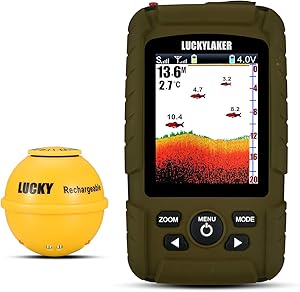
- Waterproof Rating: Floats on water, resistant to splashes and rain.
- Wireless Range: Up to 656 ft (200m) operation, 147 ft (45m) depth detection.
- Sonar Frequency: 125KHz with a 90-degree beam angle.
- Battery Life: 5-6 hours continuous, up to 10+ hours with battery save mode.
The LUCKY Portable Wireless Sonar Fish Finder stands out for its impressive portability and wireless functionality, making it an excellent choice for budget-conscious ice anglers who value flexibility. This device eliminates the need for cumbersome cables, allowing you to cast the lightweight sonar ball up to 656 feet away and detect depths of up to 147 feet – a significant range for most ice fishing scenarios. Its waterproof design ensures durability against splashes, rain, and even accidental drops, as it’s designed to float, providing peace of mind during chilly expeditions.
Beyond its core sonar capabilities, the LUCKY fish finder boasts thoughtful features such as an attractive lamp on the transducer for night fishing visibility and an adjustable display area for more accurate data focus. It’s incredibly versatile, suitable not only for ice fishing but also for kayak, boat, and bank fishing, making it a year-round tool. With a continuous working time of 5-6 hours, extendable to over 10 hours in battery-save mode, it provides ample power for extended outings. This model offers a solid balance of features, convenience, and affordability, proving that effective fishfinding doesn’t require a premium price tag, especially for those seeking a castable, wireless solution.
- Pros:
- Excellent wireless range and depth.
- Waterproof and floatable design.
- Comprehensive data display.
- Cons:
- Screen size might be small for some users.
- Requires casting the transducer.
2. Garmin Striker 4 with Transducer (3.5″ GPS Chirp)

- Display Size: 3.5 inches diagonal (4.9 x 7.3 cm).
- Sonar Technology: CHIRP Traditional and ClearVü scanning sonar.
- Maximum Depth: 1,600 ft freshwater, 750 ft saltwater.
- Water Rating: IPX7 (submersible up to 1 meter for 30 minutes).
The Garmin Striker 4 stands as a testament to Garmin’s ability to pack powerful features into an incredibly affordable package, making it a perennial favorite among budget-conscious anglers, particularly for ice fishing. Its 3.5-inch display, while compact, offers crisp and clear readings, especially beneficial with its advanced CHIRP sonar technology. CHIRP sends a continuous sweep of frequencies, delivering superior target separation and clearer fish arches compared to traditional sonar, which is crucial for distinguishing fish from structure, or even individual fish within a school, beneath the ice. The inclusion of ClearVü scanning sonar provides near-photographic images of what’s below.
What truly elevates the Striker 4 beyond a simple fish finder is its built-in GPS. This feature allows you to mark waypoints for your hottest fishing spots, making it easy to return to them on future trips. For ice fishing, this means accurately relocating productive holes season after season. Furthermore, the dedicated flasher mode is a game-changer for vertical jigging and ice fishing, providing real-time sonar data in a familiar, easy-to-interpret circular display, showing jig and fish movements instantly. Its rugged, IPX7 waterproof construction ensures reliability in harsh winter conditions.
- Pros:
- Advanced CHIRP sonar for clarity.
- Built-in GPS for waypoint marking.
- Dedicated flasher mode for ice fishing.
- Cons:
- Small display size.
- Wired transducer setup.
3. LUCKY Portable Wired Fish Finder (TFT Color LCD)

- Display: 2.4-inch TFT color LCD screen.
- Wired Range/Depth: 26 ft operating distance, 328 ft (100m) depth detection.
- Beam Angle: 45 degrees with 200KHz frequency.
- Battery Life: Approximately 5 hours continuous after full charge.
The LUCKY Portable Wired Fish Finder offers a reliable and colorful solution for anglers seeking a clear understanding of the underwater world without a hefty investment. Its standout feature is the updated 2.4-inch TFT color LCD screen, which provides a significantly clearer and more vibrant display compared to older monochrome models. This allows for easier interpretation of underwater contours, water depth, temperature, and fish size (big/middle/small), even in varying light conditions, thanks to adjustable screen brightness. The device operates with a wired transducer.
Designed for versatility, this handheld unit is equally adept at ice fishing, river fishing, sea fishing, and kayak fishing. It’s rechargeable via a convenient USB cable, offering about 5 hours of continuous use on a full charge, which is adequate for most short to medium-length fishing trips. The user-friendly interface allows for customization of various settings, including sensitivity, depth range, zoom, and alarms (depth and fish), enabling you to fine-tune the display to your specific fishing environment and preferences.
- Pros:
- Clear and vibrant TFT color LCD display.
- Reliable wired connection for consistent readings.
- Customizable settings for optimized viewing.
- Cons:
- Wired transducer can be less convenient for casting.
- Shorter battery life compared to some wireless models.
4. Venterior Portable Wireless Sonar Fish Finder

- Display: Color TFT LCD with two selectable backgrounds (black/white).
- Sonar Beam Angle: 105 degrees.
- Depth Range: 2.6-164 ft (0.8-50 m).
- Wireless Range: 262 ft (80 m) maximum distance between sensor and screen.
The Venterior Portable Wireless Sonar Fish Finder offers a compelling package for anglers seeking the convenience of wireless operation without a high price tag. Its castable design is a major advantage, eliminating the tangles and bulk of long cables – simply tether the sensor to your line and cast it out. The unit boasts a clear color TFT LCD display, a significant upgrade from monochrome screens, and even offers two screen background colors (black and white) to ensure optimal readability whether you’re fishing in bright sunlight or at night.
This fish finder excels at providing essential underwater data, displaying water depth, temperature, fish size (small/medium/big), fish depth, and detailed bottom contour. With a wide 105-degree sonar beam angle, it covers a substantial area beneath the surface, enhancing your chances of locating fish and structure. The device includes both a Work mode for real-time fishing and a Simulation mode for practicing with its functions. Rechargeable, it prioritizes ease of use and portability, making it an excellent companion for spontaneous fishing trips.
- Pros:
- Wireless and castable for freedom of movement.
- Clear color TFT LCD display with background options.
- Wide 105-degree sonar beam angle.
- Cons:
- Sensor battery status only accurate when in water.
- Max depth of 164 ft might be limiting for deep lakes.
5. LUCKY FFC1108 Portable Handheld Fish Finder

- Depth Detection: 3 ft (1m) to 328 ft (100m).
- Display: Monochrome LCD with backlight.
- Sensitivity: 5 adjustable levels.
- Battery Life: 4-5 hours continuous, longer with battery save mode.
The LUCKY FFC1108 Portable Handheld Fish Finder is an excellent entry-level option for anglers seeking straightforward and effective sonar capabilities on a budget. Designed to be compact and handheld, it’s incredibly convenient for those who prefer to keep their gear minimal, particularly for ice fishing or kayak adventures. A practical neck strap is included, freeing up your hands when needed. This device excels at its primary function: displaying approximate fish locations, water depth, and crucial bottom structure details like short & tall weeds, sand, and rocks.
Operating effectively in depths from 3 to 328 feet, the FFC1108 ensures good coverage for most freshwater and inshore saltwater scenarios. The monochrome LCD screen, while not as vibrant as color displays, is clear and features a backlight, making it readable in bright sunshine or low-light conditions. With 5 levels of sensitivity adjustment, you can fine-tune the sonar to perform optimally in various water conditions, from clear to turbid. It also features helpful fish and fish school alarms, alerting you to activity without constant screen monitoring.
- Pros:
- Highly portable and handheld design.
- Displays bottom structure (weeds, sand, rocks).
- Adjustable sensitivity for varied water conditions.
- Cons:
- Monochrome display.
- Wired transducer connection.
6. Garmin Striker Cast (Smartphone Integration)

- Wireless Range: Up to 200 ft (61m) streaming distance.
- Sonar Modes: Traditional 2-D and Ice Fishing Flasher.
- App Compatibility: Free STRIKER Cast app (Apple or Android).
- Battery Life: 10+ hours (internal USB-rechargeable battery).
The Garmin Striker Cast offers a modern, highly portable solution for budget-conscious ice anglers who prefer to leverage their smartphone or tablet as the primary display. This compact, castable sonar device pairs effortlessly with the free STRIKER Cast app, transforming your mobile device into a feature-rich fish finder. Setup is incredibly quick, allowing you to go from unboxing to fishing in just minutes, a significant advantage when time on the ice is precious. It wirelessly streams sonar data up to 200 feet away, providing clear traditional 2-D sonar views and, crucially for ice fishing, a dedicated flasher mode.
What sets the Striker Cast apart is its versatility across various water depths and its integration with the Garmin Quickdraw Community. This feature allows you to download or even create maps with up to 1-foot contours, offering invaluable insight into underwater topography that can highlight potential fish-holding structures. Its smart power management system is also a highlight, conserving battery life by powering on automatically when it floats in water and turning off when removed, contributing to its impressive 10+ hours of battery life on a single USB charge.
- Pros:
- Utilizes smartphone/tablet as a display.
- Traditional 2-D and ice fishing flasher modes.
- Quickdraw Community for contour mapping.
- Cons:
- Relies on mobile device, draining phone battery.
- Potential for connectivity issues in extreme cold.
7. Deeper PRO+ 2 GPS Castable Sonar

- Sonar Beams: Wide, Mid, and Narrow (47°, 20°, 7°).
- Depth/Casting Range: Up to 330 ft (100m) depth and casting range.
- Target Separation: 0.4 in (narrow), 1 in (wide/mid).
- Connectivity: Wi-Fi enabled, integrated GPS.
The Deeper PRO+ 2 Sonar is a powerhouse in the castable fish finder category, bringing advanced features typically found in much more expensive units to a budget-friendly price point for serious ice anglers. Its ability to switch between wide, mid, and narrow sonar beams (47°, 20°, 7° respectively) provides incredible versatility. A wide beam allows for quick area scanning, while the narrow beam offers pinpoint accuracy, perfect for drilling down on specific targets or tracking a tiny jig during vertical ice fishing. This precision is further enhanced by its exceptional target separation of just 0.4 inches on the narrow beam.
With an impressive accuracy up to 330 feet and robust Wi-Fi connectivity for a stable connection to your mobile device, the PRO+ 2 ensures reliable data streaming even at longer distances. A game-changing feature for ice anglers is the built-in GPS, which allows you to create highly detailed bathymetric maps directly from the ice. You can mark your holes, log depths, and save all your maps to the intuitive Fish Deeper app, helping you build a comprehensive understanding of your favorite fishing spots. Its sleek, lightweight, and wireless design makes it an effortless addition to any tackle box.
- Pros:
- Multiple beam angles for versatile scanning.
- Exceptional target separation for detailed views.
- Integrated GPS for creating detailed maps.
- Cons:
- Relies on smartphone display and battery.
- Higher price point than some basic budget options.
How to Choose Budget Ice Fishing Sonar
Ice fishing presents a unique challenge for anglers: what lies beneath the frozen surface is often a mystery. This is where a quality ice fishing sonar becomes an indispensable tool. A good sonar not only helps you locate fish but also reveals critical information about water depth, bottom contours, and submerged structures, significantly increasing your chances of success. However, advanced sonar units can come with hefty price tags.
The good news is that technological advancements have made highly capable and reliable cheap ice fishing sonars more accessible than ever before. Choosing the “best” budget option isn’t just about finding the cheapest device; it’s about identifying a sonar that offers the most crucial features and performance for your specific needs without overspending. This guide will walk you through the essential factors to consider when selecting an affordable ice fishing sonar, ensuring you make an informed decision that enhances your time on the ice.
Understanding the Basics: Why Sonar Matters for Ice Fishing
Sonar (Sound Navigation and Ranging) technology works by sending sound waves into the water and interpreting the echoes that bounce back. These echoes create an image of the underwater environment on your screen. For ice fishing, this means you can see fish, bait, and your lure in real-time. This capability is revolutionary compared to blind fishing, allowing you to observe how fish react to your presentation and adjust your technique accordingly. An affordable sonar might not have all the bells and whistles of a top-tier unit, but even basic models can provide critical depth readings, fish presence, and sometimes even a hint of bottom structure, giving you a distinct advantage over anglers fishing without one.
Key Features to Consider
Display Type: Flasher vs. Graph vs. Smartphone
The display is your window to the underwater world, and cheapest sonars typically come in a few key types:
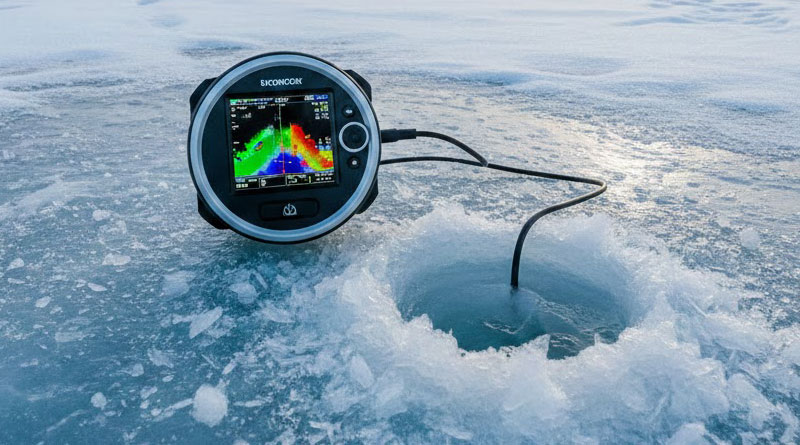
- Flasher Sonar: This is the traditional choice for ice fishing. Flashers display sonar returns as colored segments on a circular dial, with different colors indicating signal strength. They provide real-time, instantaneous feedback, which is crucial for tracking your jig and fish movement. Flashers are often highly durable and perform exceptionally well in cold temperatures. They are excellent for vertical jigging as they show what’s happening beneath your hole in the exact moment.
- Graph Sonar (LCD Screen): Modern budget sonars often feature an LCD screen that displays sonar history scrolling from right to left, similar to what you’d see on open-water boats. These screens can show more detailed information like bottom contours, fish arches, and even water temperature. While some budget graphs can have a slight lag compared to flashers, many now include a dedicated “flasher mode” to combine the best of both worlds. Color LCDs are becoming standard even at lower price points, offering better clarity and differentiation of targets.
- Smartphone Sonar (Castable): A growing trend, castable sonars connect wirelessly to your smartphone or tablet via an app. Your mobile device becomes the display. These are incredibly portable and leverage the high-resolution screens you already own. Many offer both traditional 2D and flasher modes. The main downsides can be smartphone battery drain in the cold and potential connectivity issues.
Transducer Type & Beam Angle
The transducer is the heart of your sonar, sending and receiving the sound waves. For ice fishing, portability and beam angle are key:
- Wired Transducers: These are common on many budget units. They are typically placed in the ice hole, often floating or suspended. They offer reliable, consistent connections.
- Wireless/Castable Transducers: As seen with smartphone sonars, these small, floating transducers can be dropped into a hole or even cast out. They offer great flexibility but rely on wireless signals (Wi-Fi or Bluetooth).
- Beam Angle: This determines the cone of sonar coverage. A narrower beam (e.g., 9-20 degrees) provides more detail directly below, ideal for deep water and precise jigging. A wider beam (e.g., 45-60 degrees or more) covers a larger area, good for shallower water or quickly finding fish, but with less detail. Some budget units offer dual-beam transducers for versatility.
Power (Watts) & Frequency
These specifications influence depth penetration and target separation:
- Power (RMS Watts): Higher RMS wattage generally means greater depth capability and better performance in noisy water. For budget units, anything over 100 watts RMS is usually sufficient for most ice fishing depths.
- Frequency (kHz):
- Higher Frequencies (e.g., 200 kHz): Provide better detail and target separation in shallower water, excellent for seeing small jigs and fish.
- Lower Frequencies (e.g., 50 kHz): Penetrate deeper water but offer less detail. Many budget units use 200 kHz or 125 kHz, which are ideal for the typical depths encountered in ice fishing.
Portability & Durability
Ice fishing demands gear that can withstand harsh winter conditions and be easily transported:
- Size and Weight: Look for compact, lightweight units that are easy to carry across the ice, especially if you move holes frequently.
- Battery Life: Crucial for cold weather. Cold drains batteries faster. Seek units with long battery life (5+ hours) or readily available replacement batteries. Many budget units use standard AA batteries or small rechargeable lithium-ion packs.
- Waterproof Rating: An IPX7 rating (submersible for 30 minutes at 1 meter) or better is highly recommended to protect against snow, slush, and accidental dips in the hole.
GPS & Mapping (Bonus Feature)
While often found on higher-end models, some inexpensive sonars now include basic GPS functionalities:
- Waypoint Marking: Essential for marking productive fishing spots, brush piles, or hazards. This is invaluable for returning to hot spots season after season.
- Basic Mapping: Some units can display a simple map of your waypoints. More advanced (and typically more expensive) units can even create custom contour maps.
Additional Features to Look For
- Zoom: Allows you to magnify a specific depth range, providing a more detailed view of your lure and fish interactions.
- Sensitivity Adjustment: Lets you fine-tune the sonar to eliminate clutter or pick up fainter signals.
- Fish ID Icons: While not always perfectly accurate, these can simplify identifying potential fish for beginners.
- Temperature Sensor: Knowing water temperature can be a key factor in locating fish.
- Alarms: Fish alarms, depth alarms, and battery alarms add convenience.
Budget-Friendly Strategies for Ice Anglers
When shopping for a cheaper ice fishing sonar, consider what kind of angler you are. If you’re a casual weekend warrior, a simple flasher or a basic handheld graph might be all you need. If you’re more serious but still on a budget, look for units that prioritize excellent sonar performance (like CHIRP or good target separation) over fancy mapping features. Smartphone sonars can be a great middle ground, leveraging your existing tech to save costs. Always read reviews specific to ice fishing performance, as some units designed for open water may struggle in cold conditions or with real-time flasher displays.