Best Dog Seat Belts in the UK 2025
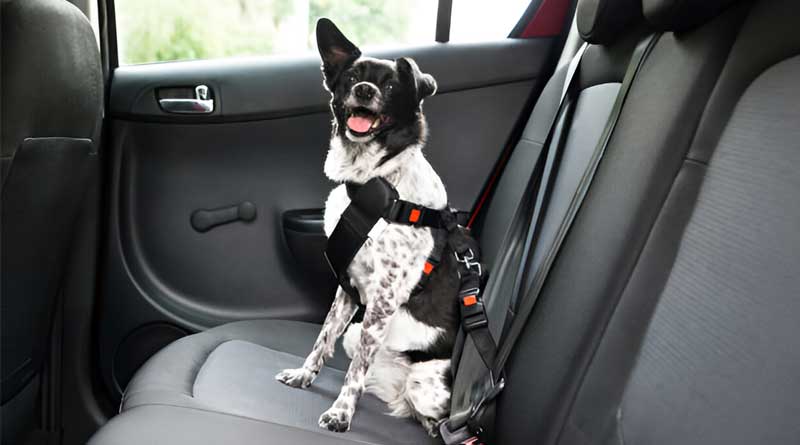
Keeping your dog safe in the car is very important. A good dog seat belt can protect your pet in a crash. It also stops your dog from moving around and distracting the driver. In the UK, there are many dog seat belts to choose from. Some clip into your car’s seatbelt socket. Others attach to your dog’s harness. The best ones are strong, safe, and easy to use. They should fit your dog well and feel comfortable. In this guide, we look at the best dog seat belts in the UK. We compare their features and help you choose the right one for your dog’s safety and comfort.
1. SOL 2pk Seatbelt

-
Adjustable length up to 70cm (27.5 inches)
-
Made from durable, woven black nylon
-
Metal trigger hook for easy harness attachment
-
Comes as a pack of two seat belts
The SOL 2pk Dog Car Seat Belts offer a practical and affordable solution for keeping dogs safe during car journeys. With an adjustable length of up to 70cm, they can fit dogs of all breeds and sizes, from small Jack Russells to large Great Danes. The belts clip easily into standard seatbelt sockets and attach securely to your dog’s harness using a metal trigger hook. This design is simple and user-friendly, making it easy to strap your dog in and out of the car, even for those with limited hand mobility.
Made from tough woven nylon, these seat belts are built to withstand chewing and rough use, offering lasting reliability. The material is strong enough to keep your pet secure while still being comfortable for long rides. Their secure yet flexible setup gives your dog just enough freedom to lie down or adjust position. The inclusion of two belts in one pack is excellent value, ideal for multi-dog households or having one ready in a second vehicle. Whether for daily commutes or long trips, these seat belts provide peace of mind and convenience for dog owners who want both safety and comfort for their pets.
Pros:
- Adjustable to fit all dog sizes
- Strong and chew-resistant nylon
- Very easy to install and use
- Great value with two belts per pack
Cons:
- Not crash-tested for high-impact accidents
- Nylon strap may twist with active dogs
See the SOL 2pk Dog Car Seat Belts
2. THE ONE Belts for Cars
-
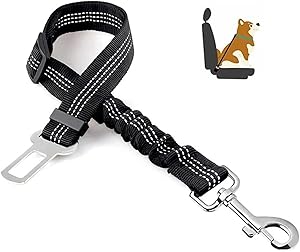
Adjustable length: 54cm to 74cm
-
Made of high-quality nylon with elastic bungee section
-
360° zinc alloy swivel snap to prevent tangling
-
Reflective stitching for low-light visibility
THE ONE Dog Seat Belt offers a dependable and well-thought-out solution for safe car travel with your pet. Built from strong nylon and featuring a bungee section, this belt absorbs shocks from sudden stops or sharp turns, making rides more comfortable and safe. The adjustable length (54–74cm) allows it to fit most dog sizes, from smaller breeds to larger ones, without compromising on safety. It attaches securely to your car’s seatbelt socket at one end and your dog’s harness at the other, ensuring minimal distractions while driving. The reflective stitching is a smart addition for evening or early-morning drives, providing added visibility.
One standout feature is the 360° swivel clip made of solid zinc alloy, which prevents the belt from twisting as your dog moves. This is especially useful for energetic dogs that like to change positions during trips. The elastic stretch adds comfort and safety by reducing the impact of braking, though some users may find the overall length a little short for larger dogs. While it’s easy to install and remove, it’s best used with a harness rather than a collar to avoid choking. Overall, THE ONE Dog Seat Belt is a solid, user-friendly option that balances safety, comfort, and affordability.
Pros:
- Durable and high-quality build
- Elastic bungee reduces impact from sudden stops
- Swivel snap prevents tangling
- Reflective stitching adds visibility
Cons:
- May be too short for large dogs
- Not ideal for use with a collar only
See the THE ONE Belts for Cars
3. PETZANA Dog Harness

-
Adjustable length with elastic bungee section
-
360° swivel snap for tangle-free movement
-
Attaches to headrest, not seatbelt socket
-
Made of heavy-duty nylon with reflective stitching
The PETZANA Dog Harness Seat Belt is a versatile and thoughtful solution for pet safety in the car. Designed to secure directly to your vehicle’s headrest, it offers an alternative to traditional seatbelt socket clips. The elastic bungee section helps soften sudden stops, reducing the shock to your dog during travel. Its 360° swivel snap lets your dog move freely—stand, sit, or lie down—without tangling the strap. This setup is ideal for dogs who fidget a lot during journeys. With reflective stitching for low-light use and a universal fit for most dog sizes, it combines both comfort and visibility for any time of day.
What sets the PETZANA apart is its dual function—you can use it as a leash when not in the car, or even attach it to a tree or stake when outdoors. It’s made from heavy-duty nylon and durable metal parts, offering decent wear resistance. However, the plastic adjuster may be a weak point for determined chewers, as some dogs have managed to chew through it. That said, when paired with a proper harness (not a collar), the belt performs reliably, keeping your dog secure without overly restricting their movement. It’s not crash-tested like some premium models, but for daily use and basic safety, it offers great peace of mind.
Pros:
- Can be used as both car restraint and leash
- 360° swivel prevents twisting
- Elastic section cushions sudden stops
- Reflective for night-time visibility
Cons:
- Plastic adjuster may be chewed easily
- Not crash-tested for severe impacts
4. Nasjac Dog Car Harness

-
Breathable mesh harness with soft edging for comfort
-
Adjustable nylon seatbelt strap (21″–30″) with elastic section
-
2-in-1 clip and carabiner for versatile attachment
-
Four-point adjustment with quick-fit buckle system
The Nasjac Dog Car Harness with Seat Belts offers a convenient all-in-one solution for keeping your dog safe and comfortable during travel. The harness itself is made from breathable mesh material with soft edging, making it suitable for both car journeys and everyday walks. It wraps securely around your dog’s body and neck, distributing pressure evenly and avoiding the risk of injury associated with collars. The harness connects to the car seatbelt via a strong nylon strap that features both a seatbelt clip and a carabiner, making it compatible with most vehicles. Its flexible design allows dogs to sit or lie comfortably without feeling restricted.
This setup is ideal for small to medium breeds, offering four adjustment points for a snug, secure fit. The included elastic seatbelt absorbs movement during sudden stops, helping to protect your pet from injury. One of the more thoughtful features is the dual rear clips—one can be used to secure your dog to the seat, while the other can hold a lead so it’s ready the moment you open the car door. It’s quick to put on and easy to adjust, and users have praised how comfortable it feels for dogs who normally squirm out of other harnesses. Whether for daily commutes or longer trips, this harness keeps dogs safe and calm.
Pros:
- Breathable and soft for everyday comfort
- 2-in-1 seatbelt clip fits most cars
- Doubles as walking harness
- Easy to adjust and quick to use
Cons:
- Not suitable for very large breeds
- No official crash-test certification
See the Nasjac Dog Car Harness
5. ZUBALITY MAIN Adjustable Safety Seat Belt

-
Adjustable length from 49cm to 75cm
-
Made of high-strength nylon with stainless steel hook and zinc alloy loop
-
Universal seatbelt clip fits most cars and vans
-
360° swivel clip for free movement and tangle prevention
The ZUBALITY MAIN Adjustable Safety Seat Belt is a simple yet highly effective way to keep your dog safe in the car. Built with sturdy, non-rusting stainless steel clips and durable nylon fabric, this seatbelt is made to last. It connects easily to your dog’s harness on one end and plugs into your car’s seatbelt socket on the other. The adjustable strap ranges from 49cm to 75cm, giving pets enough room to sit, lie down, or move slightly without risking safety. Its 360° swivel clip ensures the belt won’t tangle, even with a restless dog shifting around during the journey.
One of the most convenient features is its universal fit, working with most standard seatbelt buckles in cars and vans. This makes it a reliable choice for pet owners who travel often. The option to buy it in a two-pack is also helpful for multi-pet households or for use in multiple vehicles. It’s available in two color choices and installs quickly with no fuss. While the belt is sturdy and well-constructed, it’s crucial to use it with a proper dog harness—not a collar—to avoid injury in case of a sudden stop. Overall, it offers strong safety, great value, and dependable performance for daily car rides or longer trips.
Pros:
- Strong and rust-resistant materials
- Easy to use and widely compatible
- Adjustable for different dog sizes
- 360° swivel prevents tangles
Cons:
- Must be used with a harness, not a collar
- No crash safety certification
See the ZUBALITY MAIN Seat Belt
6. PIYAREY Dog Seat Belt for UK Cars

-
Adjustable length: 52 cm to 71 cm (20.5–28 inches)
-
Attaches securely to car headrests (not seatbelt sockets)
-
Made from strong, rust-resistant nylon and zinc alloy
-
360° swivel clasp prevents tangling and allows free movement
The PIYAREY Dog Seat Belt for UK Cars is a smart and secure option for pet owners who want peace of mind while travelling. Unlike traditional seatbelt clip designs, this one loops directly around the vehicle’s headrest, offering a firmer and more stable hold. It’s made from durable nylon and features stainless steel hardware with a quick-release buckle for convenience. The adjustable strap fits pets of various sizes and gives your dog enough space to sit, stand, or lie down comfortably. The 360° swivel clasp ensures that no matter how much your dog shifts, the strap won’t tangle.
What truly sets this seatbelt apart is its multi-functional design. It easily converts into a leash for walking or can be secured to a door, tree, or post when outdoors—ideal for road trips or stopping at service stations. It’s simple to use: loop around the headrest and clip it to your dog’s harness. Many users appreciate how quickly it sets up and the reassurance it offers during sudden stops or sharp turns. Dogs remain safe without feeling overly restricted, and the build quality holds up well over time. For UK drivers navigating bumpy country roads or busy motorways, this seatbelt is both a practical and reliable choice.
Pros:
- Headrest attachment offers extra security
- Converts to leash for added versatility
- Swivel clasp prevents tangling
- Quick and easy setup
Cons:
- Not compatible with vehicles lacking headrests
- Should only be used with a harness, not a collar
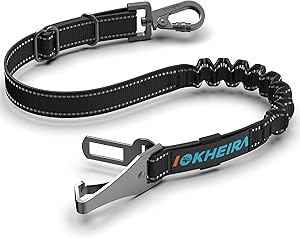
7. IOKHEIRA Dog Seatbelt
-
Adjustable length from 50 cm to 80 cm
-
Made from high-strength 1.9 mm thick, 25 mm wide nylon webbing
-
Alloy snap hook with 2156N tension resistance and mechanical lock
-
Ultra-high energy absorption system (up to 600N/m) for impact reduction
The IOKHEIRA Dog Seat Belt stands out for its exceptional focus on safety and durability, making it a premium choice for dog owners who travel frequently. Crafted from thick, abrasion-resistant nylon webbing, this belt is built to last and resist wear even with strong or restless dogs. The adjustable length allows it to fit a wide range of dog sizes comfortably, and it can be attached in multiple ways—via the car’s seatbelt buckle, ISOFIX system, or trunk LATCH anchors—offering incredible versatility. The heavy-duty alloy snap hook has a mechanical locking system and can handle up to 2156N of tension, ensuring the belt stays securely attached under stress.
A major highlight is the built-in energy absorption system that helps cushion sudden stops, reducing the risk of injury during emergencies. The 360° rotating design of the hook prevents tangling, even if your dog moves around. While the price point is higher than many alternatives, the build quality, thoughtful engineering, and multiple installation options make it excellent value for money—especially for owners of larger or more active breeds. Many users note how well it pairs with the IOKHEIRA dog harness for maximum protection. For those who want peace of mind and a secure travel solution, this seat belt truly delivers.
Pros:
- Incredibly strong and durable materials
- Multiple attachment options (seatbelt, ISOFIX, LATCH)
- Effective energy absorption system
- Secure locking hook with anti-twist design
Cons:
- Higher price than standard seat belts
- Best performance requires use with a separate harness
See the IOKHEIRA Dog Seat Belt
How to Choose the Best Dog Seat Belt in the UK?
Travelling with a dog in Britain can be a joy, but only when everyone is properly buckled up. A loose Labrador on a twisty Lake District B‑road is as dangerous as a rogue suitcase on the M1. Modern dog seat belts (often sold as harness‑and‑tether combos) keep pets from becoming projectiles, calm driver distractions, and satisfy insurers who now expect suitable restraints. With dozens of models on the market—from £5 webbing tethers to £100 crash‑tested harnesses—knowing what matters, what’s marketing fluff, and what actually fits your car can feel overwhelming. This guide breaks the decision down into ten clear steps so you can buy once, drive safely, and enjoy the ride.
1. Know the Law and the Insurance Fine Print
Rule 57 of the Highway Code states that dogs must be “suitably restrained so they cannot distract you while driving or injure you, or themselves, if you stop quickly.” Acceptable restraints include a seat‑belt harness, crate, dog guard or carrier. Failing to comply isn’t a fixed‑penalty offence on its own, but if police decide the pet caused “driving without due care and attention” you can face fines, penalty points, and a voided insurance claim. Many insurers explicitly require proof that the dog was restrained, so a £10 belt can literally protect a £10,000 payout.
2. Understand the Three Main Restraint Styles
Seat‑belt clip tethers slot into the regular belt buckle and attach to a dog harness; they are cheap and widely compatible but won’t fit every make (some Volvo and Ford buckles are non‑standard). Head‑rest loop tethers wrap around the metal posts and keep the tongue socket free for human passengers. ISOFIX/LATCH anchors—originally designed for child seats—give the firmest anchor point and are gaining popularity on premium products. All three demand a separate harness (never a collar) to spread crash forces across a dog’s chest and shoulders. Crates and boot guards are legal alternatives, yet most drivers prefer a harness‑and‑tether because the dog can still ride on the rear bench with the family.
3. Look for Independent Crash‑Test Data
Unlike child seats, pet restraints are not governed by a compulsory UK or EU test standard. A label that merely says “crash‑tested” can mean anything from a gentle tug in a factory to a destructive sled test in a certified lab. For hard evidence, search for products that have passed the voluntary Centre for Pet Safety (CPS) certification in the USA, or the FMVSS 213 child‑seat protocol used by manufacturers like 3 Peaks, Sleepypod and EzyDog. These harnesses cost more—often £50–£90—but repeated tests show they withstand real‑world crash forces far better than generic webbing straps.
4. Check the Materials and Build Quality
A good tether should be woven from at least 25 mm‑wide nylon webbing (the same width used on human seat belts). Thick yarn resists fraying and chewing, and retains tensile strength after UV exposure or muddy walks. Look for double‑box or bar‑tack stitching at stress points, metal tongue plates compatible with UK 21 mm buckles, and hardware made from zinc alloy or stainless steel, not zinc‑plated steel that can rust in a damp boot. Many top‑tier tethers include a short bungee section rated to absorb 300–600 N m of energy, softening the jerk of an emergency stop without giving the dog enough slack to collide with the front seats.
5. Demand a Swivel and Anti‑Tangle Design
Dogs rarely sit still for an entire journey. A 360‑degree swivel carabiner prevents the tether twisting into a useless knot each time your Spaniel changes position. Some head‑rest loops also rotate around the posts. If your chosen belt uses a fixed snap hook, make sure the harness has a front D‑ring so you can unclip easily without spinning your dog in circles.
6. Measure Your Dog – and Your Car
Seat belts are sold with a minimum and maximum length (e.g., 50–80 cm). Too short, and the dog can’t lie down; too long, and they can reach the front arm‑rest. Measure from your vehicle’s buckle or head‑rest down to the dog’s harness at a sitting height, then add 10 cm for comfort. Weight guidelines help, but chest girth is the critical harness measurement. Puppies, sighthounds and deep‑chested breeds often need narrower, contoured pads to avoid rubbing under the forelegs. Remember that winter coats and harness padding add bulk—if you buy in summer, leave expansion room.
7. Double‑Check Vehicle Compatibility
UK seat‑belt tongues are 21 mm wide, but a few imported belts use US‑size 23 mm tongues that won’t latch. If you drive a Volvo, Tesla, or older Ford Transit, read the small print or choose a head‑rest loop instead. ISOFIX bars live between the rear‑bench cushions; if you rarely transport children, an ISOFIX dog belt keeps the human buckle free. For estate cars, look for a model with an extra LATCH clip so you can restrain dogs in the boot without buying a full crate.
8. Consider Convenience Features
Reflective stitching makes night‑time load‑outs easier and adds visibility if you break down on the hard shoulder. A quick‑release buckle lets you detach the dog while leaving the tether in the car—handy when swapping between vehicles. Dual‑function models convert to a hand‑held lead for service‑station walks. Multi‑packs cost only a few pounds extra and cover a second car or provide a backup in case of chewing incidents.
9. Balance Budget and Reliability
A basic, non‑crash‑tested tether can cost under £10; crash‑certified harness packages run to £100+. If you drive only short urban journeys at low speed, a mid‑range £15–£25 belt with quality webbing and metal hardware may suffice. Long‑distance drivers, owners of heavy breeds, or anyone using high‑speed roads regularly should budget for a CPS‑certified harness. Remember that even the priciest tether is cheaper than vet bills—or replacing a cracked windscreen shattered by a flying Beagle at 30 mph (a 20 kg dog generates a forward force similar to a 300 kg projectile in such a crash).
10. Train, Inspect and Maintain
Introduce the harness at home first: let the dog wear it indoors with treats before clipping into the car. On day one, start the engine but don’t drive; on day two, take a five‑minute spin. Positive associations reduce anxiety, which in turn reduces chewing and twisting. Inspect webbing and stitching monthly for frays, especially after muddy walks when grit can cut fibres. Hand‑wash with mild soap, rinse thoroughly, and air‑dry away from direct heat to preserve the nylon’s tensile strength. Replace any tether that shows torn stitches, bent metal, or UV‑faded webbing—seat belts are cheap, but a failure at 70 mph is not.
Final Checklist
-
Legal duty: restraint complies with Highway Code Rule 57.
-
Harness first: never attach to a collar.
-
Crash data: CPS or FMVSS certification if possible.
-
Correct length: dog can lie down but not reach the driver.
-
Metal hardware: stainless or zinc alloy, plus a 360° swivel.
-
Vehicle fit: 21 mm buckle, head‑rest loop, or ISOFIX as required.
-
Regular checks: inspect, clean, and replace when worn.
Choose with care, and every journey—from the vets to the Highlands—will be safer, calmer, and insurance‑compliant for both you and your four‑legged co‑pilot.