Best Ice Fishing Lines For Panfish of 2025
Finding the perfect line is crucial for ice fishing panfish like crappie, bluegill, and perch. These fish have incredibly light bites, so you need a line that offers maximum sensitivity to feel even the most subtle nibble. Unlike fishing for bigger species, you’ll need a line that is extremely thin and has very little memory to ensure your tiny jigs fall naturally. This guide will help you understand the key differences between monofilament, fluorocarbon, and braided lines so you can choose the best option to help you land more of these popular winter fish.
1. Berkley Trilene XL Monofilament Fishing Line
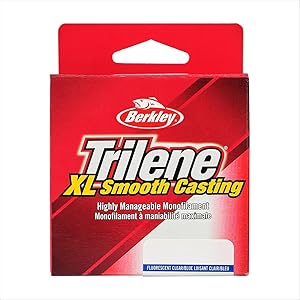
- Line Type: Monofilament
- Break Strength: 2lb | 0.9kg
- Diameter: 0.005in | 0.12mm
- Visibility: Clear design for underwater stealth
The Berkley Trilene XL Monofilament line is a classic choice for many anglers, known for its smooth performance and superior manageability. Its low memory design is a standout feature, resisting twists and kinks to allow for easy casting and a natural presentation, which is a key factor for finicky panfish. This line’s high strength-per-diameter ratio ensures it can handle surprising fights with bigger fish while remaining thin enough for subtle jigging. The clear color helps to reduce line visibility in the water, a significant advantage when targeting pressured fish in clear ice conditions. Its versatility makes it a dependable choice for a variety of baits and techniques, from drop-shotting to jigging.
This line’s balanced properties make it a solid all-around performer, particularly for anglers who prefer the forgiving nature of a monofilament line. The built-in stretch can act as a cushion during a hook set, preventing the hook from tearing out of a panfish’s soft mouth. However, that same stretch can dampen sensitivity, making it more challenging to feel those light, tentative bites. For anglers who value smooth casting and a reliable, easy-to-use line, the Berkley Trilene XL is a great option. It’s also an excellent value, providing durable performance without a high price tag.
- Pros: Excellent manageability and smooth casting, good knot strength, low memory for a monofilament line, affordable and widely available.
- Cons: High stretch reduces sensitivity, can absorb water in cold weather, less abrasion-resistant than fluorocarbon or braid.
2. Berkley Trilene Micro Ice Monofilament Ice Fishing Line

- Line Type: Monofilament
- Break Strength: 3 Pounds
- Diameter: 0.007in | 0.17mm
- Visibility: Clear Steel color for line tracking
Specially formulated for ice fishing, the Berkley Trilene Micro Ice Monofilament line is designed to handle the unique challenges of cold-weather angling. It’s engineered with low stretch to provide better sensitivity than traditional monofilament lines, allowing you to feel those delicate bites from crappie and bluegill. The “Clear Steel” color is a thoughtful feature, providing just enough visibility for you to track line movements and detect strikes visually, which is a huge benefit when bites are barely perceptible. This line is tough and durable, offering the strength needed to manage unexpected battles with larger fish while maintaining its integrity in the frigid environment.
The thin diameter of the Micro Ice line allows for a better, more natural presentation of your tiny jigs, a crucial factor for successful panfish angling. Its low-stretch design helps you achieve quicker, more solid hooksets, which is essential for capitalizing on subtle bites. While it excels in sensitivity for a mono line, it doesn’t match the zero-stretch feel of a braided line. The durability and specially formulated cold-weather resistance make this a reliable choice that bridges the gap between traditional mono and more advanced lines, offering a good balance of performance and affordability for the dedicated ice angler.
- Pros: Enhanced sensitivity for a mono line, good abrasion resistance, specialized for cold-weather use, visible color for easy tracking.
- Cons: Still has more stretch than fluorocarbon or braid, not completely invisible to fish, can retain some line memory.
3. KastKing World’s Premium Monofilament Fishing Line

- Line Type: Monofilament
- Construction: Paralleled Roll Track technology for low memory
- Absorption: Low absorption for less limpness
- Material: Superior nylon material for strength and abrasion resistance
The KastKing World’s Premium Monofilament Fishing Line is a versatile and durable line designed for both fresh and saltwater applications, making it a viable option for ice fishing. A key feature of this line is its Paralleled Roll Track technology, which minimizes line memory. This results in a line that comes off the spool smoothly with fewer coils, allowing your micro jigs to fall naturally and without spinning. This enhanced reel capacity and easier casting are significant benefits for anglers who want a smooth, hassle-free fishing experience. Its superior nylon material is engineered to be highly abrasion-resistant, which is a great asset when fishing through jagged ice holes or over submerged structures.
The line also boasts low absorption, which prevents it from becoming limp or waterlogged in cold conditions, a common issue with some monofilament lines. This property allows for quicker retrieval and more control over your lure. While it is marketed as “low memory” for a mono line, it won’t be as limp or sensitive as a specialized fluorocarbon or a braided line. The clarity and available color options offer versatility for different fishing scenarios, from clear to stained water. Overall, this is a strong, budget-friendly monofilament line that offers a good balance of handling and durability, making it a reliable choice for a variety of fishing situations.
- Pros: Excellent value for money, very low memory for a monofilament, highly abrasion-resistant, low absorption for improved performance.
- Cons: Still has more stretch than other line types, not ideal for maximum sensitivity, higher visibility compared to fluorocarbon.
4. Berkley Trilene 100% Fluorocarbon Ice Fishing Line

- Line Type: 100% Fluorocarbon
- Break Strength: 2 Pounds
- Length: 75yd
- Visibility: Practically invisible underwater
The Berkley Trilene 100% Fluorocarbon Ice Fishing Line is a top-tier choice for anglers who demand maximum performance and stealth. Its key selling point is its almost complete invisibility underwater due to a refractive index similar to water. This property is crucial for targeting wary fish in clear water or during slow bite periods. The line’s fluorocarbon construction also offers exceptional durability and resistance to abrasion, a vital feature when fishing through ice holes. It is formulated to be highly resistant to freezing and does not absorb water, ensuring it remains strong and supple even in the most extreme cold. This line also sinks faster than monofilament, helping your small jigs reach the desired depth quickly and efficiently, especially when targeting suspended fish.
With its very low stretch, this fluorocarbon line provides incredible sensitivity, allowing you to feel the faintest of bites, which is essential for panfish. You’ll be able to detect subtle “ticks” and changes in line weight that would be completely missed with a monofilament line. The low memory and thin diameter of this line ensure your lure has the most natural presentation possible, mimicking the movement of natural forage. While it is a more expensive option, its combination of invisibility, high sensitivity, and durability makes it a worthwhile investment for any serious panfish angler looking to increase their catch rate. It provides a distinct advantage when every bite counts.
- Pros: Virtually invisible underwater, superior sensitivity due to low stretch, excellent abrasion resistance, sinks quickly, designed for cold weather.
- Cons: Higher cost than monofilament, can be stiffer and more prone to line twist than some mono lines.
5. Berkley Vanish Fluorocarbon Fishing Line/Leader Material

- Line Type: 100% Fluorocarbon
- Break Strength: 2lb | 0.9kg
- Diameter: 0.006in | 0.15mm
- Versatility: Suitable for both fishing line and leader material
Berkley Vanish is a versatile fluorocarbon line that has long been a popular choice for anglers seeking low visibility and strength. With a refractive index similar to water, it is designed to be virtually invisible, making it an excellent choice for fishing in clear ice conditions where panfish are line-shy. This line boasts enhanced handling and is known for its smooth casting, a key feature for anglers looking for easy operation. It maintains its strength and durability even when submerged for extended periods, thanks to its non-absorbing properties, which is crucial for cold-weather performance. It’s a great option for those who want the benefits of fluorocarbon without the premium price of some other brands.
The line’s low memory and thin diameter contribute to an enhanced lure presentation, which is vital for tempting subtle-biting panfish. Its superior abrasion resistance allows it to withstand contact with rough structures or the edges of the ice hole. While it offers a good balance of features, some anglers find it to be a bit stiffer than other fluorocarbons on the market, which can affect lure action and handling. However, its effectiveness as both a main line and a leader material makes it a very practical choice. For an angler on a budget who wants to take advantage of fluorocarbon’s invisibility and strength, Berkley Vanish is a reliable and popular option that can definitely help you land more fish.
- Pros: Practically invisible underwater, great abrasion resistance, maintains strength when wet, versatile as both a main line and a leader, more affordable than many fluorocarbons.
- Cons: Can be stiffer than other fluorocarbon lines, may not have the same level of sensitivity as specialized ice lines.
6. Lew’s Mr. Crappie Mega Spool Monofilament Fishing Line

- Line Type: Monofilament
- Designed For: Small reel usage and specific crappie techniques
- Memory: Low memory for increased casting distance
- Durability: Extremely abrasion resistant formula
The Lew’s Mr. Crappie Mega Spool Monofilament is a line specifically designed for the discerning crappie angler, with features tailored to their unique needs. The line’s formula is extremely abrasion resistant, a critical feature when fishing around submerged timber, brush piles, or the sharp edges of an ice hole. This durability gives you the confidence to fish in tougher conditions without worrying about your line snapping. The low memory design is another major benefit, as it helps prevent coiling and line twist, ensuring a smooth flow off the reel and a natural presentation of your jig. While it is a monofilament line, the low stretch helps to transmit more of the subtle action from the jig and the bites from the fish.
Field tested and approved by fishing pro Wally Marshall, this line is trusted by those who specialize in catching crappie. The specific design for small reel usage makes it an ideal match for the compact reels commonly used for ice fishing, ensuring the best possible performance. Its low-stretch property, for a monofilament, helps provide better hooksets and a more direct feel. While it’s not as invisible as fluorocarbon or as sensitive as braid, it offers a fantastic balance of strength, low memory, and abrasion resistance. This line is a reliable workhorse for anyone who spends a lot of time on the ice pursuing panfish, offering performance and durability at an accessible price point.
- Pros: High abrasion resistance, low memory for a monofilament, designed for small reels, good value for the performance.
- Cons: Still has more stretch than other line types, not invisible, sensitivity is not on par with fluorocarbon or braid.
7. KastKing Kovert Elite 100% Fluorocarbon Fishing Line

- Line Type: 100% Fluorocarbon
- Strength: Up to 20% higher breaking strength than standard lines
- Refraction: Low light refraction for virtual invisibility
- Stretch: Low stretch for exceptional sensitivity
The KastKing Kovert Elite 100% Fluorocarbon is a premium line engineered to provide top-of-the-line performance for the most demanding anglers. Sourced from a Japanese resin, it boasts a significantly higher breaking strength—up to 20% more than competing lines. This means you can fish with smaller diameters for better presentation without sacrificing strength, a crucial advantage for landing larger panfish on light tackle. Its low light refraction and small diameter make it virtually invisible underwater, which is essential for tricking line-shy fish in clear water. This high clarity and low visibility help to dramatically increase your catch ratio when fish are wary and the bite is tough.
This line’s low stretch factor, approximately 30% lower than standard monofilament, translates to exceptional sensitivity. You’ll be able to feel every subtle change and every faint bite, giving you the best chance to react quickly and set the hook. The line’s high knot strength is also a major plus, as it prevents line failures at the knot, which is a common point of weakness. Furthermore, the unique resin provides outstanding durability and abrasion resistance, so you can confidently fish around rocky bottoms or in heavy brush. While it comes at a higher price point, the KastKing Kovert Elite is an investment in performance, offering superior strength, sensitivity, and invisibility for anglers who want the best for their panfish setup.
- Pros: Unmatched strength for its diameter, virtually invisible, very high sensitivity, excellent abrasion resistance, high knot strength.
- Cons: Higher price point than most other lines, best performance requires careful knot tying.
How to Choose an Ice Fishing Line for Panfish
Finding the perfect line is crucial for ice fishing panfish like crappie, bluegill, and perch. These fish have incredibly light bites, so you need a line that offers maximum sensitivity to feel even the most subtle nibble. Unlike fishing for bigger species, you’ll need a line that is extremely thin and has very little memory to ensure your tiny jigs fall naturally. This guide will help you understand the key differences between monofilament, fluorocarbon, and braided lines so you can choose the best option to help you land more of these popular winter fish.
Key Line Characteristics for Panfish
When selecting a line for panfish, several characteristics are far more important than they would be for larger fish. Panfish have small mouths and often bite very tentatively, so your line needs to be a seamless extension of your hand, transmitting every tiny detail from the jig below. Paying close attention to these key characteristics is the first step toward building the perfect panfish setup.
Line Pound Test and Diameter
For panfish, the most critical factor is the line’s pound test and its corresponding diameter. Anything over a 4-pound test is typically too thick and will hinder your presentation. A thick line can cause your tiny jigs to spin or not sink properly, making it difficult to get a natural-looking fall. The ideal range for most panfish scenarios is between a 2-pound and 4-pound test line. An ultra-thin diameter allows your micro jigs to fall as naturally as possible, mimicking the subtle movement of small insects or zooplankton. A thin line also reduces resistance in the water, giving you better control and a more direct feel for what is happening at the end of your line. While a lighter line might seem fragile, when paired with a sensitive rod and a light drag setting, it is more than enough to handle even a slab-sized crappie or jumbo perch.
Sensitivity and Stretch
Sensitivity is a measure of how well a line transmits energy from the lure to your rod and hand. Panfish bites are notoriously light, often feeling like nothing more than a slight “tick” or a sudden change in line weight. A line with very little stretch, such as fluorocarbon or braid, will provide the highest level of sensitivity. This allows you to feel those subtle bites and react quickly to set the hook before the fish spits out the bait. Monofilament, while popular, has significant stretch. This stretch can act as a shock absorber but also dampens the feel of a light bite, making it a less-than-ideal choice for a high-sensitivity presentation. For panfish, maximizing sensitivity is almost always the goal, as it allows you to detect bites you would otherwise miss.
Line Memory
Line memory refers to a line’s tendency to retain the coiled shape of the spool. This is a major issue for panfish anglers using micro jigs. A line with high memory will come off the spool in tight curls, which can cause your tiny jig to spin in circles instead of falling straight down. This unnatural presentation can spook finicky fish and is incredibly frustrating to deal with. A line with low memory, on the other hand, lays straight and falls smoothly, ensuring that your jig flutters and shimmies in a natural, enticing way. Braided and high-quality fluorocarbon lines generally have very low memory, making them a top choice for these finesse applications. Choosing a low-memory line is essential for achieving the perfect presentation and getting your jig to the strike zone effectively.
Visibility and Line Color
The visibility of your line is a key factor, especially in clear water. Panfish have excellent eyesight and can easily be spooked by a thick, highly visible line. In these conditions, a clear or fluorocarbon line is the best choice, as it becomes nearly invisible underwater. However, there are times when a high-visibility line can be a huge advantage. Many anglers prefer to use a brightly colored line, such as fluorescent yellow or orange, on their reels to help them see their line and detect a subtle bite. This is a crucial strategy when using a spring bobber or a sensitive rod tip, as a light bite can often be detected by a slight movement of the line before you feel it in your hand. The best of both worlds can be achieved by using a high-visibility main line with a small, nearly invisible fluorocarbon leader.
Choosing the Right Line Type
Now that you understand the key characteristics, it’s time to look at the three main types of line and how they stack up for panfish. Each type has a unique set of pros and cons, and the best choice for you will depend on your budget, fishing style, and the conditions you face on the ice.
Monofilament Line
Monofilament, or “mono,” is the most affordable and widely available fishing line. It’s a single, stretchy strand of plastic that is easy to handle and ties knots well. Its main advantage for panfish is its affordability, which makes it a great choice for beginners or anglers on a tight budget. The stretch in mono can also be a benefit, acting as a shock absorber to prevent a fish from tearing out the hook on a fast-paced hook set. However, mono has a significant amount of memory, which can cause your jig to spin, and its high stretch greatly reduces sensitivity, making it hard to feel those subtle bites. It also absorbs water and can become brittle in extreme cold. While it can work, most serious panfish anglers will look to other options to maximize their sensitivity and presentation.
Fluorocarbon Line
Fluorocarbon line has become a top choice for panfish anglers due to its unique properties. It is nearly invisible underwater, which is a major advantage for targeting line-shy fish in clear water. It has very little stretch compared to mono, which gives you exceptional sensitivity to feel those light bites. Fluorocarbon is also highly abrasion-resistant, so it can hold up to constant rubbing against the sharp edge of the ice hole. Unlike mono, it does not absorb water and is much more resistant to freezing, providing reliable performance in cold weather. It also sinks faster than mono, helping your small jigs get down to the strike zone quickly. The main downsides are its higher cost and its tendency to be a bit stiffer than monofilament, which can lead to line twist if not managed properly. Despite these drawbacks, its combination of invisibility, sensitivity, and durability makes it a premier choice for panfish.
Braided Line
Braided line, or “braid,” is made of multiple strands of synthetic fibers woven together. Its greatest advantage is its complete lack of stretch, which provides the highest level of sensitivity. With braid, you can feel everything: the subtle bottom, the weight of your tiny jig, and every single nibble. It also has a very thin diameter for its strength, allowing your lure to sink faster. However, braid is highly visible to fish and absorbs water, which can cause it to freeze and become a nightmare to handle on the ice. For this reason, braided line is almost always used with a fluorocarbon leader. This combination gives you the best of both worlds: the extreme sensitivity of the braid and the invisibility of the fluorocarbon. This setup is a bit more complex to tie but is considered a top-tier choice for anglers who demand maximum performance.
Matching Line to the Technique
The best line choice also depends on your specific fishing technique. The way you present your lure to the fish can be a major factor in what line will work best for you.
Micro Jigging and Finesse Presentations
For micro jigging with tungsten jigs and soft plastics, a highly sensitive and low-stretch line is essential. Your goal is to impart subtle action to the lure and feel the lightest of bites. For this technique, a 2-pound fluorocarbon line is an excellent choice for its invisibility and sensitivity. Alternatively, a 4-pound braided main line with a 2-foot fluorocarbon leader provides the ultimate in sensitivity, allowing you to feel every single change in line weight and every light bite.
Spring Bobber Fishing
A spring bobber is a visual strike indicator that bends or “springs” when a fish takes the bait. While you can use any line with a spring bobber, a sensitive, low-stretch line like fluorocarbon or braid is still the best choice. This combination allows you to feel the bite and see the visual indication on the bobber, giving you the best chance of a successful hook set. The low memory of these lines ensures a natural presentation, and the bobber’s movement will alert you to the slightest change in tension on the line.
Conclusion
There is no single “best” line for ice fishing panfish; the ideal choice is a personal one based on your budget and fishing style. However, the universal goal is to use a line that is thin, has low memory, and provides maximum sensitivity. While monofilament can get the job done for beginners, a quality fluorocarbon line is a significant upgrade that will help you detect more bites. For the ultimate in performance and sensitivity, a braided main line with a fluorocarbon leader is the top choice. Having a few different reels spooled with these options will ensure you are ready to tackle any situation on the ice and put more panfish on the table.