Best Lines For Ultralight Trout Fishing 2025
Trout are notoriously shy, and the key to catching them with ultralight gear often comes down to one thing: your fishing line. The best lines for ultralight trout fishing need to be thin and nearly invisible to avoid spooking fish, yet strong enough to handle a surprise hookup. They also must be sensitive enough for you to feel the faintest bite, which is crucial for finicky eaters. This guide will walk you through the top line choices, explaining the benefits of different materials like fluorocarbon, monofilament, and braid so you can make a confident choice and land more trout on your next trip.
1. Trout Magnet Trout S.O.S. Fishing Line

- Line Type: Copolymer
- Break Strength: 2lb Test
- Diameter: 0.16mm
- Spool Length: 350 Yards
The Trout Magnet Trout S.O.S. line is a purpose-built option for ultralight finesse fishing, particularly for those targeting wary trout. Its copolymer composition combines the best attributes of both monofilament and fluorocarbon, resulting in a line that is smooth, abrasion-resistant, and surprisingly strong for its diameter. The 2lb test is an ideal choice for ultralight presentations, allowing for a near-invisible approach that won’t spook cautious fish in clear water. The line’s color is specifically chosen to be difficult to see in most water conditions, giving you a stealthy advantage. The line’s smooth texture and low memory also contribute to exceptional casting distance, which is a major benefit when you need to reach a specific seam or riffle from a distance.
Beyond its low visibility and great casting, this line is engineered to be tough. It boasts extreme abrasion resistance and excellent knot strength, which is crucial when fishing around rocks, logs, or other structures in a trout stream. This durability gives you the confidence to fight a fish without worrying about a break-off. The line’s manageability is a huge plus, as it resists kinks and tangles, allowing you to spend more time fishing and less time messing with your line. For the serious ultralight trout angler, this line provides a fantastic balance of stealth, strength, and ease of use, making it a standout choice for delicate presentations.
- Pros: Excellent for finesse fishing; very strong for its diameter; smooth and manageable for casting; low visibility in the water.
- Cons: Not as sensitive as a true braided line; may not be as durable as a high-end fluorocarbon line.
2. Berkley Trilene XL Monofilament Fishing Line

- Line Type: Monofilament
- Break Strength: 2lb (0.9kg)
- Diameter: 0.005in (0.12mm)
- Spool Length: 110yd (100m)
The Berkley Trilene XL is a classic, time-tested monofilament line that has earned its reputation as a go-to for ultralight anglers. The line’s primary strength is its “maximum manageability,” which means it resists twists and kinks, making it incredibly smooth for casting. This is a huge advantage for trout fishing, where the frustration of tangles can ruin a day. The line’s easy-casting properties allow for precise lure placement, a critical skill for pinpointing trout in small streams. The 2lb test is an excellent choice for a variety of ultralight applications, from small stream trout fishing to targeting panfish, where a light, subtle presentation is required.
Despite its light diameter, Trilene XL is surprisingly strong, maintaining optimal durability even when submerged for extended periods. The clear design helps to disguise its presence in the water, a crucial factor when fishing for wary trout. While it may not have the low-stretch sensitivity of fluorocarbon or braided line, its natural stretch acts as a shock absorber. This is a significant benefit when a trout makes a sudden run on light tackle, as it helps prevent the hook from tearing out of the fish’s soft mouth. For anglers who prefer a forgiving and easy-to-use line that offers reliable performance and great value, the Berkley Trilene XL is a top-tier choice.
- Pros: Extremely easy to cast with low memory; excellent for beginners; great value and widely available; clear design for low visibility.
- Cons: Less sensitive than fluorocarbon or braided lines; its stretch may reduce hook-setting power over long distances.
3. Stren Original Monofilament Fishing Line
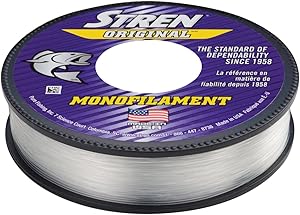
- Line Type: Monofilament
- Break Strength: 4lb (1.8kg)
- Diameter: 0.008in (0.20mm)
- Design: Low memory for enhanced handling and casting
Stren Original is a trusted name in fishing, and this monofilament line offers a great balance of strength, sensitivity, and suppleness, making it a reliable choice for ultralight trout fishing. The line’s low memory is a key feature, as it glides through the reel smoothly, enhancing handling and casting precision. This is particularly useful when casting tiny lures that require a lot of finesse. The 4lb test is a versatile strength that can handle a wide variety of situations, from fishing in small streams to targeting larger trout in lakes, providing a great blend of durability and delicacy. The line’s clear color also helps it remain unobtrusive in the water, which is essential for tricking wary fish.
This line is designed to be dependable and versatile, providing excellent knot and tensile strength that won’t let you down when you’re battling a hard-fighting trout. It’s a good choice for anglers who want a line that offers reliable performance without a high price tag. While it is a monofilament and has more stretch than a fluorocarbon or braid, its balanced design makes it a solid all-around performer. Its ease of use and consistent performance have made it a favorite among anglers of all skill levels, from beginners to experienced fishermen who need a reliable line that they can count on in any situation.
- Pros: Great balance of strength and suppleness; low memory for easy casting; good knot strength; a versatile 4lb test for various situations.
- Cons: Not as sensitive as fluorocarbon or braid; may not be as durable as some more expensive lines.
4. P-Line HP Trout Line Clear

- Line Type: Copolymer
- Features: Soft, low memory; supreme castability
- Spool Length: 150 Yards
- Visibility: Low visibility
The P-Line HP Trout Line is a specialized copolymer line designed to meet the specific demands of trout anglers. Its key features are its supreme castability and low memory. These two properties work together to ensure the line flows smoothly off the reel, allowing you to cast small, lightweight lures with ease and precision. This is a huge advantage when you need to land a lure in a tight spot near a log or rock where trout might be hiding. The line’s soft texture and low memory also make it resistant to twists and kinks, giving you a more enjoyable and tangle-free fishing experience. As a copolymer, it offers a great balance of features from both mono and fluoro lines.
This line is engineered with low visibility in mind, making it an excellent choice for fishing in clear water where line shyness is a major concern. It provides a stealthy presentation that won’t spook wary trout. The P-Line HP also boasts superior knot strength, ensuring that your connection to the fish is secure when you set the hook. While it may not have the extreme sensitivity of a braided line, its balance of features makes it a reliable and versatile choice for any trout angler. It is a fantastic all-around line that will improve your casting, presentation, and overall success on the water.
- Pros: Supreme castability with low memory; great knot strength; low visibility for clear water; versatile copolymer material.
- Cons: Lacks the extreme sensitivity of fluorocarbon or braid; may not be as abrasion-resistant as some lines.
5. Seaguar STS Trout/Steelhead Freshwater

- Line Type: 100% Fluorocarbon Leader
- Visibility: Near-invisibility
- Features: Superior knot strength and abrasion resistance
- Sinking Rate: Sinks fast to get bait into the feeding zone
The Seaguar STS Fluorocarbon Leader is a top-tier option for anglers who want the ultimate in stealth and strength. As a 100% fluorocarbon line, its most significant advantage is its near-invisibility underwater, a property that is absolutely critical when targeting finicky trout and steelhead in clear water. This line’s light-refractive index is nearly identical to that of water, making it a must-have for those tough fishing days when the fish are wary. In addition to its stealth, the line delivers superior knot strength and is highly abrasion-resistant, providing more reliability around sharp rocks and laydowns than traditional monofilament.
This line is designed to get to the fish faster. Its density causes it to sink quickly, which is a great benefit when fishing in current or when you need to get your bait down to a specific depth without adding extra weight. The low stretch of fluorocarbon also provides excellent sensitivity, allowing you to feel even the most subtle bites. While it is marketed as a leader material, it can be spooled onto a reel for a full-fluorocarbon setup, although some anglers may prefer a braid-to-fluoro leader combo for better castability. Overall, the Seaguar STS is a high-performance choice for anglers who demand the best in invisibility, sensitivity, and durability for their trout fishing adventures.
- Pros: Nearly invisible underwater; highly abrasion-resistant; superior knot strength; sinks quickly.
- Cons: More expensive than other line types; can be stiffer and have more memory than monofilament.
6. Acejoz Clear Fishing Wire
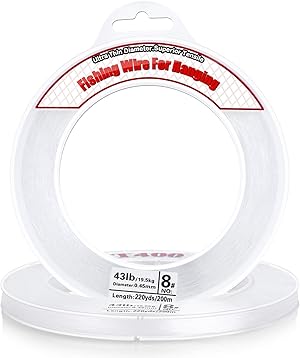
- Line Type: Nylon Monofilament
- Break Strength: Supports up to 40 pounds
- Diameter: 0.45mm
- Application: Designed for hanging decorations and crafts
The Acejoz Fishing Wire is a product explicitly designed for crafts and decorations, not for actual fishing. While it is a nylon monofilament and is transparent, its properties are not optimized for the demands of catching fish. The packaging and description highlight its use for hanging balloons, garlands, and other decorative items. Its listed strength of up to 40 pounds is for static weight and is not a reliable indicator of its strength under the dynamic stress of a fighting fish. An angler would be ill-advised to use this line, as it lacks the necessary qualities of a fishing line, such as low memory, knot reliability, and the ability to handle the abrupt pressure of a strike.
A true fishing line is designed to be supple, abrasion-resistant, and have a consistent breaking point. This product, on the other hand, is likely to be stiff, have excessive memory, and a much lower effective strength in a real-world fishing scenario. Using this for fishing would almost certainly lead to line twists, frustrating break-offs, and a poor fishing experience. While it is a great product for its intended purpose of crafting and decorations, it should not be considered a viable or safe option for any type of angling, especially not for the delicate and precise nature of trout fishing.
- Pros: Very clear and discreet for decorations; flexible and durable for crafts; large roll for many projects; inexpensive.
- Cons: Not an actual fishing line; lacks the necessary strength, stretch, and knot reliability for fighting fish; intended for decorative purposes only.
7. Anezus Fishing Wire

- Line Type: Monofilament nylon
- Break Strength: Supports up to 15 pounds
- Diameter: 0.3mm
- Application: Ideal for hanging decorations and crafts
The Anezus Fishing Wire is a product that is designed and marketed for crafting, not for fishing. The product description clearly states its purpose is for “hanging decorations,” “beading supplies,” and “DIY crafts.” While it is made of monofilament nylon and has a clear appearance, it should not be confused with a quality fishing line. A true fishing line is manufactured with specific properties like low memory, controlled stretch, and reliable knot strength to handle the stress of casting and fighting a fish. This product is likely to be stiff, have significant memory, and a much lower effective strength under dynamic pressure than its listed static weight capacity.
Attempting to use this line for ultralight trout fishing would lead to a frustrating and unsuccessful experience. The line would likely kink and tangle on the reel, and its knots would be unreliable, leading to lost lures and, more importantly, lost fish. Its primary benefit is its transparency, which is great for its intended decorative use, but a dedicated fishing line will offer superior invisibility and a host of other performance-based features that this product lacks. For any serious angler, it is essential to choose a product specifically designed for fishing to ensure safety, reliability, and success on the water. This product is an excellent crafting wire, but not a fishing line.
- Pros: Very clear and discreet for decorations; flexible and durable for crafts; large roll for many projects; inexpensive.
- Cons: Not an actual fishing line; lacks the necessary strength, stretch, and knot reliability for fighting fish; intended for decorative purposes only.
How to Choose Lines For Ultralight Trout Fishing
Trout are among the most popular targets for ultralight anglers, and for good reason. Their fight on light gear is exhilarating, and their reputation for being wary and picky makes them a rewarding challenge. The single most important piece of gear for this kind of fishing is the line. The wrong line can spook fish or break under the strain, while the right line can make a world of difference in your hook-up ratio and overall success. When selecting a line, you need to balance invisibility, sensitivity, and strength. This article will break down the key line types and features you should consider to ensure you have the perfect setup for your next trout fishing adventure.
Line Materials: The Core of Your Setup
The three main categories of fishing line—monofilament, fluorocarbon, and braid—each have distinct characteristics that make them suitable for different trout fishing scenarios. The best choice for you will depend on the water you’re fishing, the lures you’re using, and your personal style.
Monofilament Line (Mono)
Monofilament is a classic for a reason. Its greatest advantage for trout fishing is its stretch. This built-in “shock absorber” is a huge plus when a trout makes a sudden, powerful run, as it prevents the hook from tearing out of the fish’s soft mouth. Mono is also very easy to handle, has good knot strength, and is relatively inexpensive. For beginners, it’s a great starting point. Many premium monofilament lines, like Berkley Trilene XL, have low memory, which helps with casting small lures on an ultralight reel. However, monofilament is more visible in the water than fluorocarbon, and its stretch can reduce sensitivity, making it harder to feel subtle bites. It also absorbs water and can be weakened by UV rays over time.
Fluorocarbon Line (Fluoro)
Fluorocarbon is the go-to choice for anglers who prioritize stealth. Its low light-refractive index makes it nearly invisible underwater, a crucial advantage when targeting spooky trout in clear streams and lakes. Fluoro also has very little stretch, which provides superior sensitivity, allowing you to feel every light tap and tick as your lure moves through the water. This is especially useful for jig fishing, where bite detection is paramount. Additionally, fluorocarbon is highly abrasion-resistant, which is a significant benefit when fishing around sharp rocks, logs, or other structures. The main downsides are that it is generally more expensive than mono, and its stiffness can lead to more line memory, making it a bit trickier to cast and handle, especially in lighter pound tests. It also sinks, which can be a pro or con depending on the technique.
Braided Line (Braid)
Braided line offers the ultimate in strength and sensitivity. It has virtually no stretch, which means you feel everything on the other end of the line, from the slightest nibble to your lure hitting the bottom. Braid’s high strength-to-diameter ratio means you can use a much higher pound-test line (e.g., 6-10 lb) that has the same thin diameter as 2-4 lb monofilament. This thinness allows for exceptional casting distance with tiny lures. The major disadvantage of braid is its high visibility. To combat this, most trout anglers use a braided main line with a fluorocarbon leader. This combination gives you the best of both worlds: the castability and sensitivity of braid with the invisibility of a fluorocarbon leader at the business end of the line.
Choosing the Right Pound Test
Pound test is the line’s breaking strength, and for ultralight trout fishing, it is crucial to stay within the right range. The most common choices are 2 lb, 4 lb, and 6 lb test. The lighter the line, the more natural your lure’s presentation and the easier it is to cast tiny baits. However, a heavier line provides more strength and abrasion resistance. The rule of thumb is to use the lightest line you can get away with for the conditions.
2 lb Test
This is the ultimate choice for finesse fishing. A 2 lb test line is nearly invisible and allows for incredible casting distance with the smallest jigs and spinners. It is perfect for targeting small to medium-sized trout in crystal-clear, calm water where every detail matters. While it’s not ideal for fighting large fish or fishing in areas with a lot of snags, the challenge and reward of landing a trout on such a light line are unmatched.
4 lb Test
This is the most popular and versatile choice for trout fishing. A 4 lb line offers a great balance of strength, castability, and invisibility. It’s strong enough to handle bigger fish and to provide some resistance to minor abrasions, yet it’s still thin enough for a stealthy presentation. This pound test is a perfect all-rounder for streams, rivers, and lakes, and is an excellent choice for a wide variety of ultralight lures.
6 lb Test
A 6 lb test line is a great option when you’re fishing for larger trout or in conditions where there are a lot of snags or heavy current. The added strength and abrasion resistance provide a significant advantage in these situations. It is also the ideal pound test for a braided main line on an ultralight setup, as its thin diameter allows for long casts while still giving you the power to pull out of snags. While not as delicate as 2 lb or 4 lb, it’s the perfect choice when durability is a concern.
Making the Final Decision
The best line for you will ultimately depend on a combination of factors. If you’re a purist who loves the feel and fight of small fish on the lightest gear, a high-quality 2 lb or 4 lb monofilament or fluorocarbon is a great choice. If you fish a variety of water types and want a line that can do it all, a 4 lb test is your best bet. For anglers who want maximum sensitivity and power, or who frequently fish in clear water, the braid-to-fluorocarbon leader setup is a superior choice. The key is to experiment with different lines and find what works best for your specific style and the fish you’re targeting. Having a few different spools with various line types and sizes will give you the versatility to adapt to any conditions and maximize your success on the water.