Best Pocket Knives for Fishing of 2026
A successful fishing trip requires the right gear, and a dependable pocket knife is one of the most vital tools an angler can carry. From cutting stubborn braided lines and prepping bait to handling unexpected lakeside chores, a specialized blade makes all the difference. While large fillet knives have their place at the cleaning station, a compact, folding pocket knife offers unmatched portability and quick access. The following reviews highlight top-tier options that balance corrosion resistance, edge retention, and ergonomic grip to elevate your fishing experience.
1. Smith & Wesson Folding Knife

- Blade Material: 7Cr17Mov High Carbon Stainless Steel
- Overall Length: 7.1 Inches (18 cm)
- Weight: 3.5 Ounces
- Lock Type: Secure Liner Lock
The Smith & Wesson Folding Knife proves to be an exceptional companion for any angler looking for a balance of tactical utility and everyday portability. Featuring a black oxide high carbon stainless steel blade, this tool resists the harsh elements often encountered near freshwater and saltwater environments. The black aluminum handle is structurally sound and keeps the overall weight down, ensuring it will not weigh down your tackle box or pocket during long days on the water.
Deployment is incredibly swift thanks to the integrated finger flipper and ambidextrous thumb knobs, which allow you to open the blade effortlessly with one hand while holding a fishing rod in the other. The partial serrations are incredibly practical for sawing through tough rigging ropes or thick vegetation along the riverbank. Supported by a limited lifetime warranty, this tool offers the peace of mind every outdoor enthusiast needs when heading out into nature.
Pros:
- Quick one-handed flipper deployment
- Serrated section cuts heavy rope easily
- Lightweight aluminum handle design
Cons:
- 7Cr17Mov steel requires regular cleaning to prevent spotting
- Serrated edges are harder to sharpen in the field
2. GOOD WORKER Legal Pocket Knife

- Blade Material: 440C Stainless Steel
- Overall Length: 7.17 Inches
- Weight: 4.12 Ounces
- Bonus Features: Seatbelt cutter and glass breaker
The GOOD WORKER Legal Pocket Knife serves as an all-in-one survival tool that transitions perfectly into a dedicated fishing utility blade. Built with premium 440C stainless steel, the blade retains its sharpness remarkably well, making light work of slicing baits, trimming lines, or opening gear packages. The ergonomic aluminum handle is specifically tailored to provide a comfortable grip, minimizing hand fatigue during repetitive tasks around your boat or campsite.
What sets this particular option apart is its multi-functional nature, integrating emergency features like a seatbelt cutter and a glass breaker directly into the frame. The built-in pocket clip keeps the tool firmly secured inside your pocket, preventing accidental loss when you are leaning over the water to land a catch. It represents a stylish yet rugged blend of form and function that functions reliably across multiple outdoor disciplines.
Pros:
- 440C stainless steel offers excellent rust resistance
- Ergonomic handle prevents slipping when wet
- Versatile emergency features included
Cons:
- Slightly heavier than minimalist pocket knives
- The glass breaker tip can occasionally snag on loose fabric
3. AOSILEY Pocket Folding Knife

- Blade Material: Premium Stainless Steel
- Handle Material: Lightweight Aluminum
- Design: Compact folding structure
- Intended Use: Fishing, camping, and survival
The AOSILEY Pocket Folding Knife is engineered specifically for individuals who demand durability and precision from their outdoor equipment. Crafted with a premium stainless steel blade, this model highlights exceptional corrosion resistance, which is a vital attribute for any tool exposed continuously to moisture and lake spray. The edge retention is equally impressive, allowing you to go several trips without needing to touch up the blade edge.
The structural highlight is the lightweight aluminum handle, which boasts an ergonomic design that fits naturally into the contours of your hand. This thoughtful shape allows for precise control and maneuverability when performing delicate cutting tasks, such as preparing small baits or freeing tangled lines. Its highly portable nature ensures it slides effortlessly into a pocket, backpack, or small tackle box compartment without taking up valuable space.
Pros:
- Highly resistant to rust and environmental corrosion
- Ergonomic shape allows for great detail control
- Very compact and easy to carry daily
Cons:
- Lacks a textured texture on the handle surface
- Does not include additional emergency survival tools
4. KEXMO Pocket Knife

- Blade Material: 3Cr13 Black Steel
- Handle Material: Vintage Rosewood
- Overall Length: 8.46 Inches
- Blade Hardness: 56-59 HRC
The KEXMO Pocket Knife successfully marries classic aesthetics with modern utility, making it a standout option for traditional anglers who appreciate fine craftsmanship. The ultra-sharp 3Cr13 black steel blade maintains an ideal balance between hardness and durability, ensuring that it can withstand heavy-duty tasks without chipping. Its extended overall length provides a bit more leverage than smaller alternatives, expanding its usefulness around the shoreline.
The defining feature is the beautiful vintage rosewood handle, which includes built-in finger indentations to guarantee a solid, comfortable grip even when your hands are slick. Operating the blade is smooth and intuitive, utilizing a simple finger flipper paired with an ambidextrous thumb stud for seamless one-handed opening. A reversible pocket clip adds an extra layer of convenience, allowing you to configure the carry position to your preference.
Pros:
- Stunning rosewood handle with natural grip contours
- High hardness rating protects against rolling edges
- Reversible clip fits left or right pockets
Cons:
- Wood handles require more care than aluminum when exposed to water
- Larger overall footprint takes up more pocket space
5. CIVIVI Mini Praxis Folding Pocket Knife
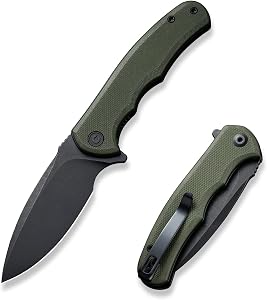
- Blade Material: Black Stonewashed D2 Steel
- Handle Material: Ultra-Durable G10
- Pivot Construction: Ceramic Ball-Bearing
- Warranty: Lifetime Service Against Defects
The CIVIVI Mini Praxis represents a masterclass in modern knife engineering, packing high-end materials into a highly efficient, compact frame. The blade is forged from black stonewashed D2 steel, a material celebrated among enthusiasts for its elite edge retention and rugged wear resistance. This choice ensures that your blade stays incredibly sharp through countless cutting cycles, minimizing the need for maintenance during your excursions.
The handle is made from premium G10 material, which is completely impervious to moisture, temperature fluctuations, and chemical exposure. It provides a tactile, non-slip surface that remains secure in your palm even when drenched in water or fish slime. Internally, a ceramic ball-bearing pivot mechanism delivers an incredibly smooth, crisp deployment every single time you press the flipper tab, setting a high standard for mechanical performance.
Pros:
- D2 steel holds a sharp edge for an exceptionally long time
- G10 handle offers superior grip in wet conditions
- Ultra-smooth ceramic ball-bearing action
Cons:
- D2 steel requires more effort to sharpen once dull
- Higher price point than basic entry-level knives
How to Choose the Best Pocket Knife for Fishing
Selecting the ideal pocket knife for fishing requires understanding how different materials and designs respond to wet, demanding environments. Unlike a standard everyday carry knife, a fishing knife must withstand constant exposure to water, organic matter, and tough materials like monofilament or braided lines. Taking the time to evaluate specific characteristics will guarantee that your chosen tool remains reliable, safe, and efficient throughout its lifespan.
Understanding Blade Steel and Corrosion Resistance
The composition of the blade steel is the most critical element to consider when shopping for a fishing pocket knife. Water accelerates the oxidation process, meaning that standard high-carbon steels will rust rapidly if not meticulously maintained. Anglers should focus on stainless steel alloys that integrate specific levels of chromium and carbon to deliver rust resistance without sacrificing edge longevity.
Comparing Common Steel Types
Different steel families offer unique trade-offs regarding edge retention, ease of sharpening, and corrosion resistance. The table below outlines how common options compare to help you find the right balance for your specific fishing habits.
| Steel Type | Corrosion Resistance | Edge Retention | Ease of Sharpening | Best Used For |
|---|---|---|---|---|
| 3Cr13 / 7Cr17MoV | Moderate | Low to Moderate | Very Easy | Budget-conscious anglers, casual freshwater trips |
| 440C Stainless | High | Moderate | Easy | General freshwater and occasional brackish use |
| D2 Tool Steel | Moderate | Very High | Moderate to Hard | Extended trips, heavy line cutting, dry environments |
Evaluating Handle Materials for Wet Performance
When working near water, the material of your knife handle directly impacts both your safety and your efficiency. A slick handle can easily slip out of a wet or slimy hand, leading to dropped gear or dangerous accidents. Modern pocket knives utilize a variety of synthetic and natural materials designed to maintain a high level of traction under adverse conditions.
Synthetic Options (G10 and Aluminum)
G10 is a high-pressure fiberglass laminate that stands out as one of the best choices for fishing applications. It is completely unaffected by water, will not absorb odors, and features a textured surface that provides excellent mechanical traction against your skin. Aluminum handles offer incredible structural rigidity and keep the tool lightweight, but they benefit greatly from ergonomic contours or texturing to prevent slipping when wet.
Natural Wood Handles
Wood handles, such as vintage rosewood, offer an attractive, timeless aesthetic that many traditional anglers love. While they feel incredibly comfortable and warm in the hand, they require more maintenance than synthetics. Wood must be sealed properly to prevent it from absorbing water, swelling, or cracking over long periods of exposure to damp tackle boxes.
Blade Shape and Edge Configurations
The geometry of the blade determines how effectively the knife cuts through various materials. Anglers typically choose between straight plain edges, fully serrated edges, or partially serrated combinations depending on the primary tasks they expect to perform during a trip.
- Plain Edges: Ideal for clean, precise slices. A plain edge makes it easy to cut clean baits, dress small fish, or trim thin monofilament lines cleanly without fraying.
- Serrated Edges: Exceptional for cutting through tough, fibrous materials. The teeth of a serrated blade easily saw through thick nylon ropes, anchor lines, and heavy braided fishing lines.
- Combination Edges: Offer the best of both worlds by placing serrations near the base of the blade and a straight edge near the tip, maximizing versatility.
Deployment and Locking Mechanisms
In a fishing scenario, you will frequently find yourself needing to open your knife with only one hand while your other hand secures a fish or holds a rod. Look for pocket knives equipped with thumb studs, finger flippers, or opening holes that allow for smooth, one-handed operation. The internal pivot system, such as ceramic ball bearings, can greatly enhance the speed and smoothness of this action.
Safety is equally paramount when applying force to a blade. A reliable locking mechanism ensures the blade cannot accidentally fold back onto your fingers during use. Liner locks are highly popular because they provide robust security while remaining simple to close with one hand once the task is complete. Always inspect the lock mechanism to ensure there is no independent movement or wobble when the blade is fully extended.
Maintenance and Longevity Tips
No matter how high the quality of your pocket knife, prolonged exposure to moisture, salt, and fish residue will eventually cause wear if left unchecked. Implementing a simple post-trip maintenance routine will extend the life of your tool exponentially and ensure it is always ready for your next adventure.
After every fishing excursion, rinse your pocket knife under clean, fresh water to remove any salt crust, slime, or sand particles lodged in the pivot. Dry the knife thoroughly with a clean cloth, paying close attention to the space between the liners where moisture likes to hide. Applying a single drop of marine-grade or food-safe mineral oil to the pivot bearings and the blade surface will create a protective barrier against future oxidation, keeping the deployment action smooth and snappy for years to come.