Best Smart Thermostat for Apartments of 2026
Finding the right thermostat for an apartment means balancing energy savings with rental restrictions, since most tenants cannot rewire walls or replace HVAC systems. A good smart thermostat should install without permanent damage, work with the wiring already in place, and still deliver app control, scheduling, and voice assistant support. Below, we review ten popular options and explain exactly how to pick the right one for your space.
1. Google Nest Thermostat

- Connectivity: Wi-Fi 802.11b/g/n 2.4GHz and 802.11a/n 5GHz, plus Bluetooth Low Energy
- C-Wire: Not required for most systems, but needed for heat pump or zoned setups
- Certification: ENERGY STAR certified for energy savings
- App Control: Google Home app scheduling with Savings Finder and remote access
The Nest Thermostat is a strong pick for apartment dwellers who want a compact, no-fuss smart thermostat that blends into a wall without extra hardware. Its charcoal finish looks sleek, and setup through the Google Home app is quick, guiding renters through wiring and compatibility checks before installation begins.
Beyond looks, the auto-away feature quietly saves energy when the unit is empty, which matters in a rental where every dollar on utilities counts. HVAC monitoring flags issues early, and remote access means roommates can each check the temperature. The main catch is C-wire dependency on some heat pump setups.
Pros:
- Compact, unobtrusive design suited to small spaces
- Auto-away scheduling reduces wasted energy
- Multi-user remote control from any device
Cons:
- May need a C-wire for some HVAC systems
- No physical lock feature for shared spaces
2. White-Rodgers 80 Series

- Display: Large, backlit screen readable in low light
- Programming: Selectable 7-day, 5-1-1, or off scheduling
- Installation: Built-in level, pluggable terminals, simple menu
- Security: Keypad lock and adjustable temperature limits
For renters who want reliable programmable control without full smart-home integration, the White-Rodgers 80 Series is a straightforward option. The large, easy-to-read display and dual fuel support work with most single-stage systems, and the built-in level makes DIY installation on apartment walls painless even for first-time users.
Flexible scheduling options let tenants set routines around work hours without touching the thermostat daily, and the keypad lock helps prevent roommates or kids from changing settings. It lacks Wi-Fi connectivity, so this is better suited to renters prioritizing simplicity and budget over app-based remote control.
Pros:
- Simple, budget-friendly programmable control
- Keypad lock protects settings
- Easy self-installation
Cons:
- No Wi-Fi or app connectivity
- No voice assistant support
3. Vine Smart Thermostat

- Display: 4.3-inch touchscreen with nightlight
- Compatibility: Works with 90% of 24V AC systems; C-wire required
- Voice Control: Compatible with Alexa and Google Assistant
- Scheduling: 7-day x 8-period programming with Auto Home/Away
The Vine Smart Thermostat brings a bright 4.3-inch touchscreen and nightlight to apartment living rooms and hallways, making it easy to read settings after dark without turning on overhead lights. Setup through the Smart Life app is guided, and voice control through Alexa or Google Home adds convenience.
Auto Home/Away mode adjusts temperatures automatically, which helps renters cut costs without micromanaging schedules. The 30-minute DIY install is apartment-friendly, though a C-wire is mandatory, so tenants should confirm their wiring setup ahead of purchase to avoid installation headaches.
Pros:
- Bright touchscreen with helpful nightlight
- Auto Home/Away saves energy automatically
- Works with Alexa and Google Assistant
Cons:
- C-wire required for all installations
- App less established than major brands
4. Aqara Smart Thermostat W200

- Display: 4-inch touchscreen with Matter controller support
- Sensing: Built-in mmWave radar for presence detection
- Compatibility: Works with about 85% of HVAC systems
- Smart Home: Works with Apple Home, Google Assistant, Alexa, SmartThings
The Aqara W200 stands out for apartment owners already invested in Apple Home, offering Adaptive Temperature that reacts to activity states like home, sleep, or away without manual scheduling. The built-in mmWave radar detects real presence rather than simple motion, waking the display as you approach.
Matter 1.4 support means local, fast control across multiple ecosystems, which is handy if roommates use different smart home apps. It can also double as a display for compatible video doorbells. The main downside is the extra cost of a C-wire adapter if your apartment lacks one.
Pros:
- Accurate presence detection via radar
- Broad smart home compatibility through Matter
- Doubles as a doorbell display
Cons:
- C-Wire adapter sold separately
- Adaptive Temperature needs an Apple hub and newer OS
5. Honeywell Home T9

- Certification: ENERGY STAR certified for savings
- Sensors: Includes 1 Smart Room Sensor with 200 ft range
- Compatibility: Forced air, hot water, steam, heat pump systems; C-wire required
- Control: Works with Alexa, Apple HomeKit, Google Assistant
The Honeywell T9 focuses on comfort where it matters most, using its included Smart Room Sensor to track occupancy and temperature in a specific room like the bedroom. This is useful in apartments with uneven heating or cooling between rooms, letting tenants prioritize comfort exactly where they spend time.
Auto Home/Away scheduling adds hands-off savings, and voice assistant support covers most major platforms. Installation is guided and includes a C-wire alternative adapter for homes without one. It does not work with electric baseboard heat, so renters should verify system compatibility first.
Pros:
- Room sensor targets comfort precisely
- Long sensor range up to 200 ft
- Works with most major voice assistants
Cons:
- Incompatible with electric baseboard heat
- Requires C-wire or included adapter
6. Sensi Lite Smart Thermostat
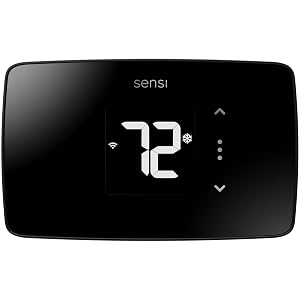
- Certification: ENERGY STAR certified, up to 23% HVAC savings
- Installation: Built-in level with step-by-step DIY setup
- Wiring: C-wire required only for heat pump and heat/cool-only systems
- Privacy: Does not sell personal data to third parties
Sensi Lite keeps things simple for renters who want energy savings without a steep learning curve. The DIY installation process includes a built-in level and clear instructions, so most tenants can have it running within minutes, and it works without a C-wire on many standard systems.
The mobile app offers remote access, geofencing, and usage reports that help track savings over time, and Sensi’s privacy policy is a genuine plus for anyone wary of data collection. It is a more basic offering than premium models, lacking a room sensor or a large touchscreen display.
Pros:
- Budget-friendly with strong energy savings
- No C-wire needed on most systems
- Privacy-focused, no data selling
Cons:
- Smaller feature set than premium models
- No included room sensor
7. Honeywell Home X8S

- Display: 5-inch customizable touchscreen
- Extras: Video doorbell camera view and intercom support
- Sensing: Includes wireless Room Sensor with 200 ft range
- Compatibility: Matter certified; works with Alexa, Google Assistant, Apple Home
The Honeywell X8S is a premium option for apartments with compatible doorbell cameras, letting tenants see and speak to visitors directly from the thermostat screen. The 5-inch customizable display looks polished, and humidity and ventilation control help maintain better indoor air quality year-round.
Occupancy and presence detection, paired with the included Room Sensor, focus comfort on living areas by day and bedrooms at night. Matter certification ensures broad compatibility. This is a higher-cost pick, and full functionality depends on owning a compatible First Alert or Ring doorbell.
Pros:
- Doorbell camera integration is unique
- Humidity and air quality control
- Matter certified for wide compatibility
Cons:
- Higher price point than most competitors
- Doorbell features need separate compatible hardware
8. Amazon Smart Thermostat

- Voice: Built for Alexa and Ring integration
- Certification: ENERGY STAR certified, averaging $90 yearly savings
- Wiring: C-wire required for installation
- Scheduling: Home, away, and sleep schedules with Alexa automation
The Amazon Smart Thermostat is an easy entry point for apartment dwellers already using Alexa devices, since it creates comfort zones by linking to compatible Echo hardware for presence and temperature detection. Setup is guided entirely through the Alexa app, keeping the process approachable for first-timers.
Custom home, away, and sleep schedules cover the basics well, and rebate information arrives after purchase to help offset costs. Alexa+ can automate temperature further for subscribers. The thermostat requires a C-wire, and it offers fewer standalone smart features compared to Nest or ecobee.
Pros:
- Deep Alexa and Ring integration
- Affordable relative to premium competitors
- Guided app-based installation
Cons:
- C-wire required
- Fewer independent smart features without Alexa devices
9. ecobee Smart Thermostat Premium

- Sensors: Includes SmartSensor for room-level temperature adjustment
- Air Quality: Built-in air quality monitor with filter reminders
- Compatibility: Works with 95% of HVAC systems; Power Extender Kit included
- Voice: Built-in Siri or Alexa with speaker
The ecobee Premium is built for apartment residents who want a genuinely premium smart home hub rather than just a thermostat. Its metal design and vibrant display look upscale, and the built-in speaker with Siri or Alexa turns the device into a voice assistant and music player as well.
The included SmartSensor and radar-based occupancy sensing keep temperatures accurate room to room, while the air quality monitor and filter reminders add practical value for renters managing older HVAC systems. The Power Extender Kit solves most C-wire issues, though this is one of the pricier options on this list.
Pros:
- Excellent 95% HVAC compatibility
- Built-in speaker and air quality monitor
- Power Extender Kit solves C-wire gaps
Cons:
- Premium price tag
- Larger footprint than minimalist models
10. Sensi Touch 2 Smart Thermostat
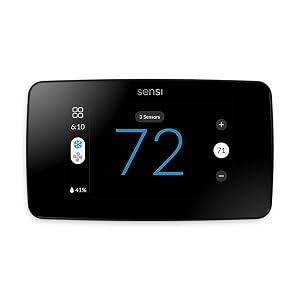
- Certification: ENERGY STAR certified, up to 23% HVAC savings
- Sensors: Compatible with optional Sensi Room Sensors
- Installation: Bluetooth-guided DIY setup; C-wire required
- Privacy: No third-party data selling
Sensi Touch 2 upgrades the brand’s DIY-friendly approach with a touchscreen interface and Bluetooth-guided installation that walks renters through each wiring step. It supports optional Room Sensors for balancing temperatures across an apartment’s rooms, addressing a common complaint about uneven comfort in multi-room units.
Usage reports and maintenance alerts help tenants keep tabs on HVAC performance without needing a technician visit for every question. Sensi’s no-data-selling policy remains a strong privacy selling point. A C-wire is required, so tenants in older buildings should confirm compatibility before ordering.
Pros:
- Touchscreen with easy Bluetooth setup
- Optional room sensors for balanced comfort
- Strong privacy commitment
Cons:
- C-wire required
- Room sensors sold separately
How to Choose the Best Smart Thermostat for Your Apartment
Picking a smart thermostat for an apartment is different from choosing one for a house you own. Renters face extra constraints, including wiring limitations, lease restrictions, and the fact that any installation may need to be reversed before moving out. The following guide walks through the key factors that matter most when narrowing down your options.
Check Your HVAC Compatibility First
Before falling in love with any thermostat’s design or features, confirm it will actually work with your apartment’s heating and cooling system. Most manufacturers, including Google Nest, ecobee, and Honeywell, offer free online compatibility checkers where you enter your current wiring setup to see if a given thermostat will work.
Do You Have a C-Wire?
The common wire, or C-wire, supplies continuous low-voltage power to a smart thermostat so its Wi-Fi radio and display stay active. Many older apartment buildings were wired without one, since traditional thermostats did not need constant power. If your apartment lacks a C-wire, you have a few options.
- Choose a thermostat that works without a C-wire on most systems, such as the Google Nest or Sensi Lite
- Buy a separate C-wire adapter, as offered by Aqara and some Honeywell models
- Ask your landlord whether an electrician can add a C-wire, since this may fall under normal maintenance
- Stick with a non-Wi-Fi programmable thermostat, like the White-Rodgers 80 Series, which does not require constant power
Consider Your Lease and Landlord Rules
Many leases restrict permanent alterations to fixtures, and a thermostat is often considered one. Before buying anything, check your lease for language about HVAC equipment, and consider reaching out to your landlord or property manager. Some landlords welcome smart thermostats because they can reduce wear on HVAC systems and lower shared utility costs, while others may require the original thermostat to be reinstalled before move-out.
Renter-Friendly Installation
Look for models that are designed for simple, tool-light installation and that keep the original thermostat’s baseplate or wiring documentation intact. Taking photos of your existing wiring before removing the old thermostat is a smart habit, since it makes reinstalling the original unit painless if you move or if your landlord requests it.
Decide How Smart You Actually Need It to Be
Not every renter needs a thermostat that includes a built-in speaker or a video doorbell display. It helps to think about which features you will genuinely use day to day.
| Need | Best Fit |
|---|---|
| Budget-friendly, no Wi-Fi needed | White-Rodgers 80 Series |
| Simple smart control with strong savings | Sensi Lite, Amazon Smart Thermostat |
| Room-by-room comfort in a multi-room apartment | Honeywell T9, Sensi Touch 2 |
| Deep smart home and voice integration | Google Nest, Aqara W200, ecobee Premium |
| Premium features like doorbell view or built-in speaker | Honeywell X8S, ecobee Premium |
Voice Assistant and Smart Home Ecosystem
If you already use Alexa, Google Assistant, or Apple Home for other devices, choosing a thermostat that fits your existing ecosystem avoids the hassle of managing multiple unrelated apps. Amazon’s own thermostat naturally favors Alexa users, Aqara leans toward Apple Home with its Adaptive Temperature feature, and most other options, including Nest, ecobee, and Honeywell, work reasonably well across all three major platforms.
Energy Savings and Certifications
Look for the ENERGY STAR label, which most thermostats on this list carry. Certified models are independently verified to reduce heating and cooling costs, often citing savings in the 20 to 26 percent range compared to a fixed setting. Features that contribute to these savings include:
- Auto Home/Away detection that adjusts temperature when no one is present
- Geofencing that uses your phone’s location to anticipate arrival
- Usage reports that show where energy is being spent
- Scheduling flexibility for different times of day or week
Room Sensors and Zoning for Multi-Room Comfort
Apartments often have uneven temperatures between rooms, especially studios with a single thermostat controlling a kitchen, living space, and bedroom together. Thermostats that support add-on room sensors, such as the Honeywell T9, Honeywell X8S, ecobee Premium, and Sensi Touch 2, let you prioritize comfort in the room you’re actually using rather than relying on a single reading near the thermostat itself.
Display, Design and Extra Features
Since a thermostat is a permanent fixture on your wall, consider how it looks and functions day to day. A touchscreen with a nightlight, like the Vine thermostat, is handy in a dim hallway, while a larger display with customizable colors, like the Honeywell X8S, blends better into a styled living space. If you like the idea of a video doorbell view or a built-in speaker, factor that into your decision, but recognize these extras usually come with a higher price and sometimes extra compatible hardware.
Physical Lock and Shared Living Considerations
If you’re splitting an apartment with roommates, a keypad lock or temperature limit setting can prevent disputes over the thermostat. The White-Rodgers 80 Series includes this feature directly, while smart models generally handle this through app-based user permissions instead.
Budget Considerations
| Budget Tier | Approximate Range | Example Models |
|---|---|---|
| Basic | Under $50 | White-Rodgers 80 Series |
| Mid-Range | $50 to $130 | Sensi Lite, Vine, Amazon Smart Thermostat, Google Nest |
| Premium | $130 and up | ecobee Premium, Honeywell X8S, Aqara W200, Sensi Touch 2 |
Final Tips Before You Buy
- Run your system through the manufacturer’s online compatibility checker before ordering
- Confirm whether a C-wire is present, or budget for an adapter if it is not
- Review your lease for any restrictions on fixture changes
- Photograph existing wiring before removing your current thermostat
- Match the thermostat’s smart home ecosystem to the devices you already own
- Decide whether room sensors or zoning would meaningfully improve comfort in your space
Taking a few minutes to verify compatibility and review your lease terms will save time and frustration later, and it ensures whichever thermostat you choose actually delivers the comfort and energy savings it promises in an apartment setting.