Best Smart Thermostat With Remote Sensors of 2026
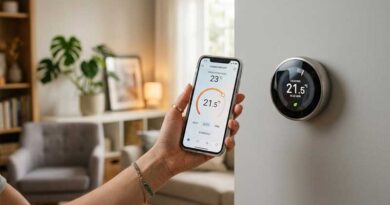
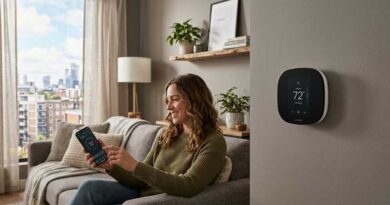
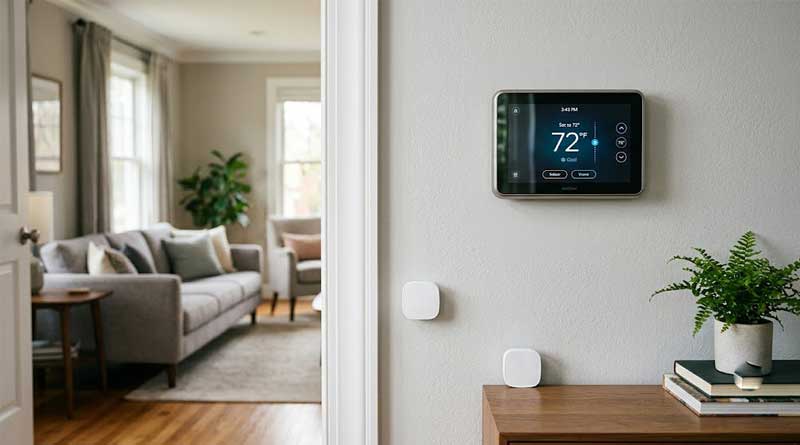
Smart thermostats with remote sensors have revolutionized home climate control by addressing a common issue: uneven temperatures in different rooms. Traditional thermostats measure temperature only where they are installed, often leading to hot or cold spots elsewhere. Smart models with remote sensors monitor multiple areas, allowing your heating and cooling system to adjust based on the temperature where you actually spend time. This enhances comfort, improves energy efficiency, and lowers utility bills. Below, we explore the top options available today.
1. Google Nest Thermostat

- Connectivity: Wi-Fi 2.4/5 GHz, Bluetooth LE
- C-Wire: Not required for most systems
- Certification: ENERGY STAR certified
- Control: Google Home App
The Google Nest Thermostat offers an affordable way to step into smart home climate management. Designed for energy efficiency, it automatically turns itself down when you leave home to avoid heating or cooling an empty house. The Savings Finder tool actively looks for schedule tweaks to help reduce your energy costs further.
Through the Google Home app, family members can control the temperature from anywhere. It also features HVAC monitoring to catch system issues early. While it works without a C-wire in many configurations, certain setups like heat pumps or sole heating/cooling systems will require dedicated power accessories.
- Pros: Budget-friendly, sleek modern design, proactive HVAC monitoring.
- Cons: Requires C-wire adapter for specific systems, no manual display lock.
2. Honeywell Home T9 Smart Thermostat

- Sensor Range: Up to 200 feet
- Power: C-Wire required (adapter included)
- Integration: Alexa, HomeKit, Google Assistant
- Display: Color Touchscreen
The Honeywell Home T9 is built around multi-room comfort management. Included with a Smart Room Sensor, it detects occupancy and prioritizes the temperature in the rooms currently in use. The remote sensors feature an impressive 200-foot signal range, making them suitable for larger residences.
Using the Resideo app, users can adjust schedules, set up geofencing, or integrate the thermostat with major smart home platforms. The unit is ENERGY STAR certified and eligible for utility demand response programs. DIY setup is straightforward thanks to guided installation and the included power adapter.
- Pros: Excellent sensor range, multi-room targeting, wide smart ecosystem support.
- Cons: Incompatible with 120-240V electric baseboard heat.
3. Sensi Lite Smart Thermostat
- Energy Savings: Approx. 23% on HVAC
- C-Wire: Not required for most systems
- Privacy: No data selling or targeting
- Installation: Built-in level included
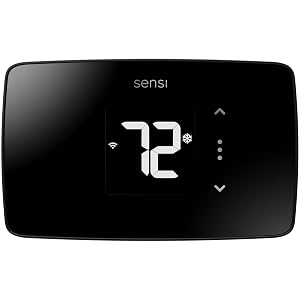
The Sensi Lite provides straightforward, privacy-focused smart heating and cooling management. It boasts energy savings of roughly 23% through smart scheduling, geofencing, and clear usage reporting. A stand-out feature is its privacy policy, which explicitly promises not to sell personal data or target advertising based on activity.
Installation is simple for DIYers, featuring step-by-step instructions and a built-in bubble level. Most standard systems operate without a C-wire, though heat pumps do require one. The top-rated mobile app grants reliable remote access to monitor and adjust target temperatures from anywhere.
- Pros: Strong privacy protection, easy installation, significant potential energy savings.
- Cons: Minimalist display without advanced color customization.
4. Honeywell Home X8S Premium Smart Thermostat

- Display: 5-inch Customizable Touchscreen
- Interoperability: Matter Certified, Alexa, Apple, Google
- Unique Feature: Doorbell Camera View & Intercom
- Air Quality: Humidity and Ventilation Control
The Honeywell Home X8S is a feature-rich, premium smart controller. Its 5-inch screen displays customizable colors and supports direct video streaming and two-way audio with compatible Ring or First Alert doorbells. It also features Matter certification, ensuring seamless communication across all modern smart home setups.
Beyond temperature, the X8S manages indoor air quality through humidity and ventilation adjustments. The included wireless sensor tracks presence and temperature up to 200 feet away, letting you focus comfort on bedrooms at night and living areas by day. A C-wire voucher is provided if needed.
- Pros: Video doorbell integration, indoor air quality controls, Matter support.
- Cons: High-end features require compatible HVAC accessories to unlock full potential.
5. Amazon Smart Thermostat

- Ecosystem: Built for Alexa and Ring
- C-Wire: Required for all installations
- Average Savings: $90 annually (EPA estimate)
- Setup: Guided via Alexa App
Designed in partnership with Honeywell Home technology, the Amazon Smart Thermostat delivers automated climate control at an accessible price point. It relies on Alexa for programming, enabling user presence detection and temperature adjustments through paired Echo devices serving as extra sensors or interaction points.
Users can set routine schedules or grant permission for Alexa to make subtle hands-free automated adjustments. According to EPA estimates, using this ENERGY STAR certified device can reduce annual energy spending significantly. Note that a C-wire is mandatory for power delivery across all HVAC configurations.
- Pros: Extremely affordable, tight Alexa integration, dependable basic scheduling.
- Cons: Requires C-wire, best experienced primarily within the Alexa platform.
6. ecobee Smart Thermostat Premium

- Voice Built-In: Siri and Alexa onboard
- Sensors Included: SmartSensor + Air Quality Monitor
- C-Wire Kit: Power Extender Kit included
- Design: Zinc frame with radar occupancy
The ecobee Smart Thermostat Premium sets a high standard for build quality and functional integration. Encased in a brushed zinc frame with a vibrant glass screen, it features radar technology for precise occupancy detection. An included SmartSensor helps equalize cold or hot spots by adjusting temperatures based on room activity.
This model features a built-in smart speaker supporting Alexa or Siri natively, along with an integrated indoor air quality sensor that alerts you to high VOCs or filter change needs. It also supports live video streaming from ecobee video doorbells directly on its display.
- Pros: Included SmartSensor, air quality tracking, premium materials, dual voice assistant capability.
- Cons: Higher initial price tag than standard smart thermostats.
7. Sensi Touch 2 Smart Thermostat
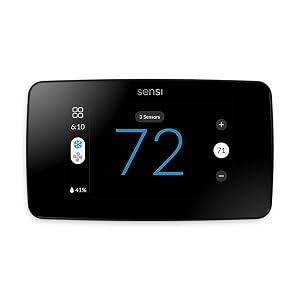
- Display: Color Touchscreen with backlighting
- Sensor Compatibility: Works with Sensi Room Sensors
- C-Wire: Required for operation
- Connectivity: Bluetooth setup, Wi-Fi operation
The Sensi Touch 2 combines a clear color touchscreen with dependable HVAC monitoring features. It works alongside standalone Sensi Room Sensors to help smooth out indoor temperature variations. Setup is streamlined by using Bluetooth technology to bridge the unit directly to your home network via the Sensi app.
Users gain access to smart maintenance features, receiving notification alerts if their HVAC equipment performs outside normal efficiency parameters. Combined with strict data privacy guarantees and flexible scheduling options, the Touch 2 offers a complete control system for modern residential heating and cooling.
- Pros: Easy-to-read touchscreen, HVAC health alerts, high commitment to user privacy.
- Cons: Remote room sensors must be purchased separately.
How to Choose the Best Smart Thermostat With Remote Sensors
Upgrading to a smart thermostat with remote sensors is one of the most effective ways to increase home comfort while managing monthly utility expenditures. While conventional thermostats measure ambient conditions at a single wall location, smart systems paired with remote sensors evaluate environmental parameters across several zones. Choosing the correct model requires evaluating your HVAC hardware, living space layout, network preferences, and desired feature set.
Understanding HVAC System Compatibility
Before purchasing any smart home climate equipment, verifying system compatibility is essential. Mismatched components can cause equipment malfunction, lack of power, or permanent damage to heating and cooling control boards.
Checking C-Wire Requirements
The common wire, or C-wire, supplies continuous 24V AC power to the thermostat. High-resolution color displays, Wi-Fi radios, and built-in voice assistants require steady electricity that traditional battery-only setups cannot supply.
- Systems with a C-Wire: Standard installation process; supports virtually all smart thermostat models without restrictions.
- Systems without a C-Wire: Requires models featuring power extender kits (such as ecobee), power adapters (like Honeywell), or models designed for power harvesting (such as the Google Nest). Alternatively, an electrician can run a new wire.
- High-Voltage / Baseboard Systems: Standard smart thermostats operate on low-voltage (24V) HVAC controls. Electric baseboard heaters using line-voltage (120V-240V) require specialized line-voltage smart controllers.
Evaluating Remote Sensor Capabilities
Remote sensors differentiate simple connected thermostats from comprehensive home comfort systems. Their primary role is detecting conditions in rooms far from the central hallway or main display wall.
Sensor Communication and Range
Remote sensors communicate wirelessly with the primary wall unit using low-power radio frequencies or Bluetooth protocols. Consider the physical distance and building construction when evaluating sensor specs. Units with extended communication ranges (up to 200 feet) penetrate thick walls and multiple floors more effectively, ensuring stable connections in larger residences.
Occupancy Detection vs. Temperature Sensing
Not all remote sensors perform the same functions. Understanding these differences helps ensure you select the proper accessories:
| Sensor Type | Primary Function | Best Application |
|---|---|---|
| Basic Temperature Sensor | Measures thermal levels only; averages readings with the main unit. | Unoccupied spaces needing baseline regulation (e.g., nurseries, hallways). |
| Occupancy & Motion Sensor | Detects human movement alongside thermal levels. | High-use areas like home offices, living rooms, and primary bedrooms. |
| Multi-Environmental Sensor | Tracks temperature, motion, humidity, and indoor air quality (IAQ). | Homes in humid climates or spaces requiring comprehensive air management. |
Smart Home Ecosystem Integration
Smart thermostats function best when aligned with your primary voice assistant and automation routines. Ensuring cross-platform interoperability simplifies daily use.
Platform Compatibility Overview
- Amazon Alexa: Supports native voice commands, automated routine triggers, and presence detection via paired Echo hardware.
- Google Assistant / Google Home: Offers streamlined integration with Nest hardware, scheduling controls, and ecosystem-wide location awareness.
- Apple HomeKit: Requires compatible hardware (like ecobee or select Honeywell units) and a Apple home hub to enable Siri voice control and HomeKit automation scenes.
- Matter Standard: Next-generation smart home protocol (found on devices like the Honeywell X8S) designed to guarantee cross-brand communication across ecosystems without custom skills or bridges.
Energy Efficiency and Financial Incentives
A primary motivation for replacing a manual thermostat is energy conservation. Look for the ENERGY STAR label, which verifies that the device meets strict efficiency guidelines established by the U.S. Environmental Protection Agency.
Geofencing and Adaptive Scheduling
Efficiency relies heavily on reducing operation when your home is vacant. Smart thermostats accomplish this via two main mechanisms:
- Geofencing: Uses your smartphone’s GPS location to establish a virtual perimeter around your property. When all household devices cross the boundary outward, the system switches to eco-mode. Upon returning, it resumes comfort settings.
- Algorithmic Learning: Analyzes daily manual adjustments and presence sensor data to construct an automated baseline schedule without requiring manual input.
Utility Rebate Opportunities
Many electric and gas utility companies offer immediate point-of-sale discounts or mail-in rebates for installing ENERGY STAR certified equipment. Additionally, enrolling in local “Demand Response Programs” allows utilities to make slight, temporary setpoint adjustments during peak grid demand hours in exchange for financial credits or annual rewards.
Display, Interface, and Aesthetic Preferences
Because wall thermostats sit in central living spaces, design and physical interface play a practical role in long-term satisfaction.
Touchscreen vs. Ring Interface
Modern units generally fall into two visual categories: large, full-color touchscreens displaying live weather, air quality metrics, and integrated camera feeds, or minimalist glass-and-metal dials prioritizing clean aesthetic profiles over dense data displays. Select a layout based on whether you prefer reading detailed info directly on the wall or managing settings mostly through a smartphone app.