Best Wifi Home Thermostats of 2026
Finding the right smart thermostat can completely change how you manage your home’s comfort and energy bills. These clever devices connect directly to your home Wi-Fi, allowing you to control the temperature from anywhere using your smartphone or voice commands. Many models even learn your daily routine to save you money automatically. Whether you want a budget-friendly option or a high-tech system, this guide highlights the best Wi-Fi home thermostats available today to keep your living space perfectly comfortable all year round.
1. Google Nest Thermostat

- Connectivity: Dual-band Wi-Fi & Bluetooth Low Energy
- Certification: ENERGY STAR Certified
- Control: Google Home app with remote access
- Compatibility: Works without a C-wire in most homes
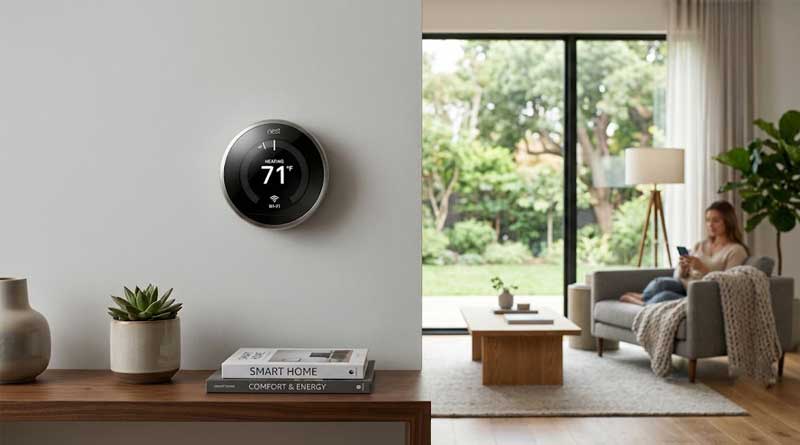
The Google Nest Thermostat is an excellent smart upgrade for homeowners looking to reduce energy consumption while maintaining indoor comfort. Its ENERGY STAR certification and intelligent scheduling automatically adjust temperatures based on your routine, helping reduce unnecessary heating and cooling costs. The Google Home app makes setup and daily operation simple, even for first-time smart thermostat users.
Remote control from your phone, tablet, or laptop provides convenience wherever you are. Features like HVAC monitoring, maintenance alerts, and Savings Finder make it more than just a thermostat. While some HVAC systems require a C-wire, its broad compatibility and user-friendly interface make it one of the best Wi-Fi thermostats available for everyday use.
Pros
- ENERGY STAR certified for energy savings
- Easy remote control with Google Home app
- Automatic Home/Away temperature adjustment
- Helpful HVAC monitoring and maintenance alerts
Cons
- Some systems require a C-wire
- Advanced features work best within Google’s ecosystem
2. Amazon Smart Thermostat

- Connectivity: Wi-Fi with Alexa app control
- Installation: C-wire required
- Certification: ENERGY STAR Certified
- Smart Home: Works with Alexa and Ring
The Amazon Smart Thermostat delivers an affordable way to modernize your home’s heating and cooling system. Built for Alexa users, it supports programmable schedules, automatic adjustments, and remote temperature control through the Alexa app. ENERGY STAR certification helps reduce annual energy costs while maintaining comfortable indoor temperatures throughout the day.
Installation is straightforward with guided instructions inside the Alexa app, making it suitable for DIY users with compatible systems. Comfort zones, presence detection, and voice commands enhance everyday convenience. Although a C-wire is required, the thermostat offers impressive value, particularly for households already invested in Amazon’s smart home ecosystem.
Pros
- Affordable smart thermostat with Alexa integration
- Simple DIY installation process
- Remote monitoring and scheduling
- ENERGY STAR certified for lower energy bills
Cons
- C-wire is mandatory
- Best features require Alexa ecosystem
3. Sensi Smart Thermostat

- Connectivity: Wi-Fi with mobile app access
- Certification: ENERGY STAR Certified
- Installation: DIY, no C-wire required in most homes
- Compatibility: Works with Alexa and most HVAC systems
The Sensi ST55 is designed for homeowners who want a reliable smart thermostat without a complicated installation process. Its familiar button-based design blends seamlessly with traditional thermostats while adding modern features such as remote access, flexible scheduling, and detailed energy usage reports. The ENERGY STAR certification supports noticeable HVAC energy savings throughout the year.
Sensi also prioritizes privacy by stating it does not sell personal information to third parties. Smart maintenance alerts, filter replacement reminders, and system monitoring help keep HVAC equipment operating efficiently. Combined with broad HVAC compatibility and easy DIY installation, the ST55 offers an excellent balance of functionality, simplicity, and long-term value.
Pros
- No C-wire required for most installations
- Excellent privacy-focused approach
- Easy DIY installation with app guidance
- Energy reports and maintenance reminders
Cons
- Display is simpler than premium models
- Fewer advanced smart home features than competitors
4. Aqara Smart Thermostat W200

- Display: 4-inch touchscreen
- Connectivity: Matter 1.4 with Wi-Fi smart home support
- Detection: Built-in mmWave radar presence sensor
- Compatibility: Works with Apple Home, Alexa, Google Assistant, and SmartThings
The Aqara Smart Thermostat W200 stands out with its premium touchscreen, Matter support, and advanced mmWave radar technology that detects real human presence instead of simple motion. Apple users benefit from Adaptive Temperature and Clean Energy Guidance, allowing the thermostat to intelligently balance comfort and energy efficiency. It also supports broad HVAC compatibility, making it suitable for most modern homes.
Beyond climate control, the W200 doubles as a smart display for compatible Aqara doorbells and smart locks, adding extra convenience to your connected home. Local Matter connectivity delivers fast response times and improved privacy. Although some homes may require the optional C-wire adapter, the W200 offers an impressive combination of smart automation, cross-platform compatibility, and innovative features.
Pros
- Advanced mmWave human presence detection
- Supports Matter for broad smart home compatibility
- Large responsive touchscreen display
- Apple Adaptive Temperature enhances automation
Cons
- C-wire adapter may be needed for some systems
- Some premium features require Apple ecosystem devices
5. Honeywell Home RTH9600WF

- Display: Customizable color touchscreen
- Certification: ENERGY STAR Certified
- Connectivity: Wi-Fi with app and voice control
- Installation: C-wire required
The Honeywell Home RTH9600WF combines reliable climate control with an attractive customizable color touchscreen that blends into virtually any home décor. It supports flexible scheduling, remote control through the mobile app, and compatibility with Alexa, Google Assistant, and other popular smart home platforms. ENERGY STAR certification helps reduce heating and cooling costs while maintaining consistent indoor comfort.
Its display provides indoor and outdoor temperature, humidity levels, and weather forecasts directly on the thermostat, making it informative as well as functional. The thermostat supports a wide range of HVAC systems, though it requires a C-wire for installation. Overall, it delivers dependable performance, attractive design, and practical smart features for homeowners seeking an established and trusted brand.
Pros
- Bright customizable color touchscreen
- Excellent smart home compatibility
- Weather and humidity displayed on-screen
- ENERGY STAR certified for energy savings
Cons
- C-wire is required
- Not compatible with electric baseboard heating
6. vine Smart Thermostat for House
- Connectivity: Wi-Fi with Vine Thermostat & Smart Life apps
- Programming: 7-day, 8-period scheduling
- Compatibility: Supports up to 90% of 24V HVAC systems
- Installation: C-wire required
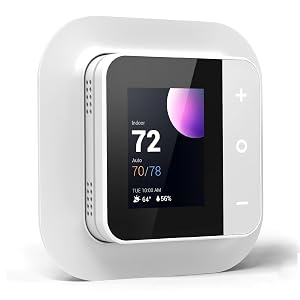
The vine Smart Thermostat is a budget-friendly option that delivers dependable smart climate control for most modern HVAC systems. It supports Alexa and Google Assistant for convenient voice commands, while the Vine Thermostat and Smart Life apps provide remote monitoring and temperature adjustments from virtually anywhere. Its 7-day programmable scheduling and Auto Home/Away mode help improve comfort while lowering energy usage throughout the week.
Additional features such as filter replacement reminders, child lock, temperature alerts, and automatic time synchronization make everyday operation more convenient. Installation is designed to be completed quickly with online guides, although a C-wire is required. Overall, the vine Smart Thermostat offers an excellent combination of affordability, practical smart features, and broad HVAC compatibility for homeowners.
Pros
- Affordable smart thermostat with useful features
- Supports Alexa and Google Assistant
- Flexible 7-day programmable scheduling
- Helpful maintenance reminders and alerts
Cons
- C-wire is required for installation
- Fewer premium automation features than higher-end models
7. ecobee Smart Thermostat Essential
- Connectivity: Wi-Fi with ecobee mobile app
- Certification: ENERGY STAR Certified
- Compatibility: Works with Siri, Alexa, and Google Assistant
- Installation: Optional Power Extender Kit for homes without a C-wire
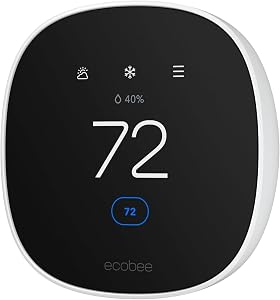
The ecobee Smart Thermostat Essential is designed to maximize comfort while helping reduce heating and cooling expenses through intelligent scheduling and ENERGY STAR-certified efficiency. It supports approximately 85% of HVAC systems and features a responsive color touchscreen for quick adjustments. The ecobee app provides convenient remote control, energy tracking, and automatic scheduling that adapts to your daily routine.
Compatibility with Apple HomeKit, Alexa, and Google Assistant makes voice control effortless across multiple smart home ecosystems. Homes without a C-wire can install the optional Power Extender Kit for added flexibility. Although this listing is sold as a pack of ten, the thermostat itself delivers dependable performance, intuitive controls, and long-term software updates that help keep the system current.
Pros
- Excellent smart home platform compatibility
- ENERGY STAR certified for energy savings
- Simple touchscreen with remote app control
- Optional Power Extender Kit for homes without a C-wire
Cons
- This listing is for a pack of 10 units
- Power Extender Kit is sold separately
How to Choose Wi-Fi Home Thermostat
Heating and cooling make up a massive portion of a typical home’s energy bills. Managing your indoor climate used to require manual adjustments on a basic dial or a frustratingly complex programmable wall unit. Today, Wi-Fi home thermostats have completely changed how we handle indoor comfort. By connecting to your home wireless network, these smart devices allow you to monitor and adjust your temperature from anywhere in the world using a smartphone, tablet, or voice commands. Choosing the right one can lead to lower utility bills, increased convenience, and a more comfortable living space.
However, entering the market for a new Wi-Fi thermostat can be overwhelming. There are dozens of models available, ranging from budget-friendly options to premium systems driven by artificial intelligence. To find the perfect fit for your household, you need to evaluate several key factors, including system compatibility, wiring requirements, smart features, and your daily routine.
1. Check Heating and Cooling System Compatibility
Before looking at sleek screens or advanced software features, you must ensure the thermostat will physically work with the equipment in your home. Not all thermostats are universally compatible with every heating, ventilation, and air conditioning (HVAC) setup.
Low-Voltage vs. Line-Voltage Systems
The vast majority of modern residential central heating and cooling systems operate on a low-voltage circuit (typically 24V). Most smart thermostats are designed exclusively for these systems. However, if your home relies on electric baseboard heaters, radiant wall heaters, or multi-zone hydronic systems, you likely have a line-voltage system (120V or 240V). Standard smart thermostats will not work with line-voltage setups and can create a severe safety hazard if connected incorrectly. Look specifically for specialized line-voltage smart thermostats if this applies to your home.
Multi-Stage and Heat Pump Systems
Standard HVAC systems simply turn all the way on or all the way off (single-stage). Advanced, high-efficiency systems feature multi-stage heating or cooling, variable-speed fans, or heat pumps with auxiliary heat sources. If you have a complex system, verify that the Wi-Fi thermostat you choose supports multi-stage operation to avoid losing system efficiency.
2. The C-Wire Requirement
One of the most critical mechanical details of choosing a Wi-Fi thermostat is checking for a common wire, universally known as the “C-wire.” Older programmable thermostats ran on small AA or AAA batteries because they only needed a tiny amount of power to flip a switch. Modern Wi-Fi thermostats feature bright backlit displays, continuous wireless radios, and processing chips that demand a steady stream of 24V power.
The C-wire delivers continuous power from your HVAC furnace panel directly to the thermostat. Before purchasing, pop your old thermostat off the wall and look at the wiring. If you see a wire connected to a terminal labeled “C,” you are ready for a seamless installation. If you do not have a C-wire, you have three options:
- Choose a C-Wire Free Model: Some models use a lithium-ion battery that recharges only when the HVAC system is actively running, though this can sometimes cause system cycling issues in older furnaces.
- Use a Power Adapter Kit: Many manufacturers bundle a small add-on adapter that installs inside your HVAC furnace control panel to send power over existing wires.
- Hire an Electrician: You can have a professional run a brand-new physical C-wire from the furnace to your thermostat location.
3. Types of Wi-Fi Thermostats
Wi-Fi thermostats generally fall into three distinct categories based on how they operate and manage your home schedule. Understanding these categories helps match a device to your personal habits.
| Thermostat Type | Core Characteristics | Best Suited For |
|---|---|---|
| Standard Wi-Fi / App-Controlled | Allows manual programming via a phone app; basic remote access without automated adjustments. | Budget-conscious users who keep a strict, predictable daily routine. |
| Smart Learning Thermostats | Uses motion sensors and algorithm tracking to build a custom schedule based on your actual behavior. | People with unpredictable schedules who want automated energy savings without programming effort. |
| Geofencing-Driven Thermostats | Relies heavily on smartphone location tracking to shift into saving modes when you leave a boundary zone. | Smaller households or individuals who are frequently away from home at random times. |
4. Key Smart Features to Consider
Once you narrow down compatibility and type, evaluate the premium features that separate basic connected models from top-tier comfort systems.
Smart Home Ecosystem Integration
If you already use a smart home assistant, your thermostat should seamlessly connect to it. Look for official compatibility badges on the packaging. Integration allows you to include your climate control into broader home scenes, such as a “Goodnight” command that locks your doors, turns off the lights, and drops the temperature by five degrees simultaneously.
Remote Room Sensors
Traditional thermostats read the temperature only in the hallway or room where they are mounted. This often leaves upstairs bedrooms too hot or back offices too cold. Many premium Wi-Fi thermostats support external, wireless remote sensors. You can place these small sensors in problematic rooms, telling the thermostat to balance the system based on the temperature of the room you are currently using, rather than the hallway.
Geofencing Capabilities
Geofencing establishes a virtual perimeter around your house using your phone’s GPS. When all registered smartphones cross outside the boundary, the thermostat automatically enters an energy-saving “Away” mode. When a phone crosses back into the boundary, the system kicks back on so the house is perfectly comfortable by the time you walk through the front door.
Energy Reports and Tracking
Many Wi-Fi models track your energy usage over time and generate monthly reports. These summaries detail exactly how many hours your system ran, how weather patterns impacted your usage, and offer tailored tips on minor adjustments you can make to lower your bills further.
5. Aesthetics and Interface Design
Because the thermostat sits prominently on a living room or hallway wall, visual appeal matters. Modern options range from minimalist glass dials that blend into contemporary decor to large, full-color touchscreens that display local weather forecasts and indoor humidity levels. Consider whether you prefer physical buttons, a rotating ring, or a responsive touchscreen interface for manual overrides.
6. Local Utility Rebates
Before making your final purchase, check with your local electricity or natural gas provider. Because Wi-Fi thermostats are highly effective at reducing strain on the electrical grid during peak hours, many utility companies offer substantial financial rebates. In many regions, you can receive a significant credit on your bill or a direct discount code, making an advanced smart thermostat surprisingly affordable.
Summary Check-list for Buyers
When you are ready to buy, keep this quick sequence of steps in mind to prevent mistakes:
- Remove your current thermostat cover and take a photo of the wiring connections.
- Confirm whether you have a 24V system and look closely for a terminal connected to a C-wire.
- Identify your preferred smart assistant ecosystem to ensure voice control compatibility.
- Decide if your home layout suffers from uneven temperatures, which requires a model that supports remote room sensors.
- Search your local utility company’s portal for active smart thermostat rebate programs.
Investing a small amount of time into analyzing your HVAC system and household behavior ensures you choose a Wi-Fi thermostat that delivers convenience, comfort, and noticeable utility savings for years to come.