Best Thermostats for Apple Homekit of 2026
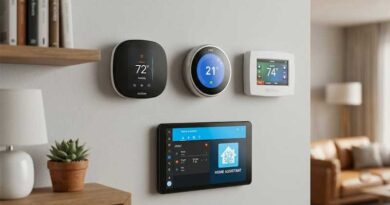
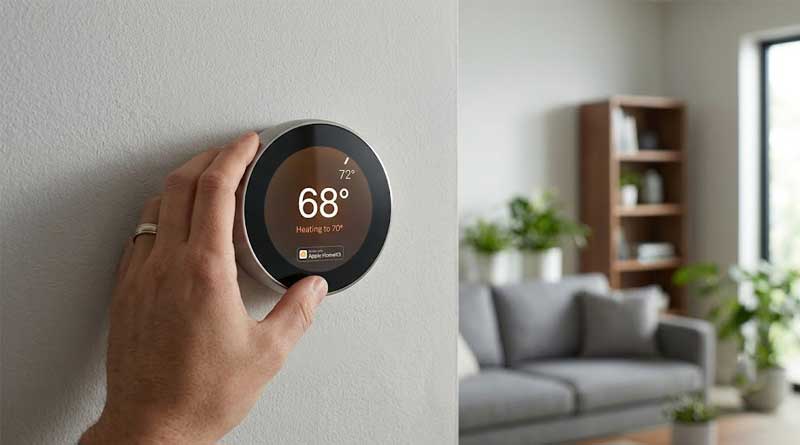
Integrating your home’s climate control with Apple HomeKit offers unparalleled convenience and energy efficiency. The best smart thermostats for Apple HomeKit provide seamless Siri voice control, automated scheduling based on your location, and deep integration within the Apple ecosystem. This guide reviews the top contenders, from privacy-focused options to advanced models with built-in sensors, helping you find the perfect device to create a smarter, more comfortable home.
1. Sensi Smart Thermostat, Wi-Fi, DIY, Alexa, Energy Star Certified, ST55

- Privacy Protection: Sensi will not sell your personal information to third parties.
- Installation: Easy DIY with built-in level and app instructions; C-wire not required in most homes.
- Energy Savings: ENERGY STAR certified, saves about 23% on HVAC energy.
- Design: Traditional look with physical buttons, fits standard wall plates.
The Sensi ST55 is a fantastic choice for those who want a reliable, no-nonsense smart thermostat that prioritizes user privacy. Its commitment to not selling your data is a major plus. The DIY installation is genuinely straightforward, thanks to the built-in level and clear app guidance, and the fact that it doesn’t require a C-wire in most setups makes it accessible for a wide range of homes.
While it may lack the flashy touchscreens of other models, its simple, button-based interface feels intuitive and familiar. The ENERGY STAR certification ensures it will help reduce your energy bills, and the smart maintenance features, like filter change reminders, are incredibly useful for keeping your HVAC system in top shape. It’s a solid, dependable performer.
Pros: Excellent privacy policy, easy DIY installation, no C-wire required for most systems, traditional and user-friendly interface.
Cons: Lacks a modern touchscreen display, fewer advanced smart features compared to competitors.
2. Aqara Smart Thermostat W200 with Apple Adaptive Temperature

- Apple Adaptive Temperature: Automatically adjusts based on your activity state via Apple Home.
- Display: 4-inch touchscreen that functions as a smart display for video doorbells.
- Connectivity: Matter 1.4 controller for local, secure control across multiple platforms.
- Presence Detection: Built-in mmWave radar for accurate human presence detection.
The Aqara W200 is a premium, feature-packed thermostat that truly shines within the Apple ecosystem. Its standout feature is Apple Adaptive Temperature, which uses your iPhone to learn your routines and adjusts the climate for optimal comfort and energy savings without complex scheduling. The large 4-inch touchscreen is crisp and responsive, and the ability to view your video doorbell feed directly on the device is a game-changer for home security.
Installation is versatile, working with about 85% of HVAC systems, and the inclusion of a trim kit is a thoughtful touch. The built-in mmWave radar is incredibly precise for presence detection, ensuring the screen lights up as you approach and your home is always at the perfect temperature when you’re there. As a Matter controller, it offers robust, local control, ensuring fast and reliable performance that’s not dependent on the cloud.
Pros: Cutting-edge Apple Adaptive Temperature, 4-inch touchscreen with doorbell integration, precise mmWave presence sensor, Matter 1.4 support for local control.
Cons: Higher price point, requires a home hub (Apple TV/HomePod) for full Adaptive Temperature features, some advanced features require additional sensors.
3. Honeywell Home RTH9600WF Smart Color Thermostat

- Energy Savings: ENERGY STAR certified with personalized energy-saving tips.
- Display: Customizable, high-definition color touchscreen.
- Information: Shows indoor/outdoor temperature, humidity, and daily weather forecast.
- Compatibility: Forced air, hot water, steam, and heat pumps; C-wire required.
The Honeywell Home RTH9600WF is an excellent choice for users who value a customizable and informative display. The high-definition color screen can be changed to match any décor, and it provides a wealth of information at a glance, including weather forecasts, making it a central hub for your home’s comfort data. Its ENERGY STAR certification and personalized energy tips are great for the environmentally and budget-conscious.
Control is flexible, with a well-designed app and compatibility with all major voice assistants. However, it’s crucial to note that this model requires a C-wire for power, so you’ll need to verify your system’s compatibility before purchasing. Its compatibility with a wide range of HVAC systems makes it versatile, but the lack of a C-wire adapter in the box might be a hurdle for some DIY installers.
Pros: Vibrant and customizable color screen, detailed local weather and humidity info, robust app and voice assistant control, ENERGY STAR certified.
Cons: C-wire is required for installation, does not work with electric baseboard heat, lacks built-in presence or occupancy sensors.
4. vine Smart Thermostat
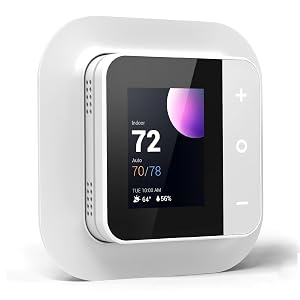
- Programming: 7-day flexible scheduling with 8 periods per day.
- Compatibility: Works with 90% of 24V AC systems, including heat pumps.
- Control: Remote and voice control via Vine or Smart Life app, compatible with Alexa and Google Home.
- Features: Includes temperature alerts, filter change reminders, and child lock.
The vine Smart Thermostat is a great value-focused option that doesn’t skimp on essential smart features. It offers comprehensive 7-day programming with up to 8 periods per day, giving you granular control over your home’s temperature schedule. The inclusion of Auto Home/Away mode helps save energy automatically, and the compatibility with 90% of HVAC systems makes it a widely applicable choice.
This thermostat provides solid functionality with remote and voice control, alongside practical features like filter change reminders and a child lock. However, it’s important to remember that a C-wire is required for installation, and its integration with Apple HomeKit is not explicitly highlighted, though it works with Alexa and Google Home. It’s a reliable and affordable entry point into smart climate control.
Pros: Excellent value for money, extensive 7-day programming, wide HVAC compatibility, includes useful practical features like filter reminders and child lock.
Cons: C-wire is required, does not explicitly mention Apple HomeKit compatibility, interface is more basic than premium models.
5. ecobee Smart Thermostat Essential
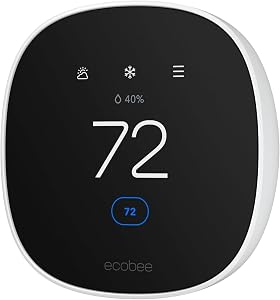
- Energy Savings: Save up to 23% on heating and cooling costs annually.
- Compatibility: Works with 85% of systems; C-wire not required with included Power Extender Kit (sold separately).
- Control: Color touchscreen with control via the ecobee app.
- Ecosystems: Works with Apple HomeKit, Google Assistant, and Alexa.
The ecobee Smart Thermostat Essential is a fantastic blend of performance, features, and value. It delivers the core ecobee experience, including significant energy savings and easy control via its color touchscreen. The promise of free software upgrades ensures your thermostat will get better over time, a testament to ecobee’s commitment to its users. Its automatic scheduling and energy consumption tracking are excellent for those looking to optimize their usage.
One of its strongest selling points is its deep ecosystem integration, working seamlessly with Apple HomeKit, Google, and Alexa. For installation, ecobee smartly includes a Power Extender Kit in the box, making it compatible with homes that don’t have a C-wire. This thoughtful inclusion, combined with its attractive design and reliable performance, makes the ecobee Essential a top-tier choice for any smart home enthusiast.
Pros: Deep integration with Apple HomeKit, Alexa, and Google Assistant, includes a Power Extender Kit for C-wire-free homes, impressive energy savings, free software updates.
Cons: The touchscreen is smaller than some premium models, lacks the built-in occupancy sensor of higher-end ecobee models.
How to Choose the Best Thermostat for Apple HomeKit
Selecting the right smart thermostat for your Apple HomeKit ecosystem involves more than just picking the most expensive or feature-rich model. It requires a careful assessment of your home’s specific needs, your HVAC system’s capabilities, and your personal preferences for control and automation. This guide will walk you through the critical factors to consider, ensuring you make an informed decision that enhances your home’s comfort and efficiency.
1. Apple HomeKit & Ecosystem Compatibility
While all products listed are compatible with Apple HomeKit, the depth of integration can vary. This is the core of your choice.
What to Look For:
- Official Support: Ensure the thermostat explicitly states “Works with Apple HomeKit.” This guarantees a secure and reliable connection.
- Siri Voice Control: Confirm that you can control the thermostat using Siri on your iPhone, iPad, Apple Watch, or HomePod. Basic commands like “Set the temperature to 72 degrees” or “Set the heat to 68” are standard.
- Home App Integration: The thermostat should appear in the Apple Home app alongside your other devices. This allows you to create scenes and automations, such as a “Good Night” scene that lowers the temperature and turns off the lights.
- Advanced Features: Look for advanced Apple-specific features like Adaptive Temperature, which uses your iPhone’s presence and activity state to automatically adjust settings for comfort and savings without complex schedules.
2. HVAC System Compatibility & Power Requirements
This is the most critical technical step. A thermostat that isn’t compatible with your system will not work. Every model has different requirements.
Key Compatibility Factors:
- System Type: Check if your system is conventional (gas, oil, electric), a heat pump, or a boiler. The thermostat must support your specific system type.
- Voltage: Most smart thermostats require 24V AC systems. They will not work with high-voltage (120V-240V) electric baseboard heating.
- The C-Wire: This is the “common wire” that provides continuous power.
- C-Wire Required: Some models, like the Honeywell RTH9600WF and vine thermostat, require a C-wire. If your home doesn’t have one, you’ll need to hire an electrician to install it, or use a C-wire power adapter (if compatible).
- C-Wire Not Required: The Sensi ST55 is designed to work without a C-wire in most cases, making installation much simpler for older homes. The ecobee Essential includes a Power Extender Kit (PEK) that can be installed at the furnace to create a virtual C-wire.
3. Installation and DIY vs. Professional
Assess your comfort level with DIY projects before making a purchase.
| Thermostat Model | Installation Ease | Key Installation Feature |
|---|---|---|
| Sensi ST55 | Very Easy (DIY) | Built-in level, step-by-step app instructions, no C-wire required. |
| Aqara W200 | Moderate (DIY) | Wide compatibility, optional C-wire adapter, includes trim kit. |
| Honeywell RTH9600WF | Moderate (DIY) | C-wire is mandatory, must check compatibility before purchase. |
| vine Thermostat | Easy (DIY) | C-wire is mandatory, step-by-step guides and videos available. |
| ecobee Essential | Easy (DIY) | Power Extender Kit (PEK) included for homes without a C-wire. |
4. Advanced Features and Usability
Beyond basic temperature control, consider the features that will make your life easier or more comfortable.
Important Features to Consider:
- Display: Do you prefer a traditional button interface (Sensi) or a modern, customizable touchscreen (Aqara, Honeywell)? The Aqara even features a 4-inch screen that acts as a smart display.
- Sensors: Built-in sensors can add immense value.
- Presence/Occupancy: The Aqara W200’s mmWave radar can detect if you’re home to adjust temperature automatically and even trigger other automations.
- External Sensors: Some models allow you to connect external room sensors to balance the temperature in different parts of your home.
- Energy Savings: All ENERGY STAR certified models help save energy, but features like usage reports, personalized tips, and adaptive schedules can make a significant difference in your bill.
- Smart Home Integration: While all work with HomeKit, consider if you also want compatibility with other platforms like Alexa, Google Assistant, or Matter for a more flexible smart home.
- Maintenance and Alerts: Look for features like filter change reminders, equipment alerts, and usage reports to keep your HVAC system running efficiently.