Best Fish Finder GPS Combos for Saltwater of 2026
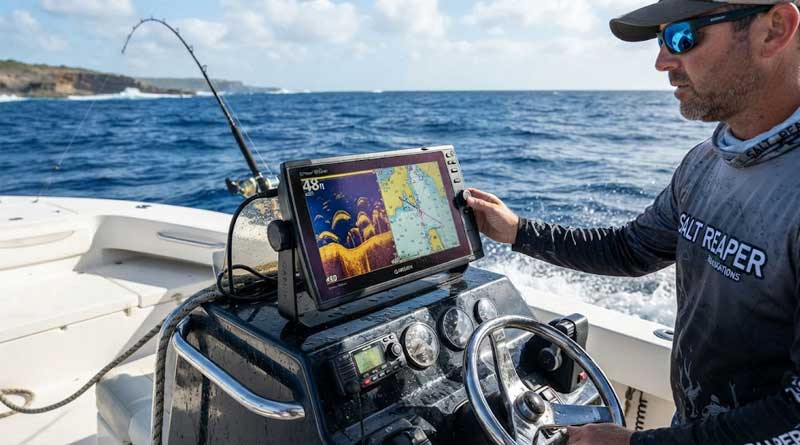
Fishing in saltwater demands more from your electronics than a casual lake outing ever will. Corrosive spray, deeper water columns, faster-moving fish, and unpredictable currents mean your fish finder GPS combo has to deliver accurate readings, reliable navigation, and rugged durability all at once. Whether you are chasing tuna offshore or working nearshore flats for redfish, the right unit turns guesswork into confidence. Below we review five of the best fish finder GPS combos suited for saltwater anglers, followed by a detailed buying guide to help you choose.
1. Garmin Echomap UHD2 73cv

- Display: 7-inch keyed display with UHD clarity
- Transducer: GT20-TM included
- Mapping: Built-in U.S. Navionics Plus inland maps
- Control: Physical keypad for wet-hand operation
The Garmin Echomap UHD2 73cv is a solid mid-size option for saltwater anglers who want dependable performance without an oversized console footprint. The keyed interface is a genuine advantage on rough water, since buttons remain operable even when hands are wet or gloved, something touchscreens struggle with in spray-heavy conditions.
Sonar clarity from the GT20-TM transducer is crisp enough to mark bait balls and structure at moderate depths, and the preloaded Navionics charts make nearshore navigation straightforward. It is not the flashiest unit here, but it is dependable and easy to learn.
Pros:
- Reliable physical keypad controls
- Clear UHD sonar imaging
- Compact size fits smaller boats
Cons:
- Screen is small for split-view use
- No touchscreen convenience
2. Garmin ECHOMAP UHD2 93sv

- Display: 9-inch sunlight-readable touchscreen
- Transducer: GT56UHD-TM with CHIRP, ClearVu, SideVu
- Connectivity: Built-in Wi-Fi for chart and waypoint sharing
- Compatibility: Pairs wirelessly with Garmin Force trolling motors
For anglers who want a full-featured command center, the Garmin ECHOMAP UHD2 93sv is a serious upgrade. The nine-inch touchscreen stays legible even in bright offshore sun, and the wide viewing angle helps when mounted off-axis on a console. Sonar performance with CHIRP, ClearVu, and SideVu scanning gives a genuinely detailed picture of structure and fish.
Wi-Fi connectivity lets you sync data between compatible units or link to a Force trolling motor for route following, a feature that saltwater flats and bay anglers will appreciate. It carries a higher price tag, but the feature set justifies it for serious boaters.
Pros:
- Large, bright touchscreen display
- Excellent multi-sonar detail
- Trolling motor integration
Cons:
- Premium price point
- Larger footprint needs more console space
3. Humminbird Helix 5 Chirp

- Sonar: Dual Spectrum CHIRP with Wide and Narrow modes
- Mapping: Humminbird Basemap with coastal coverage
- Mapping tool: AutoChart Live for real-time depth mapping
- Controls: Softkey keypad interface
The Humminbird Helix 5 Chirp is a budget-friendly combo that still manages to pack in useful saltwater features. Dual Spectrum CHIRP sonar gives you the choice between wide coverage for scanning large areas and narrow mode for pinpointing structure, which is handy when working reefs or wrecks.
AutoChart Live is a standout feature at this price, letting you build your own depth contour maps as you cruise. The keypad control system holds up well in wet conditions, and coastal basemap coverage means you are not starting from a blank chart. It is a strong value pick for anglers on a budget.
Pros:
- Affordable price
- Real-time custom mapping
- Reliable keypad in wet conditions
Cons:
- Smaller five-inch screen
- No touchscreen option
4. Lowrance Eagle Fish Finder

- Screen: High-visibility IPS display readable with polarized glasses
- Sonar: SplitShot HD with FishReveal on DownScan and CHIRP
- Mapping: Preloaded C-MAP inland charts, coastal bundles available
- Installation: Twist-lock connector for easy mounting
The Lowrance Eagle is built around simplicity and clarity. Its IPS screen holds up impressively well under direct sunlight and remains readable through polarized sunglasses, a small but appreciated detail for long days on the water. The FishReveal overlay makes it easier for less experienced anglers to distinguish fish from surrounding structure and vegetation.
Installation is genuinely plug-and-play thanks to the twist-lock transducer connector, so swapping between boats is painless. With optional coastal charting bundles and Genesis Live custom mapping, it scales well for anglers who want to expand capability over time. It is an easy recommendation for beginners entering saltwater fishing.
Pros:
- Excellent screen visibility
- Easy installation and setup
- Beginner-friendly fish identification
Cons:
- Coastal charts sold separately
- Basic compared to premium units
5. Garmin Echomap UHD2 54cv

- Display: 5-inch chartplotter and fishfinder combo
- Transducer: GT20-TM included
- Mapping: Navionics Plus U.S. Coastal and Great Lakes maps
- Size: Compact footprint for small saltwater craft
The Garmin Echomap UHD2 54cv is the most compact and budget-conscious unit in Garmin’s UHD2 lineup, but it does not skimp on saltwater-relevant mapping. Coastal and Great Lakes Navionics charts are preloaded, giving nearshore anglers accurate depth and structure data right out of the box.
Its small size makes it ideal for kayaks, skiffs, or as a secondary unit on a larger boat. Sonar performance from the GT20-TM transducer is respectable for the price, handling typical inshore depths well. It will not satisfy offshore anglers chasing deep structure, but for coastal and flats fishing it is a smart, affordable choice.
Pros:
- Compact and lightweight
- Coastal charts preloaded
- Budget-friendly Garmin option
Cons:
- Small 5-inch screen
- Limited for deep offshore use
How to Choose Fish Finder GPS Combo for Saltwater
Choosing a fish finder GPS combo for saltwater use is a different challenge than picking one for a freshwater lake. Saltwater environments are harsher on equipment, the water columns you are scanning are often much deeper, and the navigational hazards you face, from sandbars to shipping channels, demand more precise mapping. Below is a detailed breakdown of the factors that matter most when narrowing down your choice.
Understand Your Fishing Environment
Before comparing specs, think about where you actually fish. Nearshore flats fishing has very different sonar and mapping needs than deep-sea trolling for pelagic species. A angler working skinny water for redfish and snook needs shallow water clarity and side-scanning to spot structure, while an offshore angler chasing tuna or marlin needs strong CHIRP sonar performance at depths of several hundred feet.
Nearshore and Flats Fishing
For skinny water, prioritize side-scanning sonar and a unit with a high-resolution display, since you are often reading subtle bottom contour changes and structure in just a few feet of water.
Offshore and Deep-Sea Fishing
Offshore anglers should prioritize CHIRP sonar strength, transducer power, and depth capability, since standard sonar can struggle to return clear signals beyond a few hundred feet without a stronger transducer.
Screen Size and Display Quality
Screen size directly affects how much information you can view at once, especially when running split-screen views of sonar and chartplotter data simultaneously. Saltwater environments are typically brighter due to open water glare, so sunlight readability is non-negotiable.
- 5-inch displays suit kayaks, small skiffs, or secondary helm stations
- 7-inch displays are a solid middle ground for most center console boats
- 9-inch and larger displays are best for offshore boats running multiple data views
Touchscreens offer convenience and faster menu navigation, but keypad units tend to perform more reliably when hands are wet, gloved, or the boat is bouncing through chop, which is common in saltwater conditions.
Sonar Technology
Sonar is the core function of any fish finder, and saltwater fishing benefits from more advanced sonar types due to greater depth and more complex structure.
| Sonar Type | Best Use Case |
|---|---|
| Traditional CHIRP | General fish and depth detection at most depths |
| DownVu / DownScan | Detailed images of structure directly below the boat |
| SideVu / SideScan | Wide-area scanning to locate structure off to the sides |
| Dual Spectrum CHIRP | Switching between wide coverage and narrow detail scanning |
For serious saltwater use, a combo with both down and side scanning gives the most complete picture, especially around reefs, wrecks, and drop-offs where fish concentrate.
GPS and Mapping Capability
Accurate charts are arguably just as important as sonar in saltwater, since navigational hazards like sandbars, jetties, and shifting channels can pose real safety risks. Look for units with preloaded coastal charts rather than only inland lake maps.
Preloaded vs Add-On Charts
Some units come with coastal charts included out of the box, while others require purchasing add-on chart cards for full coastal coverage. Always confirm coastal chart coverage before buying if you fish saltwater primarily.
Real-Time Mapping Features
Features like AutoChart Live or Genesis Live let you build custom depth maps as you fish, which is particularly useful in less-charted saltwater flats, backwaters, or areas with shifting sandbars that standard charts may not reflect accurately.
Transducer Type and Mounting
The transducer determines sonar accuracy, and saltwater boats often require through-hull or trolling motor mounts rather than simple transom mounts, depending on boat type and hull material.
- Transom mount transducers are easiest to install and work for most smaller boats
- Through-hull transducers offer cleaner readings at higher speeds on larger boats
- Trolling motor mounts are popular for shallow saltwater flats fishing
Durability and Corrosion Resistance
Saltwater is far more corrosive than fresh water, so housing materials, connector seals, and mounting hardware matter more than they would for a lake boat. Look for units explicitly rated for marine or saltwater use, and rinse connections after each outing regardless of manufacturer claims.
Connectivity and Extra Features
Modern combos often include Wi-Fi, smartphone app pairing, and trolling motor integration. These are not essential but can meaningfully improve your day on the water.
- Wi-Fi lets you transfer waypoints and routes between compatible units
- Trolling motor integration allows route following and automated boat control
- Smartphone connectivity can enable notifications and remote chart updates
Budget Considerations
Fish finder GPS combos for saltwater range from budget-friendly entry units to premium multi-thousand-dollar systems. Set a budget based on how seriously and how often you fish saltwater rather than buying the most expensive unit available.
| Budget Range | What to Expect |
|---|---|
| Entry-level | Basic CHIRP sonar, smaller screens, limited chart coverage |
| Mid-range | Down and side scanning, larger displays, coastal charts included |
| Premium | Touchscreens, Wi-Fi, trolling motor integration, advanced mapping tools |
Final Thoughts
The best fish finder GPS combo for saltwater fishing depends on where and how you fish. Nearshore anglers should prioritize side-scanning and shallow water clarity, while offshore anglers need strong CHIRP sonar and depth performance. Regardless of your budget, prioritize coastal chart coverage and corrosion-resistant construction, since both directly affect safety and usability in a saltwater environment. Matching the unit to your specific fishing style will always outperform simply buying the most feature-packed model on the market.